Tongzhi Emperor: The Brief and Turbulent Reign of a Qing Dynasty Ruler
The Tongzhi Emperor stands as a complex figure in the twilight of Imperial China. As the only surviving son of the Xianfeng Emperor and Empress Dowager Cixi, his life and reign were defined by a constant struggle for autonomy against the powerful women who raised him and the rigid protocols of the Qing court.
His era name, Tongzhi, translates to "order and prosperity." This name was derived from Confucian teachings suggesting that the essence of good government is summarized by these two virtues. While his era was also the namesake for the Tongzhi Restoration—a political reform effort initiated by his mother—the Emperor's personal life often contradicted the stability his name implied.
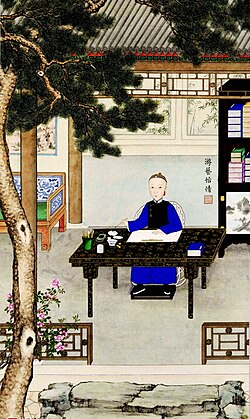
Early Life and the Regency
The Tongzhi Emperor ascended to the throne at the tender age of five following the death of his father. While the Xianfeng Emperor had originally appointed a regent named Sushun, this arrangement was quickly overturned. Power instead shifted into a partnership between two women: Empress Dowager Cixi and Empress Dowager Ci'an.
Early hopes were high that the young ruler would mirror the success of the Kangxi Emperor, who had also taken the throne as a child in 1661. However, as he matured, the Tongzhi Emperor developed a reputation for being obstinate and dissolute. He frequently expressed deep dissatisfaction with the influence and control exerted by his mother, Empress Cixi.
The Struggle for Power and Diplomatic Tension
In the fall of 1872, the Emperor married Empress Xiaozheyi and took two official concubines. This period marked a turning point as the Emperor sought to assume direct control of the government immediately. This ambition led to a sharp quarrel at court regarding the timing and process of dismantling the regency. Despite the friction, the Empress Dowagers maintained their timeline, and the regency officially ended on February 23, 1873.
Almost immediately after taking power, the Emperor faced the complexities of international diplomacy. Foreign representatives requested an audience, which sparked a conflict between the Zongli Yamen (the foreign affairs ministry) and the foreign legations. The primary point of contention was the kowtow—the traditional ritual of kneeling and bowing—which the foreign ministers refused to perform.
To avoid the strict protocols of the Forbidden City, the Qing government arranged the meeting at the "Pavilion of Purple Light" in a lakeside palace (now part of Zhongnanhai). The audience finally took place on June 29, 1873, though foreign representatives remained annoyed that they were received in a hall typically reserved for envoys of tributary states.
Conflict, Illness, and Death
By the fall of 1874, the Emperor's relationship with his administration collapsed. He clashed violently with his ministers, including his uncles Prince Gong and Prince Chun. The disputes centered on the Emperor's desire to rebuild the Old Summer Palace despite the empire's bankruptcy, as well as his perceived dissolute behavior.
In a fit of frustration, the Emperor fired his ministers. However, this act of authority was short-lived; Empresses Dowager Ci'an and Cixi intervened and reinstated the officials. Shortly thereafter, in December 1874, it was announced that the Emperor had contracted smallpox. The Empress Dowagers resumed the regency, and the Tongzhi Emperor passed away on January 12, 1875, without leaving a male heir.
The Succession Crisis
The death of a childless emperor triggered a succession crisis. To ensure continuity, the Empress Dowagers selected Zaitian, the three-year-old son of Prince Chun and cousin to the deceased emperor. To make him eligible for the throne, Zaitian was symbolically adopted as the son of the Xianfeng Emperor and enthroned as the Guangxu Emperor. This transition allowed Empresses Dowager Ci'an and Cixi to return to their roles as regents. Shortly after the Emperor's death, his wife, Empress Alute, also passed away under unclear circumstances.
Key Facts
- Era Name: Tongzhi, meaning "order and prosperity."
- Ascension: Became emperor at age five.
- Regents: Primarily governed by Empress Dowager Cixi and Empress Dowager Ci'an.
- Diplomatic Conflict: Refusal of foreign ministers to perform the kowtow in 1873.
- Cause of Death: Smallpox.
- Successor: His cousin Zaitian (the Guangxu Emperor).
| Category | Details |
|---|---|
| Parents | Xianfeng Emperor and Empress Dowager Cixi |
| Reign Start | Age 5 (following father's death) |
| Key Political Event | Tongzhi Restoration |
| Date of Death | January 12, 1875 |
| Succession | Guangxu Emperor (symbolically adopted) |
Frequently Asked Questions
What does the name "Tongzhi" mean?
The name means "order and prosperity," based on Confucian teachings that these two elements are the summary of a good government.
Who actually held power during the Tongzhi Emperor's reign?
For most of his reign, power was held by the regents Empress Dowager Cixi and Empress Dowager Ci'an, who managed the empire until the Emperor's brief period of direct rule and subsequent illness.
Why was there a conflict with foreign diplomats in 1873?
The conflict arose because foreign ministers refused to perform the kowtow (a ritual bow) and were dissatisfied with being received in a hall used for tributary states rather than a primary imperial hall.
How did the Tongzhi Emperor die?
The Emperor died on January 12, 1875, after falling ill with smallpox.
Who succeeded the Tongzhi Emperor?
Because he died childless, his three-year-old cousin Zaitian was symbolically adopted as the son of the Xianfeng Emperor and ascended the throne as the Guangxu Emperor.