Thomas Pennant: The Legacy of a Great Welsh Naturalist and Antiquarian
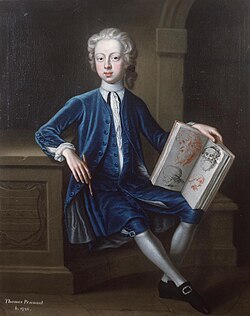
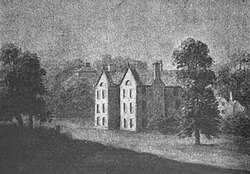
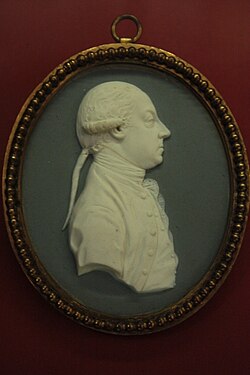
Thomas Pennant (1726–1798) was a distinguished Welsh naturalist, traveler, writer, and antiquarian—a scholar of ancient objects and customs. Born and raised at his family estate, Downing Hall, in Flintshire, Wales, Pennant dedicated his life to the meticulous observation of the natural world and the preservation of historical records. His work bridged the gap between amateur curiosity and professional science during the Enlightenment.
Pennant's intellectual journey began at age twelve when he was gifted Francis Willughby's Ornithology, sparking a lifelong passion for natural history. Though he attended Wrexham Grammar School and later Queen's College and Oriel College at Oxford, he left university without a degree, as was common for wealthy students of his era. However, his contributions to science were so significant that he was later awarded an honorary degree in 1771.
Key Facts
- Lifelong Residence: Lived his entire life at Downing Hall, Flintshire, Wales.
- Major Works: Authored British Zoology, Arctic Zoology, and several influential travelogues.
- Scientific Range: Expert in zoology, geology, and antiquities.
- Philanthropy: Donated profits from his expensive publications to charity, including the Welsh Charity School.
- Global Recognition: Member of the American Philosophical Society and the Royal Swedish Academy of Sciences.
Early Scientific Pursuits and Geology
In the 1740s, a visit to Cornwall and a meeting with naturalist William Borlase ignited Pennant's interest in minerals and fossils. Throughout the 1750s, geology became his primary focus. He contributed papers to the Philosophical Transactions of the Royal Society, including an account of an earthquake at Downing in 1750 and a study of coralloid bodies from Coalbrookdale, Shropshire, in 1756.
Pennant's scientific knowledge had practical applications; he used his geological expertise to open a lead mine, which provided the funds necessary to improve the Downing estate after he inherited it in 1763.
Major Zoological Contributions
British Zoology
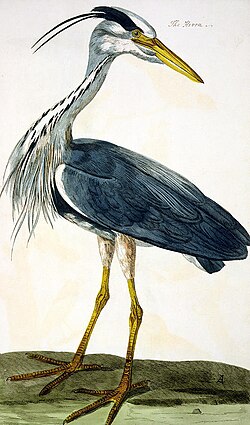
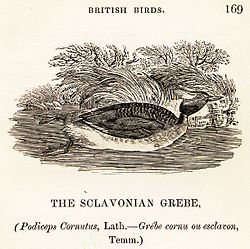
Inspired by European naturalists, Pennant began British Zoology in 1761. Published between 1766 and 1767, this comprehensive work featured 132 color folio plates. Because the illustrations were so costly, Pennant made little personal profit, often donating earnings to charity. His observations were so precise that modern researchers have used them to reconstruct ecological studies using molecular data.
Arctic Zoology and Global Studies
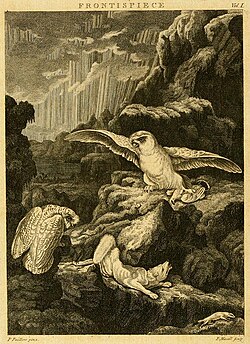
Later in his career, Pennant shifted his focus toward the Northern Hemisphere. Originally intending to write a "Zoology of North America," he renamed the project Arctic Zoology (published 1785–1787) due to his feelings regarding the loss of British control over America. This acclaimed work was divided into volumes on quadrupeds and birds, with assistance from Sir Joseph Banks's expedition to Newfoundland.
Other Zoological Works
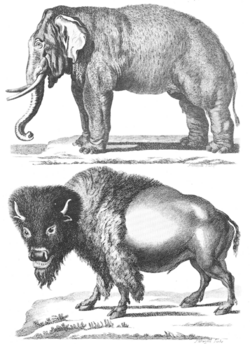
Pennant also published the Synopsis of Quadrupeds (1771), which expanded into the History of Quadrupeds, and a second edition of Indian Zoology. Toward the end of his life, he envisioned a massive 14-volume global series covering various countries' productions and natural history, though only the first two volumes (covering India and Ceylon) were published during his lifetime.
Travels and Antiquarianism
Pennant was a prolific traveler, exploring the British Isles on horseback and keeping detailed journals. His tours were not merely scientific but also historical and sociological.
Tours of Scotland and the Hebrides
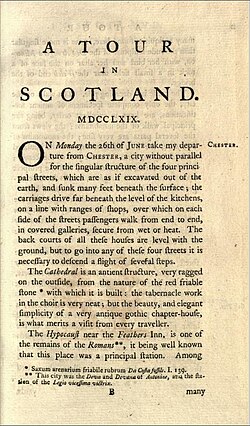
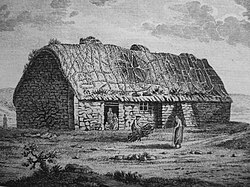
His 1769 tour of Scotland was so successful that he returned in 1772 with the Rev. John Lightfoot and Rev. J. Stewart. They explored the Lake District and sailed a ninety-ton cutter to the outer isles, including Bute, Arran, and Jura. His writings on the Hebrides provide a detailed snapshot of the region's economy and customs that remains valuable for historical comparison.
Tours of Wales and England
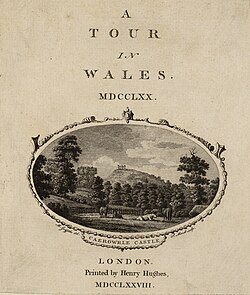
Pennant's Tour in Wales (first published in 1778) and Journey to Snowdon focused heavily on history and antiquities, including the struggles of Owain Glyndŵr. He also documented the natural world, such as the nesting habits of herons at St Orme's Head and the legendary presence of beavers on the River Conwy.
His other travels included journeys through Northamptonshire, the Isle of Man, and various routes from Chester to London, the latter of which resulted in the publication of Journey from Chester to London (1782).
Scientific Network and Legacy
Pennant maintained an extensive correspondence with the leading scientists of his day. He was a close associate of Sir Joseph Banks, from whom he received bird specimens from Captain James Cook's voyages. This network allowed Pennant to fill gaps in other scientific works, such as those by John Latham.
His legacy lives on not only in his books but also in taxonomy. Numerous marine and land species bear the epithet pennanti, pennantii, or pennantiana, including the fisher (Pekania pennanti).
| Work | Publication Date | Primary Focus |
|---|---|---|
| British Zoology | 1766–1767 | Comprehensive zoology of Britain |
| A Tour in Scotland | 1771 | Geography, customs, and nature of Scotland |
| Tour in Wales | 1778 | History and antiquities of Wales |
| Arctic Zoology | 1785–1787 | Quadrupeds and birds of the Arctic regions |
| Account of London | 1790 | Historical interest in the capital |
Frequently Asked Questions
Did Thomas Pennant earn a degree from Oxford?
No, Pennant left Oxford without taking a degree, which was common for wealthy students at the time. However, he was later awarded an honorary degree in 1771 in recognition of his work as a zoologist.
How did Pennant fund his scientific interests?
Pennant used his knowledge of geology to open a lead mine, which helped finance the improvements to his family estate, Downing Hall, and supported his research.
What was the significance of 'British Zoology'?
It was one of the first comprehensive descriptions of British animals, featuring high-quality color plates. Its accuracy was so high that it has been used in modern ecological reconstructions.
Why did he change the name of his North American work to 'Arctic Zoology'?
Pennant felt "mortified" by the loss of British control over America following the American Revolutionary War, leading him to rename the work.
Which famous explorers did Pennant correspond with?
Pennant had a significant relationship with Sir Joseph Banks, who provided him with specimens and data from Captain James Cook's voyages of exploration.