Histoire Naturelle: Buffon's Monumental Contribution to Natural History
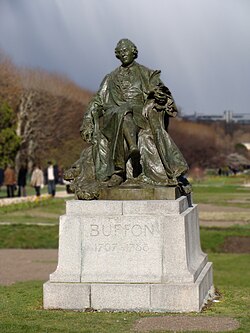
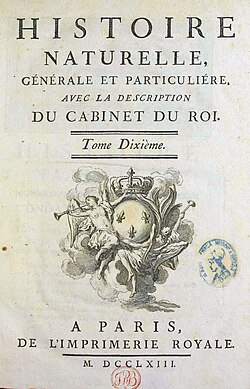
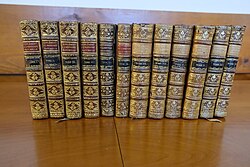
Between 1749 and 1788, the Comte de Buffon produced one of the most influential scientific works of the Enlightenment: Histoire naturelle, générale et particulière. Spanning 36 volumes (with an additional volume based on his notes appearing in 1789), this massive undertaking was originally intended to encompass all three kingdoms of nature. However, the final work focused primarily on the mineral kingdom and the animal kingdom—specifically birds and quadrupeds.
Written in a brilliant and engaging style, the work became a staple for every educated person in Europe. Buffon did not work alone; he was supported by artists and collaborators including Gabriel-Léopold Bexon, Philibert Guéneau de Montbeillard, and Louis Jean-Marie Daubenton. The global reach of the text was immense, translated into numerous languages and establishing Buffon as a literary and scientific rival to figures like Voltaire, Rousseau, and Montesquieu.
Key Facts
- Scope: 36 volumes published between 1749 and 1788, focusing on minerals, birds, and quadrupeds.
- Biogeography: Established the first principle of biogeography, now known as Buffon's Law.
- Earth's Age: Estimated the Earth to be at least 75,000 years old, challenging the Biblical timeline.
- Transformism: Proposed that quadrupeds evolved from an original set of 38 species.
- Conflict: His theories on reproduction and Earth's history were repeatedly condemned by the Sorbonne.
Challenging the Scientific Status Quo
From the very beginning, Buffon used Histoire naturelle to challenge the prevailing intellectual currents of his time. He questioned the utility of mathematics in natural history and criticized the taxonomical approach—the system of classification—championed by Carl Linnaeus. Furthermore, he proposed a theory of reproduction that contradicted the then-dominant theory of pre-existence.
These provocative ideas did not go unnoticed. The Faculty of Theology at the Sorbonne condemned the early volumes. While Buffon issued a formal retraction to appease the authorities, he continued to publish the offending volumes without making any changes to the text.
Buffon's Law and the Origins of Biogeography
One of Buffon's most enduring contributions was his observation that different geographical regions possess distinct plants and animals, even when their environments are similar. This concept, later termed Buffon's Law, is recognized as the founding principle of biogeography (the study of the distribution of species and ecosystems in geographic space).
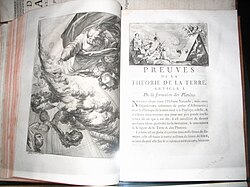
Buffon suggested that species could either "improve" or "degenerate" after migrating from a center of creation. In volume 14, he argued that all quadrupeds descended from an original group of just 38 species. Because of these ideas, Buffon is often viewed as a "transformist" and a precursor to Charles Darwin. He also hypothesized that climate change played a role in helping species spread from their points of origin.
The American Moose Debate
Buffon initially claimed that animals in the New World were smaller than those in the Old World due to environmental factors. This claim sparked a famous disagreement with Thomas Jefferson. Jefferson attempted to correct Buffon's error by pointing out that the American moose was significantly larger than the European reindeer. To prove the "stature and majesty of American quadrupeds," Jefferson arranged for twenty soldiers to capture a bull moose in the New Hampshire woods and send it to Buffon. The specimen convinced Buffon, who promised to correct the record in a future volume.
The Age of the Earth and the Solar System
In his 1778 work, Les époques de la nature, Buffon expanded his scope to the cosmos. He speculated that the Solar System was formed when a comet collided with the Sun. He also challenged the chronological calculations of Archbishop James Ussher, who had dated the creation of the Earth to 4004 BC.
Using his laboratory, the Petit Fontenet at Montbard, Buffon conducted experiments on the cooling rate of iron. Based on these results, he calculated that the Earth was at least 75,000 years old. This conclusion led to further condemnation by the Sorbonne, prompting another retraction from Buffon to avoid persecution.
Buffon was also aware of extinct species, such as the European rhino and the mammoth. Some of his early assumptions regarding the natural world have since inspired modern scientific models, including the theory of continental drift.
Summary of Buffon's Major Works
| Work | Date/Period | Primary Focus |
|---|---|---|
| Histoire naturelle, générale et particuliére | 1749–1767 | Mineral kingdom, birds, and quadrupeds |
| Discours sur le style | 1753 (Speech) | Literary style and rhetoric |
| Les époques de la nature | 1778 | Origins of the Solar System and Earth's age |
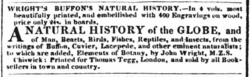
| Buffon's Natural History of the Globe... | 1831 (English Ed.) | English translation edited by John Wright |
Frequently Asked Questions
What is Buffon's Law?
Buffon's Law is the observation that different regions have distinct plants and animals despite having similar environments. This is considered the first principle of biogeography.
How did Buffon determine the age of the Earth?
Buffon estimated the Earth's age by studying the cooling rate of iron in his laboratory at Montbard, concluding that the Earth was at least 75,000 years old.
Why was Buffon considered a precursor to Darwin?
He is viewed as a "transformist" because he proposed that all quadrupeds developed from an original set of 38 species and suggested that species could change as they dispersed from a center of creation.
What was the conflict between Buffon and Thomas Jefferson?
Buffon believed American animals were smaller than European ones. Jefferson disagreed and sent a live bull moose from New Hampshire to France to prove the size and majesty of American wildlife.
Did Buffon cover all kingdoms of nature in his work?
Although originally intended to cover all three kingdoms, the Histoire naturelle was ultimately limited to the mineral kingdom and the animal kingdom (specifically birds and quadrupeds).