The Washington Post: A Legacy of Journalism and Evolution
Since its founding in the late 19th century, The Washington Post has stood as a cornerstone of American media. Known for its deep coverage of political power and its role in shaping national discourse, the publication has navigated through eras of massive technological shifts, changing ownership, and evolving journalistic standards. From its early days as a local daily to its current status as a global digital powerhouse, the Post's journey reflects the broader history of the American press.

Foundations and Early History
The newspaper was founded on December 6, 1877, by Stilson Hutchins. In its formative years, the publication established itself within the competitive landscape of Washington, D.C. media. Throughout the late 19th and early 20th centuries, the paper saw various shifts in leadership, moving through the hands of owners such as Frank Hatton, Beriah Wilkins, and the McLean family.

By the mid-20th century, the Post had become a significant force in national news. The era of Eugene Meyer, who acquired the paper in 1933, marked a period of stability that paved the way for the legendary leadership of the Graham family. Under the guidance of publishers like Katharine Graham, the newspaper cemented its reputation for investigative excellence.
The 20th Century: A Golden Era of Reporting
The mid-to-late 20th century is often regarded as a defining period for the publication. The newspaper became synonymous with high-stakes political reporting, most notably during the Watergate scandal, which was brought to light by journalists Bob Woodward and Carl Bernstein. This era helped define the paper's role in holding government officials accountable.
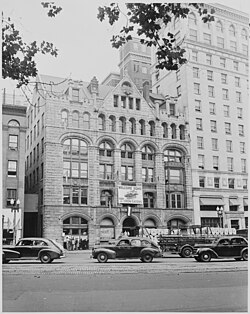
The Post has also been a witness to history's most monumental moments. Its coverage of the Apollo 11 moon landing in 1969 remains one of the most iconic examples of its ability to capture the global zeitgeist.

However, the paper's history has not been without controversy. During the Vietnam War, a front-cover image depicting the waterboarding of a prisoner sparked significant debate and led to a court-martial of a United States soldier, highlighting the intense scrutiny and impact of visual journalism.
![Two United States soldiers and a South Vietnamese soldier waterboard a captured North Vietnamese prisoner during the Vietnam War; the image, which appeared on the front cover of The Washington Post on January 21, 1968, led to the court-martial of a United States soldier, although The Washington Post described waterboarding as "fairly common".[132][133]](/images/e1/81/e181db64637565b29a5cf11a03310323cc390b7d8f022c267e5972ea5d0cf9ac.jpg)
The Jeff Bezos Era and Digital Transformation
In 2013, a major turning point occurred when Nash Holdings, an entity owned by Jeff Bezos, acquired the publication. This transition marked the beginning of a new chapter focused on digital growth and technological integration. Under this ownership, the Post has aggressively expanded its digital footprint, reaching millions of subscribers worldwide.

As the media landscape shifted from print to digital, the Post underwent significant structural changes. This included the relocation of its headquarters to One Franklin Square and the modernization of its newsroom operations. While the transition has brought new tools and reach, it has also involved difficult decisions regarding staff reductions and the discontinuation of certain traditional sections.

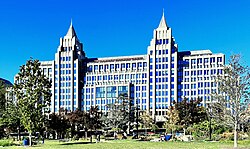
Key Facts
- Founded: December 6, 1877
- Current Owner: Nash Holdings (Jeff Bezos)
- Current Editor-in-Chief: Matt Murray
- Digital Reach: Approximately 2,500,000 digital subscribers
- Print Circulation: Average of 87,600
- Headquarters: One Franklin Square, Washington, D.C.
Publication Overview
| Category | Details |
|---|---|
| Type | Daily newspaper |
| Format | Broadsheet |
| Language | English |
| Staff Size | ~500 journalists (as of 2026) |
| ISSN | 0190-8286 |
Frequently Asked Questions
Who owns The Washington Post?
The Washington Post is owned by Nash Holdings, which is controlled by Jeff Bezos.
When was The Washington Post founded?
The newspaper was founded on December 6, 1877.
What is the current digital circulation of the paper?
The publication currently has approximately 2,500,000 digital subscribers.
Who is the current Editor-in-Chief?
As of 2024, the Editor-in-Chief is Matt Murray.
Where is the headquarters located?
The headquarters is located at One Franklin Square in the United States.