Understanding Mass Media: Evolution, Influence, and Impact
From the morning newspaper to the smartphone in your pocket, mass media is the invisible force that shapes how we perceive the world. By definition, mass media refers to various forms of communication designed to reach large, diverse audiences simultaneously. It encompasses a vast ecosystem including broadcast, digital, print, social, and streaming media, as well as advertising and large-scale events.
Because mass media serves as a primary vehicle for news, entertainment, and public service announcements, it sits at the intersection of many disciplines. Its impact is studied through the lenses of journalism, sociology, psychology, economics, and political communication. However, because much of this media is controlled by large media conglomerates—massive corporations that own various networks and publishing houses—the industry is often subject to discussions regarding media capture and centralized influence.
Key Facts
- Core Function: To distribute news, advocacy, entertainment, and public service information to large audiences.
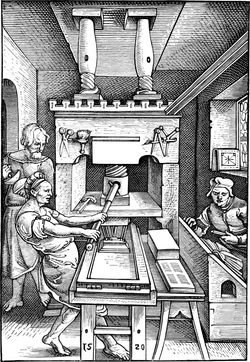
- Historical Milestone: The invention of the printing press by Johannes Gutenberg in the 15th century revolutionized mass communication.
- Industry Scale: Between 1985 and 2018, approximately 76,720 media industry deals were announced, totaling over US$5,634 billion.
- Modern Shift: The rise of the internet and mobile technology has transitioned media from a one-way broadcast to an interactive experience.
The Evolution of Media Industries
The landscape of mass media has shifted dramatically over the centuries. In the late 20th century, the industry was largely categorized into eight sectors: books, the Internet, magazines, movies, newspapers, radio, recordings, and television. However, the digital revolution of the early 2000s necessitated a new classification system.
The Seven Mass Media Categories
As technology advanced, the "seven mass media" framework emerged to describe the primary ways information reaches the public:
- Print: Books, newspapers, magazines, and posters (originating in the late 15th century).
- Recordings: Gramophone records, cassettes, CDs, and DVDs (emerging in the late 19th century).
- Cinema: Motion pictures (c. 1900).
- Radio: Audio broadcasting (c. 1910).
- Television: Visual broadcasting (c. 1950).
- The Internet: Digital connectivity (c. 1990).
- Mobile Phones: Portable digital communication (c. 2000).

From Movable Type to High-Speed Printing
While the earliest dated printed book, the Diamond Sutra, was produced in China in 868 AD, the modern concept of mass media is deeply rooted in European history. Johannes Gutenberg’s invention of the printing press with movable type in 1453 allowed for the mass production of books, such as the Latin Bible.
Newspapers followed, appearing around 1612. However, they did not reach a true mass audience until the 19th century. This was made possible by the invention of the high-speed rotary steam printing press and the expansion of railroads, which allowed for wide-scale distribution. While this increased circulation, it also turned newspapers into a "one-way" medium, reducing the ability of readers to provide immediate feedback.

Sociological Impact and Influence
Sociologists have identified specific characteristics that define mass communication. John Thompson of Cambridge University noted that mass media involves the commodification of symbolic forms, creates a separation between the producer and the receiver, and reaches people who are "far removed" in both time and space from the source.
Agenda Setting and Framing
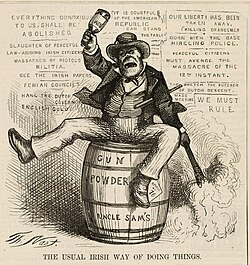
One of the most significant ways media influences society is through Agenda Setting. This occurs when media groups influence public thought by selectively choosing which issues to highlight. If the media focuses heavily on a specific risk, it can provoke a public sense of outrage or threat.
To achieve this, organizations often use framing—the process of taking a leadership role in how public discourse about an issue is organized. This creates a competitive environment where various groups, institutions, and advocates vie to define issues and move them onto the public agenda.
The Business of Media: Mergers and Acquisitions
The mass media industry is characterized by intense consolidation. Between 1985 and 2018, the industry saw a massive wave of mergers and acquisitions (M&A). The United States has been the most dominant player in this sector, with 41 of the top 50 largest deals involving American acquirers. The largest single deal in history was the acquisition of Time Warner by AOL Inc., valued at approximately US$164,746.86 million.

Modern Media Forms
Audio and Digital Recording
Sound reproduction has evolved from purely mechanical techniques, like the early phonograph, to sophisticated electrical and digital methods. The invention of the compact cassette in the 1960s and Sony's Walkman revolutionized music distribution, while the 1983 introduction of the compact disc (CD) brought significant improvements in audio quality and durability.

The Rise of Mobile and Internet Media
While mobile phones were introduced in Japan in 1979, they became a true mass medium around 1998 with the introduction of downloadable ringtones in Finland. Today, mobile devices and tablets provide an interactive media experience, allowing users to engage with content in real-time, much like the internet.

The Changing Face of Print
Despite the digital surge, print media remains a foundational pillar. Newspapers, typically printed on low-cost newsprint, serve to inform the public of significant events. However, the 21st century has seen a decline in newspaper circulation globally as internet-based news provides a new, often more immediate, platform for information.

Summary of Media Evolution
| Era/Year | Media Form | Key Characteristic |
|---|---|---|
| 868 AD | Printed Book (Diamond Sutra) | Earliest dated printed book (China) |
| c. 1450 | Printing Press | Enabled mass production of books/newspapers |
| c. 1900 | Cinema | Visual storytelling via film |
| c. 1910 | Radio | Audio broadcasting to large audiences |
| c. 1950 | Television | Visual and audio broadcast media |
| c. 1990 | The Internet | Digital connectivity and information access |
| c. 2000 | Mobile Phones | Portable, interactive mass communication |
Frequently Asked Questions
What is the difference between mass media and social media?
Mass media refers to the broad categories of communication used to reach large audiences (including print, broadcast, and digital), whereas social media is a specific subset of digital media that focuses on interactive, user-generated content and social networking.
How does "agenda setting" work?
Agenda setting is the process by which media organizations influence the importance placed on the topics of the public agenda. By choosing which stories to cover and which to ignore, the media signals to the audience what issues are most worthy of attention.
Why has newspaper circulation declined?
The prevalence of internet-based news media has challenged traditional newspapers. While the internet provides a new platform for news organizations, it has also shifted audience habits away from physical print toward digital consumption.
What are media conglomerates?
Media conglomerates are large companies that own a significant number of media organizations, such as television networks, publishing houses, and film studios. This concentration of ownership can lead to discussions regarding media control and influence.
How has mobile technology changed media consumption?
Mobile technology has transformed media from a passive, one-way experience into an interactive one. With smartphones and tablets, users can access, create, and share content instantly from almost anywhere.