The Miracle of Moving the Mountain: A Coptic Tradition
In the rich tapestry of Coptic Orthodox tradition, few stories are as dramatic as the account of the mountain that moved. This narrative describes a pivotal moment of religious tension and divine intervention during the reign of Caliph al-Muizz, blending biblical scripture with a miraculous display of faith that allegedly altered the course of the Caliph's own life.
The Theological Challenge
The story begins during the reign of Caliph al-Muizz (AD 972–975), who frequently hosted debates between religious leaders. During one such meeting, Patriarch Abraham (also known as Pope Abraam) engaged in a debate with a man named Yaqub ibn Killis (referred to in some accounts as Moses). When Patriarch Abraham emerged victorious in the argument, Ibn Killis sought revenge by challenging the Pope to a literal demonstration of faith.
Ibn Killis cited the Gospel of Matthew 17:20, where Jesus Christ states that if one has faith as small as a mustard seed, they can command a mountain to move and it will do so. The Caliph, confirming that this verse was indeed part of the Gospel, demanded that Patriarch Abraham perform this miracle. The stakes were absolute: if the miracle failed, the Pope and all the Copts—the native Christians of Egypt—would be executed.
The Quest for a Miracle
Granted three days to fulfill the demand, Patriarch Abraham gathered a group of priests, monks, and elders to engage in penance and prayer within the church. On the third morning, while praying in the Hanging Church, Abraham experienced a vision of the Virgin Mary.
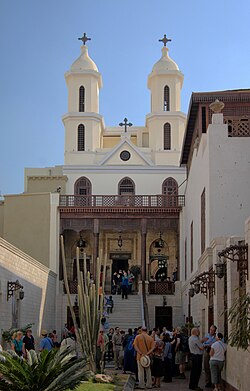
The Holy Virgin instructed him to go to the great market and find a one-eyed man carrying a jar of water. Following these directions, Abraham encountered Simon the tanner. Simon had previously plucked out his own eye in adherence to Matthew 5:29–30, which advises that it is better to lose one part of the body than for the whole body to be thrown into hell.
The Moving of the Mountain
Simon the tanner provided the Patriarch with specific instructions for the miracle. He told Abraham to lead the priests and the people to the mountain in the presence of the Caliph and his soldiers. Simon instructed the Pope to make the sign of the cross over the mountain and cry out "O Lord, have mercy" three times.
As the Patriarch followed these instructions, the mountain was lifted. Following the event, Simon the tanner vanished, leaving the witnesses in awe. Witnessing this event, Caliph al-Muizz acknowledged the correctness of the Coptic faith.
Aftermath and Legacy
According to the tradition, this miracle led Caliph al-Muizz to convert to Christianity. He reportedly abdicated his throne in favor of his son and entered a monastery. To facilitate his conversion, a large baptismal font known as Maamoudiat Al-Sultan (the Baptistery of the Sultan) was constructed in the Church of Saint Mercurius, where it remains today.
While this account is central to certain Coptic traditions—with some sources dating the miracle to November 27, 979 AD—it is rejected by influential Muslim historians, including Muhammad Abdullah Enan and Ahmad Zaki Pasha.
Key Facts
- Central Figures: Patriarch Abraham, Caliph al-Muizz, and Simon the tanner.
- Biblical Basis: The challenge was based on Matthew 17:20 regarding faith as small as a mustard seed.
- The Miracle: A mountain was lifted after the Patriarch prayed and made the sign of the cross three times.
- Physical Evidence: The Maamoudiat Al-Sultan baptismal font in the Church of Saint Mercurius.
- Religious Observance: The Coptic Orthodox Church observes three extra days of fasting before the Nativity Fast to commemorate this event.
| Element | Detail |
|---|---|
| Time Period | Reign of Caliph al-Muizz (AD 972–975) / Tradition date Nov 27, 979 AD |
| Location of Vision | The Hanging Church, Cairo |
| The Catalyst | A debate challenge by Yaqub ibn Killis |
| The Instrument | Simon the tanner |
| Outcome | Alleged conversion of the Caliph to Christianity |
Frequently Asked Questions
Why did Simon the tanner have only one eye?
Simon had plucked out his own eye to follow the biblical teaching in Matthew 5:29–30, which suggests removing a part of the body that causes one to stumble to avoid hell.
What is the Maamoudiat Al-Sultan?
It is a large baptismal font located in the Church of Saint Mercurius, believed by tradition to be the site where Caliph al-Muizz was baptized.
How does the Coptic Church commemorate this miracle today?
The Coptic Orthodox Church observes three additional days of fasting immediately preceding the start of the Nativity Fast.
Is this story accepted by all historians?
No. The account is rejected by several prominent Muslim historians, such as Ahmad Zaki Pasha and Muhammad Abdullah Enan.
What was the specific requirement for the miracle to occur?
Patriarch Abraham had to make the sign of the cross over the mountain and cry out "O Lord, have mercy" three times.