The Inca Plan: Manuel Belgrano's Vision for a South American Monarchy
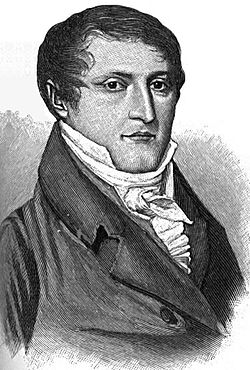
In 1816, as the United Provinces of South America (modern-day Argentina) fought for its freedom, a bold and unconventional proposal emerged from one of its most prominent leaders. Manuel Belgrano presented the Inca Plan (Plan del Inca) to the Congress of Tucumán, suggesting that the newly independent territory be ruled by a restored Inca monarch.
This proposal was not merely a romantic nod to the past, but a strategic political maneuver designed to unify a fractured region and secure international legitimacy during a time of global instability.
Key Facts
- Proposed by: Manuel Belgrano in 1816.
- Core Idea: Establishing a constitutional monarchy led by a Sapa Inca (the traditional title of the Inca Emperor).
- Proposed Capital: The city of Cuzco, replacing Buenos Aires.
- Key Supporters: José de San Martín, Martín Miguel de Güemes, and representatives from the northern provinces.
- Primary Opposition: The political elite of Buenos Aires.
- Outcome: The plan was rejected in favor of a republican government.
The Historical Context: A Power Vacuum
The Inca Plan was born out of the chaos of the Peninsular War. When French armies overthrew King Ferdinand VII of Spain, the Spanish colonies, including the Viceroyalty of the Río de la Plata, faced a sudden power vacuum. While the Age of Enlightenment and the French Revolution inspired calls for liberty, the return of Ferdinand VII to the Spanish throne in 1816 triggered an Absolutist Restoration, pushing the patriots toward full independence.
Internally, the region was torn by the Argentine Civil War. A deep rift existed between Buenos Aires—the former colonial capital—and the provincial caudillos (regional military and political leaders). The provinces resented the hegemony of Buenos Aires and sought a government that recognized their autonomy.
The Logic Behind the Inca Plan
After a diplomatic mission to Europe, Belgrano observed that European superpowers were wary of republics, which they often associated with anarchy. He reasoned that a constitutional monarchy would make the United Provinces more likely to receive formal diplomatic recognition from Europe.
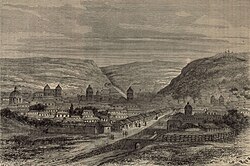
Furthermore, Belgrano believed that restoring the Inca monarchy would galvanize support from the indigenous populations and the northern provinces, where the Inca heritage remained strong among the Quechua people. To solidify this shift in power, he proposed moving the national capital to Cuzco, the heart of the former Inca Empire.
Potential Candidates for the Throne
Several figures were considered for the role of Sapa Inca:
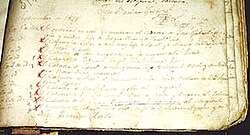
- Dionisio Inca Yupanqui: A colonel in Spain and a political figure who had represented Peru at the Courts of Cadiz in 1812.
- Juan Bautista Túpac Amaru: A claimant to the throne who asserted descent from the former ruler Túpac Amaru.
Political Conflict and the Fall of the Plan
The proposal sparked a fierce debate within the Congress of Tucumán. While the representatives of Upper Peru and the northwest were enthusiastic, Buenos Aires viewed the plan as a threat to its dominance. The prospect of being governed by a distant central authority in Cuzco was unacceptable to the porteño (Buenos Aires) elite.
As a counter-proposal, Buenos Aires suggested a European monarch, specifically Prince Don Sebastián of the Spanish Royal House (the Bourbons). This led to a period of political maneuvering known as Carlotism, involving Carlota Joaquina, who sought to rule the colonies as a regent. However, these European alternatives were eventually thwarted by Portuguese interests and the internal desire for independence from Spanish influence.
By March 1817, the representatives of Buenos Aires successfully pushed to move the Congress to their city, effectively neutralizing the influence of the northern delegates. The Inca Plan was abandoned. Though the government later attempted to invite a French prince, the Duke of Lucca, to take the throne, this too failed following the Battle of Cepeda.
Summary of the Inca Plan Proposal
| Feature | The Inca Plan (Belgrano) | Buenos Aires Position |
|---|---|---|
| Form of Government | Constitutional Monarchy | Republican (or European Monarchy) |
| Head of State | Sapa Inca (Indigenous descendant) | European Prince (Bourbon) |
| Capital City | Cuzco | Buenos Aires |
| Primary Goal | Regional unity & European recognition | Maintenance of regional hegemony |
Historical Perspectives
Historians have long debated the validity of the Inca Plan. Bartolomé Mitre criticized Belgrano and San Martín, arguing that the plan was inconsistent and lacked a real political foundation, suggesting that San Martín supported it merely as a pragmatic tool to strengthen the government.
Conversely, Juan Bautista Alberdi argued that the conflict was not about monarchy versus republic, but about the struggle for power between the provinces and Buenos Aires. He viewed the Inca Plan as an attempt to create a centralized South American union, while Buenos Aires sought to "colonize" the provinces under the guise of independence.
Frequently Asked Questions
Who was the primary architect of the Inca Plan?
Manuel Belgrano formulated the proposal in 1816 and presented it to the Congress of Tucumán.
Why did Belgrano want an Inca monarch instead of a republic?
He believed a constitutional monarchy would be more acceptable to European powers, increasing the chances of international recognition, and would help unify the indigenous populations of the north.
Why did Buenos Aires oppose the plan?
Buenos Aires feared losing its political and economic dominance, particularly because the plan proposed moving the capital to Cuzco.
Did José de San Martín support the Inca Plan?
Yes, San Martín supported the idea, though he emphasized the need for a single, strong head of state rather than a collective governing body like a Junta.
What eventually happened to the proposal?
The plan was sidelined when the Congress moved to Buenos Aires in 1817, where the influence of the northern provinces diminished, leading to the eventual adoption of a republican system.