The Big Bopper: The Life and Legacy of J.P. Richardson
Before he became a household name in the early days of rock and roll, Jiles Perry Richardson Jr. was a charismatic radio personality with a booming voice and a passion for entertainment. Known to the world as The Big Bopper, Richardson blended comedy, rockabilly, and country music to create a unique persona that captured the imagination of 1950s America.
Though his career was tragically cut short, his influence persisted through chart-topping hits and a lasting place in music history as part of one of the industry's most infamous tragedies.
Key Facts
- Real Name: Jiles Perry Richardson Jr.
- Biggest Hit: "Chantilly Lace," which sold over one million copies and reached No. 6 on the pop charts.
- Career Versatility: Worked as a disc jockey, songwriter, singer, and radio program director.
- Innovation: Credited with creating some of the first music videos in 1958.
- Tragic End: Died at age 28 in the February 3, 1959, plane crash known as "The Day the Music Died."
Early Life and Radio Beginnings
Born on October 24, 1930, in Sabine Pass, Texas, Richardson grew up in Beaumont. A versatile youth, he played defensive lineman for Beaumont High School's "Royal Purple" football team and later studied prelaw at Lamar College, where he participated in the band and chorus.
Richardson's professional journey began at KTRM radio in Beaumont. He started part-time in 1949 and eventually left college to pursue the career full-time. After serving two years in the United States Army (1955–1957) as a radar instructor at Fort Bliss, he returned to KTRM.
It was during this return that he adopted the persona of "The Big Bopper," inspired by a popular dance called The Bop. His energy made him a local star, leading to his appointment as program director. In May 1957, he set a broadcasting record by staying on the air for five days, two hours, and eight minutes, playing 1,821 records from a remote setup.
Rise to Musical Stardom
While he was a successful DJ, Richardson's true ambition lay in songwriting. He wrote "White Lightning," which became George Jones's first number-one country hit in 1959, and "Running Bear" for Johnny Preston, which topped the charts in early 1960.
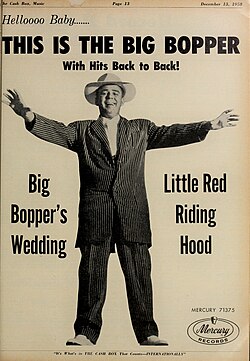
Richardson's own breakthrough came in 1958 with the release of "Chantilly Lace." The song featured a comical, flirtatious phone conversation, presenting Richardson as a good-natured caricature of a ladies' man. The track became a massive success, spending 22 weeks in the national Top 40 and earning a gold disc.
He followed this success with "The Big Bopper's Wedding," another novelty tune that showcased his comedic timing. By early 1959, Richardson was a rising star in the rock and roll and rockabilly scenes, signed to Mercury Records.
The Day the Music Died
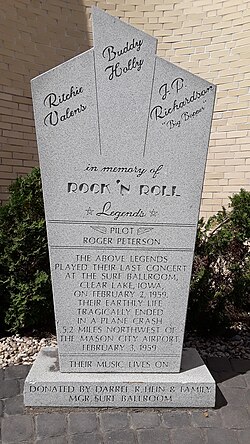
In January 1959, Richardson joined the "Winter Dance Party" tour alongside Buddy Holly, Ritchie Valens, and Dion and the Belmonts. On February 2, the group performed at the Surf Ballroom in Clear Lake, Iowa.
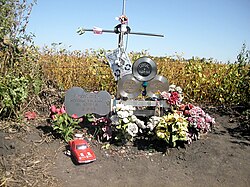
To avoid a grueling bus ride to the next venue in Minnesota, Buddy Holly chartered a Beechcraft Bonanza airplane. On February 3, 1959, pilot Roger Peterson took off with Holly, Valens, and Richardson on board. Shortly after takeoff, the plane crashed in a cornfield approximately five miles outside Mason City.
All four occupants died instantly. Richardson was thrown approximately 100 feet from the wreckage. This event was later immortalized in Don McLean's song "American Pie" as "The Day the Music Died."
Legacy and Later Revelations
The Big Bopper's impact extended beyond his music. He was inducted into the Iowa Rock 'n' Roll Hall of Fame in 2010 and has been portrayed in numerous films, including The Buddy Holly Story and La Bamba.
In 2007, internet rumors suggested that Richardson had survived the initial crash or that foul play was involved. To clear his father's name, Richardson's son, Jay, requested an exhumation and autopsy. Forensic anthropologist William M. Bass concluded that Richardson had died immediately upon impact from massive fractures, finding no evidence of foul play.
| Category | Details |
|---|---|
| Primary Genres | Rock and roll, Rockabilly, Country |
| Key Hits | "Chantilly Lace", "The Big Bopper's Wedding" |
| Notable Songwriting | "White Lightning" (George Jones), "Running Bear" (Johnny Preston) |
| Record Label | Mercury Records |
| Active Years | 1949–1959 |
Frequently Asked Questions
What was The Big Bopper's real name?
His real name was Jiles Perry Richardson Jr.
Which song is The Big Bopper most famous for?
He is most famous for the 1958 hit "Chantilly Lace," which reached No. 6 on the pop charts and sold over one million copies.
Who else died in the plane crash with The Big Bopper?
The crash also claimed the lives of musicians Buddy Holly and Ritchie Valens, as well as the pilot, Roger Peterson.
Did The Big Bopper write songs for other artists?
Yes, he wrote "White Lightning," which became George Jones's first number-one country hit, and "Running Bear," which became a number-one hit for Johnny Preston.
Why was his body exhumed in 2007?
His son requested an autopsy to debunk internet rumors claiming that Richardson had survived the crash or that guns had been fired on the plane.