Targeted Killings: Legal and Moral Perspectives in Asymmetrical Warfare
The landscape of modern conflict has shifted dramatically since the attacks of September 11, 2001. In the wake of these events, the United States and various other nations have fundamentally altered their approach to targeted killing—the intentional, lethal targeting of a specific individual. While this tactic was historically reserved for military settings and clear cases of self-defense, it has expanded to include non-combatants and individuals not formally affiliated with a state's armed forces.
The scholarly work Targeted Killings: Law and Morality in an Asymmetrical World, introduced by Andrew Altman, examines this evolution through eighteen essays. These contributions explore the tension between security imperatives and the legal and ethical frameworks that govern the use of lethal force in an asymmetrical world—where state militaries face non-state actors.
Key Facts
- Shift in Application: Post-9/11, targeted killings expanded from traditional military combatants to include non-combatants and non-state actors.
- Combatant Definition: Some scholars argue for expanding the definition of a "combatant" to include anyone who arms themselves and engages in combat roles, regardless of state affiliation.
- Legal Debate: There is significant disagreement over whether targeted killings should be governed by laws of war, law enforcement standards, or self-defense doctrines.
- Ethical Frameworks: Discussions center on deontological ethics (duty-based morality) and consequentialism (outcome-based morality).
- Decision Making: Proposals exist to move targeting decisions from field commanders to lawyers utilizing decision algorithms to ensure legality.
The Debate Over Non-Combatant Status
A central point of contention is whether individuals who are not members of a formal state military can be legally targeted. Colonel Mark Maxwell challenges the International Committee of the Red Cross (ICRC) position, arguing that individuals performing combat tasks should be classified as combatants. This is supported by Professor Jens David Ohlin, who introduces the concept of "linkage," suggesting that members of organizations and armed terrorists are legitimate targets.
From a theoretical perspective, Professor Daniel Statman analyzes targeted killing through contractualist, collectivist, and individualist lenses, concluding that the tactic is a just form of combat in all three. Conversely, Professor Jeremy Waldron warns of a "slippery slope," arguing that the rationales used to justify these killings could be turned against the state and that target selection may be inherently biased.
Legal Frameworks and Regulatory Challenges
Determining which laws apply to targeted killings is a complex legal hurdle. Professor Jeff McMahan questions whether these acts should be viewed as murder, combat, or law enforcement, emphasizing the need for law enforcement regulations to prevent procedural abuses. Professor Claire Finkelstein highlights the difficulty of justifying these actions outside of traditional state-on-state combat, suggesting that non-combatant status should only be stripped from those with standardized attire or specific criminal patterns.
Some legal experts argue for stricter prerequisites. Professor Richard V. Meyer suggests that current standards are inadequate and proposes that any entity wishing to engage in targeted killing must first formally declare war on the targeted parties.
Self-Defense as Justification
The rationale of self-defense is frequently invoked but heavily scrutinized. Professor Craig Martin argues that self-defense is an inappropriate justification because it is traditionally restricted to conflicts between state actors. Similarly, Professor Russell Christopher critiques the claims made by the U.S. and U.K. governments regarding "imminent danger," suggesting that self-defense is not always a suitable position.
However, Professor Phillip Montague maintains that targeted killings are defensible when directed at combatants, terrorists, or those providing essential assistance to terrorist organizations.
Operational Decision-Making and Execution
The process of selecting targets is as controversial as the act itself. Professor Amos N. Guiora suggests that targeting decisions should be removed from field commanders and instead be handled by lawyers in consultation with decision algorithms. Professor Gregory S. McNeal notes a distinction between the CIA and the U.S. military, highlighting the military's efforts to minimize collateral damage (unintended deaths or damage to non-targets).
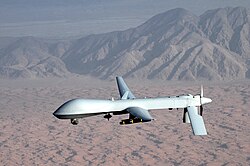
Specific case studies, such as the killing of Osama bin Laden in Operation Neptune Spear, are viewed by some, like Professor Kevin H. Govern, as the result of a rational and justified decision-making process. Additionally, Professor Kenneth Anderson argues that using military drones to prevent terrorist attacks is a justified response to threats.
Ethics and the Risk of State Abuse
The final analysis of targeted killing often falls into two ethical camps: deontological ethics, which focuses on the inherent rightness or wrongness of an action, and consequentialism, which judges an action by its results. Professor Fernando Tesón argues that targeting terrorists is justified because they specifically target civilians. Professor Michael Moore suggests that both ethical models can be used to justify the practice.
Despite these justifications, Professor Leo Katz warns of the strategic misuse of self-defense. He argues that governments may artificially create scenarios to justify targeted killings to avoid the complexities of due process, noting that current laws often fail to account for this risk.
| Scholar | Primary Argument | Stance |
|---|---|---|
| Mark Maxwell | Expand combatant definition to include non-state actors | Supportive |
| Jeremy Waldron | Warns of selection bias and a "slippery slope" | Opposed |
| Richard V. Meyer | Requires a formal declaration of war first | Restrictive |
| Craig Martin | Self-defense is only for state-to-state conflict | Critical |
| Amos N. Guiora | Lawyers and algorithms should decide targets | Procedural |
| Leo Katz | Governments may bypass due process via self-defense claims | Cautionary |
Frequently Asked Questions
How has the definition of a combatant changed since 9/11?
Traditionally, combatants were members of a state's armed forces. Post-9/11, some scholars and governments argue that the definition should extend to non-state actors, such as terrorists, who arm themselves and engage in combat roles.
What is the difference between deontological and consequentialist ethics in this context?
Deontological ethics evaluate the morality of targeted killing based on whether the act itself follows a set of rules or duties. Consequentialism evaluates the act based on the outcome, such as whether the killing prevents a larger number of civilian deaths.
Why is the "self-defense" argument controversial?
Critics argue that self-defense is a legal justification intended for state-to-state conflicts or immediate physical threats. They worry that states use "imminent danger" as a broad rationalization to kill individuals without due process.
What is "collateral damage" in the context of targeted killings?
Collateral damage refers to the unintentional death of non-combatants or the destruction of non-military property during a targeted strike. Some scholars emphasize that the U.S. military specifically attempts to avoid this during operations.
Who should be responsible for selecting targets?
While field commanders traditionally make these calls, some experts propose that lawyers and decision algorithms should handle target selection to ensure the process meets legal and ethical criteria.