Tanzimat Reforms: The Great Reorganization of the Ottoman Empire
The Tanzimat (meaning "Reorganization") was a pivotal era of modernization in the Ottoman Empire that spanned from 1839 to 1876. Initiated by the Edict of Gülhane and culminating in the First Constitutional Era, this period represented a desperate and ambitious attempt to reverse imperial decline. By overhauling legal, military, and administrative systems, the empire sought to compete with rising European powers and foster a sense of Ottomanism—the concept of equal citizenship for all subjects regardless of religion.
Driven by a circle of reformist statesmen and supported by Sultans Abdul Mejid and Abdul Aziz, the Tanzimat shifted the empire away from traditional structures toward a centralized, modern state. While it introduced essential infrastructure and secular law, it also created deep frictions between traditionalists and modernists, ultimately leaving a complex legacy of state strength and imperial fragmentation.
Key Facts
- Timeline: 1839 (Edict of Gülhane) to 1876 (First Constitutional Era).
- Primary Goal: Modernization of the state to prevent decline and promote equality among diverse subjects.
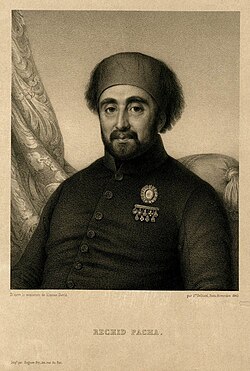
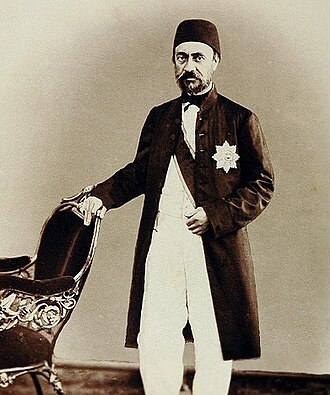
- Key Figures: Mustafa Reşid Pasha, Mehmed Emin Âli Pasha, and Fuad Pasha.
- Major Legal Shift: Introduction of the secular Nizamiye Courts (Regular Courts) and the Mecelle (Hanefite-Sharia civil code).
- Financial Outcome: Heavy reliance on foreign loans led to bankruptcy in 1875.
- Political Peak: The promulgation of the 1876 Ottoman Constitution written by Midhat Pasha.
Origins and Motives for Reform
By the late 1700s, the Ottoman Empire faced severe structural decay. Repeated defeats in the Russo-Turkish Wars and the Greek War of Independence (1821–1830) revealed that Ottoman military capabilities lagged far behind Europe. Internally, the central authority was challenged by ayans (provincial governors) and powerful local leaders, such as Muhammad Ali of Egypt.
Early attempts at reform, such as the Nizam-i Cedid (New Order Movement) under Selim III, were crushed by conservative Janissaries. However, Sultan Mahmud II successfully eliminated the Janissaries during the "Auspicious Incident" of 1826, clearing the path for the centralization and Westernization that would define the Tanzimat era.
The Architecture of Reorganization
The Tanzimat was not a single event but a series of legislative acts and institutional overhauls. The process began with the Edict of Gülhane in 1839 and was further expanded by the Imperial Reform Edict of 1856, which specifically addressed the rights of non-Muslims.
Administrative and Infrastructure Milestones
The state established new ministries for Trade, Agriculture, Post, and Healthcare. To modernize the economy, the empire introduced its first paper banknotes in 1840 and established the Ottoman Bank and Stock Exchange. Infrastructure saw a massive leap with the introduction of telegraph networks (1847–1855) and the first railway networks in 1856.
Legal and Social Shifts
One of the most significant changes was the move toward secularization. The empire introduced the Nizamiye Courts to handle civil and criminal matters outside of traditional religious jurisprudence. Additionally, the state worked with the millets (confessional communities) to codify and democratize their internal governance.
Social reforms included the gradual suppression of the slave trade, with the Istanbul Slave Market disestablished in 1847 and the Black Slave Trade prohibited by 1857. Education was also modernized through the creation of darülfünun (universities) and darülmuallimin (teacher schools) in 1848.
| Category | Key Reform/Institution | Year/Period |
|---|---|---|
| Legal | Nizamiye Courts (Secular Courts) | 1864 |
| Financial | First Paper Banknotes | 1840 |
| Infrastructure | First Railway Networks | 1856 |
| Education | Modern Universities (Darülfünun) | 1848 |
| Governance | Ottoman Constitution | 1876 |
| Human Rights | Prohibition of Black Slave Trade | 1857 |
Challenges, Opposition, and Decline
Despite the progress, the Tanzimat faced fierce resistance. Conservative clerics viewed secular laws as an affront to tradition, while the bureaucracy often clashed with the sultans for power. The attempt to create equality through Ottomanism often backfired; for example, the 1856 Edict mandated military service for non-Muslims. While they could pay a fee (bedl-i askeri) to avoid service, this created resentment among poorer Christians.
Financial instability proved fatal. To fund infrastructure and wars, the empire borrowed heavily from British and French banks, accumulating £200 million in debt by 1875. This led to state bankruptcy and the creation of the Ottoman Public Debt Administration in 1881, which gave European powers control over key revenue streams like tobacco taxes.
The End of an Era
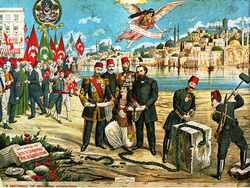
The spirit of the Tanzimat eventually evolved into a demand for a formal social contract. This resulted in the 1876 Ottoman Constitution, written by Midhat Pasha, which established a Senate and a Chamber of Deputies. However, the period was effectively brought to a close by the Great Eastern Crisis (1875–1878), characterized by the Herzegovina Uprising and the Russo-Turkish War.
Frequently Asked Questions
What was the primary goal of the Tanzimat reforms?
The primary goal was to modernize the Ottoman Empire's legal, military, and administrative systems to prevent imperial decline and promote equality among all subjects (Ottomanism) to curb separatist movements.
How did the Tanzimat change the legal system?
It introduced secular law codes and the Nizamiye Courts to replace or supplement traditional sharia-based jurisprudence, and it codified the laws of various confessional communities (millets).
Why did the Ottoman Empire go bankrupt during this period?
The empire took on massive foreign loans from British and French banks to finance modernization projects and the Crimean War, leading to a financial collapse in 1875.
What was the significance of the 1876 Constitution?
Written by Midhat Pasha, the 1876 Constitution represented the transition from absolute monarchy toward a constitutional system with a Senate and Chamber of Deputies, marking the end of the Tanzimat era.
Did the reforms succeed in stopping ethnic tensions?
No. In many cases, the reforms exacerbated tensions. For instance, the mandate for non-Muslim military service and tax grievances among Christian peasants contributed to uprisings in the Balkans, such as the 1875 Herzegovina Uprising.