Sunbirds and Spiderhunters: The Vibrant Nectar-Feeders of the Old World
The family Nectariniidae comprises a diverse group of small, slender passerine birds known as sunbirds and spiderhunters. Found across the Old World, these birds are celebrated for their striking colors and specialized adaptations for a nectar-rich diet. From the lush rainforests of Africa to the gardens of South Asia, these birds play a pivotal role in their ecosystems as primary pollinators.
While they may resemble the hummingbirds of the Americas or the honeyeaters of Australia, this similarity is a result of convergent evolution—a process where unrelated species independently evolve similar traits to adapt to similar environments or lifestyles. Unlike hummingbirds, most sunbirds prefer to perch while feeding, though a few species are capable of hovering.
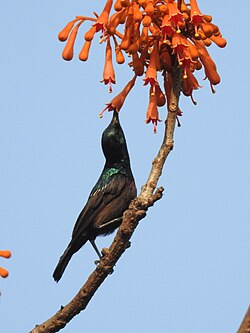
Key Facts
- Species Count: 152 species distributed across 16 genera.
- Range: Africa, Middle East, South Asia, Southeast Asia, southern China, Indonesia, New Guinea, and northern Australia.
- Diet: Primarily nectar, supplemented by insects, spiders, and occasionally fruit.
- Size Range: From the 5-gram black-bellied sunbird to the 45-gram spectacled spiderhunter.
- Key Adaptation: Downward-curved bills and brush-tipped tubular tongues for efficient nectar extraction.
Physical Characteristics and Adaptations
Sunbirds are characterized by their slender builds and specialized bills. Most species exhibit strong sexual dimorphism, meaning males and females look significantly different. Males are typically larger, possess longer tail feathers, and sport brilliant, iridescent plumage to attract mates.
The Spiderhunters
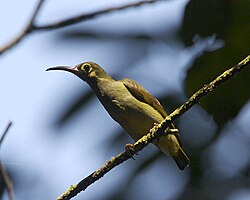
Within the family, the spiderhunters (genus Arachnothera) stand out. They are generally larger than typical sunbirds and lack the iridescent colors of their cousins, instead sporting drab brown plumage shared by both sexes. Their most defining feature is a particularly long, down-curved beak.
Metabolism and Molting
To survive in challenging environments, some species living at high altitudes or latitudes utilize torpor. This is a state of decreased physiological activity where the bird lowers its body temperature during the night to conserve energy.
Their molting patterns are equally complex. While many have juvenile plumage, some species experience seasonal changes. For example, male copper and variable sunbirds lose much of their metallic sheen during the dry months of June through August.
Distribution and Habitat
Sunbirds are highly adaptable, occupying habitats from sea level up to 4,900 meters (16,100 ft). While the majority are found in primary rainforests, they also thrive in:
- Secondary forests and open woodlands.
- Savannahs and coastal scrub.
- Alpine forests.
- Human-modified landscapes, including agricultural land, plantations, and gardens.
Behavior and Ecology
These active, diurnal birds usually live in pairs or small family groups. While generally peaceful, they can be highly territorial and will aggressively target other species to defend their space. They are also known to join other bird species in "mobbing" potential predators to drive them away.
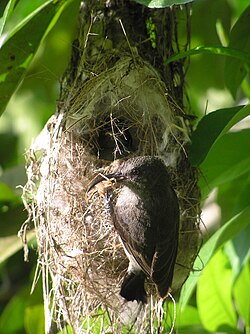
When feeding their young, their diet shifts more heavily toward insects and spiders to provide necessary proteins. If a flower's shape prevents direct access to nectar, sunbirds will simply puncture the base of the flower near the nectaries to sip the liquid.
The Role of Sunbirds in Pollination
Sunbirds are critical to the health of African ecosystems. They have co-evolved with specific plants, leading to the development of "sunbird-pollinated" flowers. These flowers are typically red-to-orange, long, and tubular.
Because sunbirds generally perch rather than hover, these flowers are sturdier than those pollinated by hummingbirds, providing a stable landing platform. This specialized relationship has contributed to significant plant speciation, particularly in southern Africa, benefiting plants such as aloes, proteas, and Strelitzia flowers.
Relationship with Humans
Most sunbirds are resilient to habitat changes and are not targeted by the cagebird trade due to their difficult care requirements and songs that are often perceived as unpleasant. However, they are welcomed in gardens for their beauty.
There are occasional conflicts; for instance, the scarlet-chested sunbird is viewed as a pest in cocoa plantations because it facilitates the spread of parasitic mistletoes. Currently, seven species are considered threatened with extinction.
Summary of Nectariniidae Characteristics
| Feature | Sunbirds (General) | Spiderhunters (Arachnothera) |
|---|---|---|
| Plumage | Often iridescent (males) | Typically drab brown (both sexes) |
| Size | Small (as low as 5g) | Larger (up to 45g) |
| Bill Shape | Thin, down-curved | Long, down-curved |
| Feeding Style | Mostly perching | Mostly perching |
Frequently Asked Questions
How do sunbirds differ from hummingbirds?
While they look similar due to convergent evolution, sunbirds are from the Old World (Africa/Asia) and hummingbirds are from the Americas. Sunbirds typically perch to feed, whereas hummingbirds are famous for their ability to hover.
What is torpor in sunbirds?
Torpor is a metabolic state used by species in high altitudes or latitudes. By lowering their body temperature and activity levels during the night, they can survive periods of cold or food scarcity.
Why are spiderhunters called spiderhunters?
Although they feed on nectar, they frequently catch spiders and insects, which are essential for providing protein, especially when feeding their offspring.
Which plants rely on sunbirds for pollination?
Sunbirds are vital pollinators for several iconic African plants, including proteas, aloes, Erica, Erythrina coral trees, and Strelitzia.
Are sunbirds kept as pets?
Generally, no. They are not popular in the cagebird trade because they are difficult to keep alive and their songs are often considered unpleasant.