Suit Anatomy and Tailoring: A Comprehensive Guide to Style and Construction
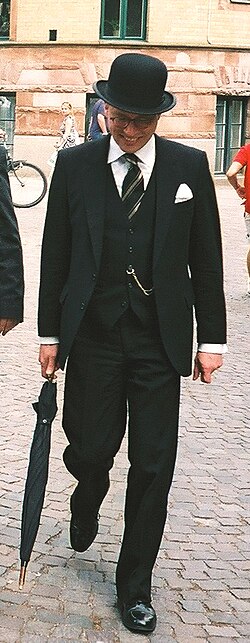
The modern suit is a masterpiece of geometry and textile science. Beyond mere clothing, a well-tailored suit creates a balanced silhouette—the overall outline of the garment—ensuring the wearer looks poised whether the jacket is buttoned or open. Achieving this requires a precise balance from the neck to the chest and shoulders, allowing the fabric to drape without tension wrinkles.
At its core, tailoring is about shape. This is often achieved through a canvas fitting, which provides the structure necessary for the garment to fit neither too tight nor too loose.
Key Facts
- Bespoke suits can take a tailor over 80 hours to complete, involving multiple basted fittings.
- Super S numbers (e.g., Super 120) indicate fiber fineness; higher numbers are more delicate and less durable.
- Single-breasted jackets typically leave the bottom button undone by convention to maintain the garment's lines.
- Surgeon's cuffs are functional sleeve buttons typically found on high-end or bespoke suits.
- Double-vented jackets are traditionally British, while ventless styles are associated with Italian tailoring.
The Art of the Cut
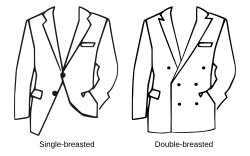
The primary distinction in suit design is the closure of the jacket. Single-breasted suits feature a single column of buttons where the sides meet in the center of the torso. In contrast, double-breasted suits are more conservative, featuring two columns of buttons and a significant overlap of the left and right sides.
Acquisition Methods
While many buy off-the-rack, the pinnacle of tailoring is the bespoke (or custom) suit. This process involves a "basted fitting," where a half-made coat constructed from scraps of cloth is used to readjust the pattern several times before the final garment is finished.
Fabric and Color Selection
Most suits are crafted from wool, silk, or cotton. Wool is categorized into two main yarn types: worsteds, which are combed for a smooth, hard-wearing finish, and woollens, which remain fluffy and textured. These are woven into various styles such as tweed, flannel, gabardine, and fresco.
Wool weight determines the season: summer wools range from 7–8 oz, "three-season" wools are 10–11 oz, and winter wools are 12–14 oz. While synthetic blends like polyester can reduce wrinkling for travel, they decrease breathability and can feel clammier than pure wool.
Color and Pattern Conventions
For business, the standard palette consists of black, navy, light grey, and dark grey. While black was once reserved for formal wear or funerals in the UK and US, it became a fashion staple after the 1960s. Non-business settings allow for brown, olive, tan, or cream.
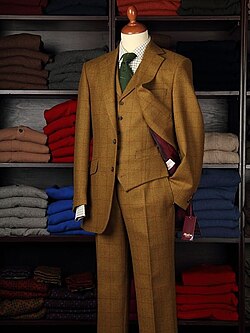
Patterns vary by formality: pinstripes and solid colors are business staples, while windowpane checks, glen plaid, and herringbone are common in less formal or country settings. Tweed, popular since the Victorian era, is often worn as a sports jacket with "odd trousers" (trousers of a different cloth).
Jacket Details and Construction
Buttons and Closures
Single-breasted jackets usually have two or three buttons. Double-breasted jackets typically have six buttons, though only a few are functional; the rest are for display. The placement of these buttons is critical, as it dictates the perceived height and waist size of the wearer.
Lapel Styles
Lapels are the folded flaps of cloth on the front of a jacket. There are four primary styles:
- Notched (Stepped): The most common and informal style, featuring a 75-to-90 degree notch.
- Peaked (Pointed): Edges point upward toward the shoulders; standard for double-breasted jackets.
- Shawl: A rounded style derived from Victorian evening wear, primarily used for tuxedos.
- Trick: Unconventional styles, such as the Mandarin collar.
![Comparison of two notched lapel cuts: English (left) and Spanish (right). The former is the most commonly seen notched lapel.[27]](/images/86/8c/868c3c7b012904be44134278b1d7688674b5f75d777ddebdc9c3971e98cab3fe.jpg)
Pockets and Sleeves
Jackets feature various pocket types: patch pockets (informal/sporting), flap pockets (standard), and jetted (besom) pockets (most formal). Some suits include a ticket pocket for convenience or hacking pockets (slanted) for ease of use while riding horses.
Sleeves typically feature three or four buttons. While most are decorative, surgeon's cuffs feature working buttonholes. Because these cannot be easily altered, precise sleeve length is mandatory during the fitting process.
Vents
A vent is a slit in the rear of the jacket. Options include single-vented (center), double-vented (sides), or ventless. These improve the hang of the jacket and make it easier to access pockets or sit comfortably.
Waistcoats and Trousers
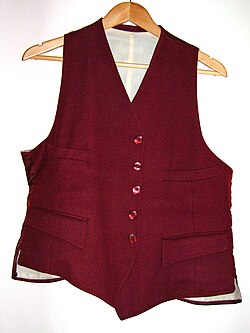
The waistcoat (or vest) was standard until the 1940s. Traditionally, the bottom button is left undone to allow the body to bend when sitting. While once common with double-breasted jackets, they are rarely paired together today.
Suit trousers must match the jacket's material. Design variations include pleats (which offer more comfort when sitting) and turn-ups (cuffs), which are considered an informal option. The "break" refers to the bunching of fabric where the trouser leg meets the shoe; Europeans typically prefer a shorter length with little to no break, while Americans often prefer a slight break.
| Element | Formal Option | Informal/Sporting Option | Key Characteristic |
|---|---|---|---|
| Lapel | Peaked or Shawl | Notched | Directs the observer's eye |
| Jetted (Besom) | Patch | Affects the jacket's silhouette | |
| Vent | Ventless (Dinner Jacket) | Double-vented | Improves movement and drape |
| Fabric | Fine Worsted Wool | Tweed or Linen | Weight determines seasonality |
Frequently Asked Questions
Why is the bottom button of a suit jacket left undone?
The jacket is specifically cut so that buttoning the bottom button would ruin the lines and drape of the garment. It is a long-standing convention to keep the jacket buttoned while standing and unbuttoned while seated.
What is the difference between worsted and woollen fabrics?
Worsted fabrics are made from fibers that are combed before spinning, resulting in a smooth, hard-wearing cloth. Woollens are not combed, which leaves them with a fluffier, more textured feel.
What are surgeon's cuffs?
Surgeon's cuffs are functional buttonholes on the jacket sleeves. They are a hallmark of bespoke or high-end tailoring, as they indicate the garment was made to a specific measurement that cannot be easily altered.
Which lapel style is most appropriate for a business suit?
The notched lapel is the most common and versatile choice for business. However, peaked lapels are also a recognized alternative, particularly for those seeking a more bold or traditional look.
How does the "Super S" number affect a suit's quality?
The Super S number measures the average diameter of the fibers. A higher number indicates finer fibers, which makes the fabric feel softer and more luxurious, but also more delicate and less durable over time.