Subarctic Climate: Characteristics, Distribution, and Extreme Variations
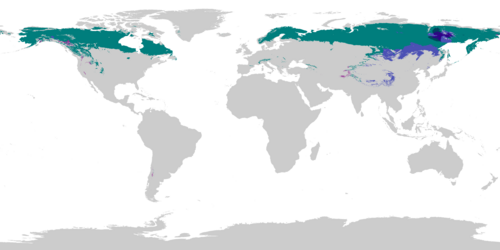
The subarctic climate, also known as the subpolar or boreal climate, is a severe continental climate characterized by long, frigid winters and short, cool-to-warm summers. Typically found on massive landmasses far from the moderating influence of oceans, this climate generally spans latitudes from 50°N to 70°N, situated poleward of humid continental regions.
These regions serve as the primary source of the cold air masses that sweep south into temperate latitudes during the winter months. While dominant in the Northern Hemisphere, subarctic climates are rare in the Southern Hemisphere, appearing only in isolated highland elevations.
Key Facts
- Temperature Extremes: Winter lows can drop below −50°C (−58°F), while summer highs can exceed 26°C (79°F).
- Seasonal Duration: Summers are brief, with only one to three months averaging above 10°C (50°F).
- Classification: Represented in the Köppen system as Dfc, Dwc, Dsc, Dfd, Dwd, and Dsd.
- Global Reach: Primarily covers vast stretches of Siberia, Canada, and Alaska.
- Record Lows: Temperatures have been known to approach −70°C (−94°F).
Climate Classification and Temperature Profiles
The subarctic climate is defined by specific temperature thresholds. To be categorized as subarctic, the coldest month must average below 0°C (32°F) or −3°C (27°F), and at least one month (but no more than three) must maintain a 24-hour average temperature of at least 10°C (50°F).
Subarctic Temperature Variants
The Köppen classification uses specific letters to denote the severity of the cold:
- Regular Subarctic (c): The coldest month ranges between 0°C (32°F) / −3°C (27°F) and −38°C (−36.4°F).
- Severely Cold Subarctic (d): The coldest month averages −38°C (−36.4°F) or lower.
Global Distribution
The distribution of the subarctic climate varies based on precipitation and temperature patterns, with the Dfc type being the most widespread.
Eurasia and North America (Dfc and Dfd)
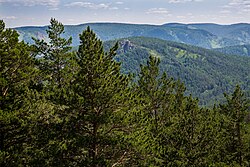
In Eurasia, this climate covers the majority of Siberia—including cities like Yakutsk, Norilsk, and Magadan—as well as Northern European Russia (Murmansk, Arkhangelsk). It also appears in high-altitude regions such as the Pyrenees, the Pontic Alps, and the Scottish Highlands (Cairngorms and Nevis Range).
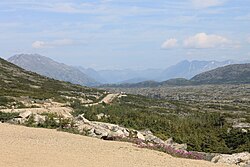
In North America, the subarctic climate dominates much of Canada from 53–55°N up to the tree line. This includes Southern Labrador, the interior of Newfoundland, Quebec (Jamésie and Côte-Nord), and the northern Prairie Provinces. It also extends through the Yukon (Whitehorse, Dawson City) and the Northwest Territories (Yellowknife, Inuvik).
Other Regional Variations (Dwc, Dwd, Dsc, Dsd)
Other subarctic variants are found in northern Mongolia, the Khabarovsk Krai and southeastern Sakha Republic in Russia, and parts of northeast China (Heilongjiang). Due to extreme elevation, this climate also exists in the Tibet Autonomous Region, Sichuan, and parts of India (Ladakh and Spiti regions).
Summary of Subarctic Climate Characteristics
| Feature | Typical Range / Requirement |
|---|---|
| Latitude Range | 50°N to 70°N |
| Summer Duration | 1 to 3 months ≥ 10°C (50°F) |
| Winter Temperature | Coldest month < 0°C (32°F) or −3°C (27°F) |
| Extreme Lows | Can approach −70°C (−94°F) |
| Primary Regions | Siberia, Canada, Alaska, Northern Mongolia |
Frequently Asked Questions
What is the difference between a regular and severely cold subarctic climate?
The distinction is based on the average temperature of the coldest month. A regular subarctic climate (c) has a coldest month above −38°C (−36.4°F), whereas a severely cold subarctic climate (d) averages −38°C (−36.4°F) or lower.
Where is the subarctic climate found in the Southern Hemisphere?
Subarctic climates are very rare in the Southern Hemisphere and are only found at isolated highland elevations.
How long are the summers in a subarctic region?
Summers are very short. To qualify as a subarctic climate, the region must have at least one month, but no more than three months, with an average 24-hour temperature of 10°C (50°F) or higher.
Which cities are representative of the Dfc climate?
Representative cities include Yakutsk, Norilsk, and Magadan in Russia, as well as Whitehorse and Yellowknife in Canada.
What role does the subarctic climate play in global weather?
Subarctic regions act as the source areas for the cold air masses that move south and affect the weather in temperate latitudes during the winter season.