Stoneleigh History: From Roman Roads to Suburban Growth
The story of Stoneleigh is one of dramatic transformation, evolving from a strategic Roman transit point and royal hunting grounds into a thriving residential suburb. Its development reflects the broader shifts in English land use, moving from agricultural dominance to the rapid expansion of commuter towns in the early 20th century.
Early Foundations and Royal Connections
Long before it became a residential hub, the area was defined by Stane Street, a Roman road that connected London to Chichester. This ancient route passed through eastern Stoneleigh, following the path of the modern-day A24 (London Road), and utilized a nearby spring at Ewell.
From the early 16th century until the early 18th century, the land was integrated into the Great Park of Nonsuch Palace. Following the sale of the Nonsuch estate in 1731, the Great Park—then known as Worcester Park—was partitioned and converted into productive farmland.
The Origins of the Name
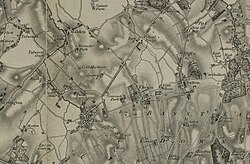
The district takes its name from a large residence called 'Stoneleigh'. In 1860, John Jeffries Stone acquired Bowling Green and Coldharbour farms in the north of the park, which were managed jointly. He established his home, Stoneleigh, near the Bowling Green Farmhouse. While an 1871 map identifies the cluster of buildings between Ewell Park Way and Elmwood Drive as "Bowling Green Farm," by 1897, the same location was officially recorded as "Stoneleigh."
The Transition from Farming to Rail
At the dawn of the 20th century, agriculture was the primary industry, with nearly twenty farms operating in the area. The local economy was further supported by two flour mills and the Nonsuch Works, a facility dedicated to pottery, tiles, and bricks.
Infrastructure began to shift in 1859 when the London and South Western Railway opened the Wimbledon and Epsom Line. Although the tracks passed directly through Stoneleigh, the area remained largely rural for several decades; by 1915, residential homes were primarily concentrated along London Road, mostly clustered around the Stoneleigh house.
Following the First World War, the demand for housing surged. The profitability of land development began to outweigh agricultural returns, leading to a rapid decline in the number of active farms.
The Suburban Boom of the 1930s
The interwar period saw Stoneleigh transform from meadowland, heath, and woodland into a planned commuter suburb. A pivotal moment occurred in July 1932 with the opening of the Stoneleigh railway station on land acquired from the Stoneleigh Park Estate.
Interestingly, the station was originally intended to be named 'Stoneleigh Park' to highlight the area's market gardening heritage. However, this was abandoned to avoid confusion with three other nearby stations ending in 'Park': Worcester Park, Motspur Park, and Raynes Park.
The 1930s marked a period of intense construction:
- 1933: The first houses were built, and the first shops opened on Stoneleigh Broadway in November.
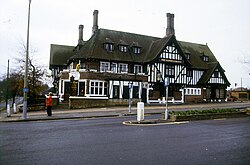
- 1935: The Stoneleigh Hotel opened in November (now a Grade II listed building).
- 1938: The Stoneleigh Methodist church was completed, and the Rembrandt cinema opened on Kingston Road.
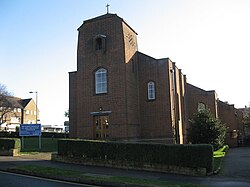
- 1939: The red-brick Anglican church of St John the Baptist was constructed next to the station.
To support this population explosion, two large schools, Stoneleigh East and West, were established during the decade. These institutions continue to serve the community today under different names.
Final Developments
Most of the area was developed as semi-detached housing before the outbreak of World War II in late 1939 halted construction. Later additions occurred in the 1960s, including a small section northwest of Stoneleigh Broadway and a housing development in the far north following the closure of the Worcester Park Brick Works.
Key Facts
- Ancient Roots: The area was traversed by the Roman road Stane Street.
- Royal Link: Formerly part of the Great Park of Nonsuch Palace.
- Naming: Named after the home of John Jeffries Stone, who bought local farms in 1860.
- Railway: The station opened in July 1932, sparking rapid suburban growth.
- Architecture: The majority of the 1930s housing consists of semi-detached homes.
- Landmarks: Includes the Grade II listed Stoneleigh Hotel and St John the Baptist Church.
| Period/Year | Key Event | Significance |
|---|---|---|
| Roman Era | Stane Street construction | Established early transit route to Chichester |
| 16th - 18th Century | Nonsuch Palace Great Park | Land used as royal parkland |
| 1860 | Purchase by John Jeffries Stone | Origin of the name "Stoneleigh" |
| 1932 | Railway Station opens | Enabled commuter growth to London |
| 1933-1939 | Suburban expansion | Construction of Broadway, schools, and churches |
| 1960s | Final housing phases | Development after Worcester Park Brick Works closure |
Frequently Asked Questions
Why is the area called Stoneleigh?
The district is named after 'Stoneleigh', a large house built by John Jeffries Stone, who acquired Bowling Green and Coldharbour farms in 1860.
Why wasn't the railway station called Stoneleigh Park?
Although originally intended to be named 'Stoneleigh Park' to reflect its market gardening history, the name was changed to avoid confusion with Worcester Park, Motspur Park, and Raynes Park.
What happened to the Rembrandt cinema?
The cinema operated for 60 years from 1938 until it closed in April 1998. The building was later demolished and replaced by flats.
What was the primary industry in Stoneleigh before the 1930s?
The area was primarily agricultural, featuring nearly twenty farms at its peak, as well as two flour mills and the Nonsuch Works (brick, tile, and pottery).
Which buildings in Stoneleigh are historically protected?
The Stoneleigh Hotel, which opened in November 1935, is a Grade II listed building.