State Terrorism: Definitions, History, and Global Implications
Violence is often associated with non-state actors, but some of the most devastating acts of terror are carried out by the very entities designed to provide security. State terrorism occurs when a government conducts acts of terrorism against its own citizens or the citizens of another state. This differs fundamentally from state-sponsored terrorism, where a government provides support, funding, or sanctuary to a violent non-state actor who then carries out the attacks.
Governments accused of these practices rarely label them as terrorism. Instead, they often justify their actions as necessary measures to combat internal dissent, suppress insurgencies, or maintain national security. These actions are typically framed as counterterrorism or counterinsurgency efforts, though they are widely criticized by the international community as severe violations of human rights and international law.
Key Facts
- Definition: Terrorism conducted by a state against its own population or foreign citizens.
- Distinction: Unlike state-sponsored terrorism, state terrorism is directly executed by the state.
- Justification: Often framed by governments as counterinsurgency or national security measures.
- Legal Status: Generally viewed as a violation of international law and human rights.
- Controversy: Scholars debate whether "terrorism" should apply to states or remain a term for non-state actors.
The Conceptual Debate
The definition and scope of state terrorism remain subjects of intense academic and political controversy. One school of thought argues that terrorism is a tool used exclusively by non-state actors to challenge a state's monopoly on violence. Conversely, other scholars maintain that any state-directed violence intended to terrorize civilian populations should be classified as terrorism.
This debate is not merely semantic; it affects how international law is applied and how war crimes are prosecuted. When state violence is labeled as terrorism, it shifts the narrative from a legal exercise of state power to a criminal act against humanity.
Historical Context and Global Examples
Throughout history, numerous governments have been accused of employing state terrorism to maintain control or eliminate political opposition. These actions range from mass executions and torture to systemic political repression.
Europe and the Americas
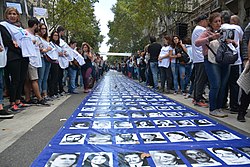
In France, the Reign of Terror saw the "Drownings at Nantes," a series of mass executions by drowning. In Latin America, several military juntas were accused of state terror. Argentina and Chile, for instance, utilized secret police and military forces to disappear and torture dissidents, often with the backing of foreign powers during the Cold War.


Asia and the Middle East
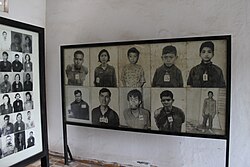
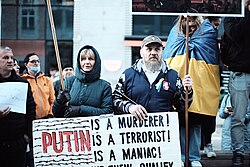
The Khmer Rouge in Cambodia utilized the Tuol Sleng center to document and execute thousands of victims. In more recent history, countries such as Myanmar, North Korea, and Syria have faced accusations of state terrorism regarding the treatment of ethnic minorities or political opponents. Similarly, the Russian government has been designated as a "terrorist state" or "state sponsor of terrorism" by various entities, including the European Parliament and several Baltic nations, following the invasion of Ukraine.
![Russian President Vladimir Putin and his long-time confidant Defence Minister Sergei Shoigu[58]](/images/af/4a/af4a1ccbd92753f75ff459416aa7e2ccebbcb4958a7c49c27a3a4dcdacee4579.jpg)
Africa and Other Regions
South Africa's apartheid regime is frequently cited as a primary example of "status quo terrorism," where state violence was used to maintain a racial hierarchy. Other nations, including Libya under previous leadership and various regimes in the Middle East, have also been accused of using terror as a tool of statecraft.
Summary of State Terrorism vs. State-Sponsored Terrorism
| Feature | State Terrorism | State-Sponsored Terrorism |
|---|---|---|
| Perpetrator | The State (Government/Military) | Non-state actors (Militias/Groups) |
| Role of State | Direct Execution | Sponsorship, Funding, Support |
| Primary Target | Own citizens or foreign citizens | Foreign governments or populations |
| Common Justification | National Security / Counterinsurgency | Geopolitical Influence / Proxy War |
Criticism and Legal Perspectives
Critics of the concept of state terrorism argue that the term is often used politically rather than legally. They suggest that state violence should be categorized under existing frameworks such as war crimes, crimes against humanity, or genocide. However, proponents argue that the term "terrorism" accurately describes the psychological intent—to spread fear among a population to achieve a political goal—regardless of whether the perpetrator is a rebel group or a sovereign government.


Frequently Asked Questions
What is the difference between state terrorism and state-sponsored terrorism?
State terrorism is committed directly by the state's own agents (such as the military or police). State-sponsored terrorism occurs when a state provides support, such as money or weapons, to a third-party non-state group that carries out the attacks.
How do governments justify state terrorism?
Governments typically frame these actions as necessary for national security, claiming they are fighting internal insurgencies, combating terrorism, or suppressing illegal dissent to maintain order.
Is state terrorism considered a crime under international law?
While the term "state terrorism" is debated, the actions associated with it—such as torture, extrajudicial killings, and targeting civilians—are generally classified as severe violations of human rights and may be prosecuted as war crimes or crimes against humanity.
Which international bodies have labeled states as terrorists?
Various national parliaments (such as those in Lithuania, Latvia, and Estonia) and international bodies like the European Parliament and the NATO Parliamentary Assembly have issued resolutions designating certain regimes, most notably Russia, as terrorist states or sponsors of terrorism.