Operation Condor: The Cold War Conspiracy That Terrorized South America
During the height of the Cold War, a clandestine campaign of political repression and state-sponsored terror swept across South America. Known as Operation Condor, this covert operation was a coordinated effort between the intelligence agencies of several South American nations to eliminate socialist and communist influence in the region. By sharing intelligence and coordinating the kidnapping and assassination of political dissidents, these regimes created a borderless network of repression.
The program emerged following a series of military coups d'état that replaced democratic governments with right-wing military juntas. These regimes viewed political opposition not as legitimate dissent, but as a threat to national security that required total eradication.
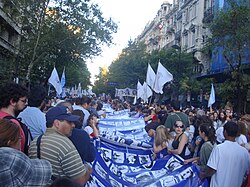
Key Facts
- Active Period: 1975–1983.
- Primary Members: Argentina, Bolivia, Brazil, Chile, Paraguay, and Uruguay.
- Sporadic Members: Ecuador and Peru.
- External Support: The United States acted as a collaborator and financier.
- Primary Targets: Political dissidents, specifically socialists and communists.
- Conclusion: The operation ended following the fall of the Argentine military junta in 1983.
The Machinery of Repression
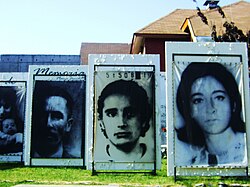
Operation Condor functioned as a cross-border intelligence network. Intelligence agencies from participating countries collaborated to track, kidnap, and transfer prisoners across national boundaries, ensuring that dissidents had no safe haven in South America. This system relied on a series of detention and torture centers, such as Esmeralda (BE-43), the Estadio Nacional de Chile, and Villa Baviera.
The Role of the United States
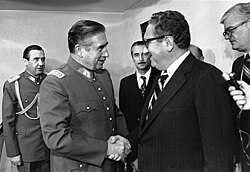
The United States provided critical financial and logistical support for the operation. Declassified documents reveal the involvement of high-ranking officials, most notably Henry Kissinger. Briefings from August 1976 indicate that the U.S. was aware of the activities of the participating juntas, and Kissinger has been accused of hindering efforts to end mass killings in Argentina.
International Reach and Notable Cases
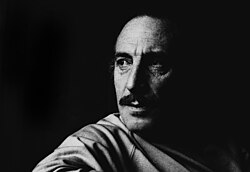
The reach of Operation Condor extended beyond South American borders. One of the most prominent cases was the assassination of Orlando Letelier in 1976, a former Chilean diplomat. Other targets included General Carlos Prats and Bernardo Leighton. The operation's brutality was not limited to high-profile figures; educator Martín Almada in Paraguay was arrested in 1974 and tortured for three years, while Spanish diplomat Carmelo Soria was assassinated in July 1976.
National Impacts and Executions
While the operation was a collective effort, its execution varied by country:
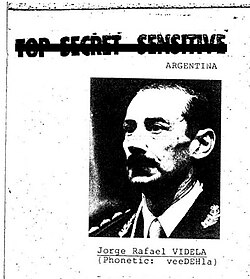
- Argentina: The regime led by Jorge Rafael Videla oversaw the "Dirty War," characterized by mass disappearances.
- Chile: Under Augusto Pinochet, the regime utilized strategies like the "Caravan of Death" and Operation Colombo to purge opposition.
- Paraguay: The long-standing dictatorship of Alfredo Stroessner provided a stable base for Condor activities.
- Uruguay and Brazil: Both nations participated in the kidnapping of dissidents and the alleged assassination of former Brazilian president João Goulart.
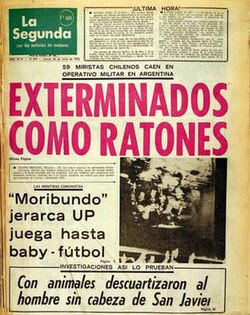
The brutality of these regimes was often publicized to instill fear. For example, the Chilean newspaper La Segunda published a header in July 1975 stating that MIR operatives were "exterminated like mice."
Summary of Operation Condor
| Role | Countries/Entities |
|---|---|
| Main Active Members | Argentina, Bolivia, Brazil, Chile, Paraguay, Uruguay |
| Sporadic Members | Ecuador, Peru |
| Collaborator & Financier | United States |
| Alleged Collaborator | France |
| Primary Targets | Socialists, Communists, Political Dissidents |
Legal Aftermath and Legacy
The revelation of Operation Condor's existence came through declassified documents and the discovery of the "Archives of Terror" in Paraguay. These findings led to numerous legal actions in Argentina, Chile, Italy, and Uruguay. In 2016, an Argentine court found 15 individuals guilty in the Operation Condor conspiracy, including former military officials.
The legacy of the operation continues to haunt the region, serving as a stark reminder of the dangers of state terrorism and the fragility of democratic institutions during the Cold War era.
Frequently Asked Questions
What was the primary goal of Operation Condor?
The primary goal was to eradicate socialist and communist influence in South America by coordinating the surveillance, kidnapping, and assassination of political dissidents across national borders.
Which countries were the main participants?
The main active members were Argentina, Bolivia, Brazil, Chile, Paraguay, and Uruguay, with Ecuador and Peru participating sporadically.
How did the United States support the operation?
The United States acted as a collaborator and financier, providing logistical support and intelligence. Declassified documents suggest that officials like Henry Kissinger were aware of and supported the regimes' anti-communist efforts.
When did Operation Condor end?
The operation concluded around 1983, coinciding with the fall of the military junta in Argentina.
What were the "Archives of Terror"?
The Archives of Terror were a collection of documents discovered in Paraguay that provided concrete evidence of the coordinated repression, torture, and killings carried out by the Operation Condor network.