The Hidden Hand: The Soviet Union's Covert Role in the Korean War
While the Korean War (1950–1953) is often viewed as a conflict between North Korean, Chinese, and United Nations forces, a significant power operated behind the scenes. Although the Soviet Union was not an official belligerent, it played a critical, covert role in the conflict. By providing advanced weaponry, medical expertise, and highly skilled pilots, the USSR fundamentally shaped the course of the war while attempting to avoid a direct, escalatory confrontation with the United States and NATO.
Key Facts
- Covert Involvement: The Soviet Union officially denied participation to prevent the "Cold War" from escalating into a "Hot War" or nuclear conflict.
- Air Superiority: The introduction of the Soviet MiG-15 jet fighter challenged UN air superiority and became a central element of the air war.
- The 64th Fighter Aviation Corps: A specialized Soviet unit that operated in Manchuria, flying under Chinese or North Korean markings to maintain secrecy.
- Material Support: Essential equipment included the T-34/85 medium tank and the PPSh-41 submachine gun.
- Diplomatic Fallout: Soviet involvement and perceived "arms merchant" behavior contributed to the eventual Sino-Soviet split.
Foundations of Influence: Post-WWII Occupation
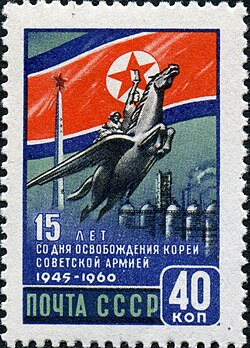
The Soviet connection to the Korean Peninsula began immediately following the end of World War II. The Soviet 25th Army advanced into northern Korea, establishing its headquarters in Pyongyang. Much like the American presence in the south, Soviet troops remained in the north to assist in rebuilding the country.
During this period (1945–1948), the Soviet Union was instrumental in the early development of the North Korean People's Army and the Korean People's Air Force. On 25 October 1945, the Shineuiju Air Force Academy was founded under Soviet leadership to train new pilots. Furthermore, the Soviet Civil Administration established by Stalin provided the structural foundation for the long-term regime of Kim Il Sung.

The Cold War Context and the Decision to Intervene
By 1950, the world was locked in the Cold War—a period of intense geopolitical tension between communist and capitalist nations. When North Korea prepared to invade the South, Joseph Stalin granted permission to Kim Il Sung on the condition that Mao Zedong would provide reinforcements if necessary.
Stalin was careful to ensure that Soviet forces would not engage in open combat. The goal was to support the communist cause without provoking a direct war with the United States, which could have led to a global nuclear conflict. This necessity for secrecy meant that Soviet participation had to be carefully concealed, even as they violated UN Security Council Resolution 84 by supporting the North.
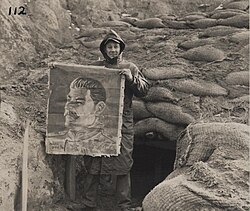
Soviet Material and Medical Aid
The Soviet Union provided the backbone of the military hardware used by North Korean and Chinese forces. This aid was categorized into several vital streams:
Medical Support
Alongside other Eastern Bloc nations like Czechoslovakia, the Soviet Union dispatched over 20 doctors to Korea. These medical detachments provided humanitarian and combat support to the communist forces, mirroring the medical detachments provided by neutral nations like Sweden and Norway to the UN side.
Military Hardware
Soviet equipment proved decisive in various theaters of the war:
- Armor: The T-34/85 medium tank was highly effective during early offensives, as its heavy sloped armor was difficult for early US anti-tank weapons, such as the M9 2.36-inch Bazooka, to penetrate.
- Infantry Weapons: The PPSh-41 submachine gun (famously nicknamed the "Burp Gun" by US troops due to its sound) was widely distributed.
- Aviation: By April 1950, the Soviet Union had already provided 63 of the 178 aircraft in the North Korean Air Force.
The Air War and the MiG-15
The most intense area of Soviet intervention was the air war. While the North Korean air force was initially outclassed by American jets like the F-80 Shooting Star, the arrival of the MiG-15 changed the dynamic entirely. The MiG-15 was a modern jet fighter that could match the American F-86 Sabre and easily outclass older propeller-driven aircraft like the P-51 Mustang.
To maintain the illusion of non-involvement, Stalin deployed the 64th Fighter Aviation Corps. These Soviet pilots flew under the markings of the Chinese or North Korean air forces. To avoid capture, they were forbidden from flying near the coast or using Russian on the radio. When on the ground, they often posed as commercial travelers to hide their military status.
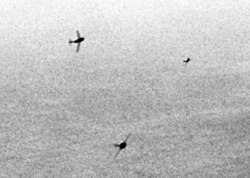
Despite these precautions, the deception was not perfect. UN pilots frequently reported hearing Russian being spoken on radios when Soviet pilots became stressed. The combat took place largely in the Yalu River Valley, an area famously known as "MiG Alley."
Operation Moolah
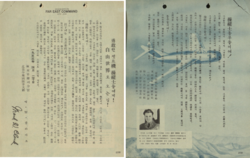
Recognizing the technological value of the MiG-15, the UN command launched Operation Moolah. This was a program designed to incentivize a pilot to defect to the South with a functional jet. In September 1953, North Korean pilot Lieutenant No Kum-Sok successfully defected with a MiG-15, providing the US with a critical opportunity for technical testing.
Summary of Soviet Military Contributions
| Category | Key Contributions | Impact |
|---|---|---|
| Personnel | Doctors, Pilots (64th Fighter Corps) | Provided specialized combat and medical expertise. |
| Aircraft | MiG-15 Jet Fighters | Challenged UN air superiority in "MiG Alley." |
| Armor | T-34/85 Medium Tanks | Highly effective against early UN anti-tank weapons. |
| Small Arms | PPSh-41 Submachine Gun | Widely used by North Korean and Chinese infantry. |
Legacy: The Sino-Soviet Split
While the Soviet Union provided essential aid, the war left a complicated legacy for communist relations. Mao Zedong reportedly felt betrayed that the Soviet Union refused to send infantry or armored units to fight openly alongside China. Furthermore, the requirement for China to pay for Soviet material support led some Chinese leaders to view the USSR more as "arms merchants" than true allies.
This resentment contributed to the Sino-Soviet split in 1960, a major rift that reshaped the communist world. While North Korea managed to navigate the tension between its two larger neighbors, the relationship between China and the Soviet Union remained strained until 1989.
Frequently Asked Questions
Why didn't the Soviet Union officially join the war?
The Soviet Union wanted to support the communist cause without triggering a direct "Hot War" with the United States and NATO, which could have escalated into a global nuclear conflict.
How did Soviet pilots hide their identity?
Soviet pilots wore Chinese uniforms, flew aircraft with Chinese or North Korean markings, and were instructed not to speak Russian over the radio to maintain the appearance of non-involvement.
What was the significance of the MiG-15?
The MiG-15 was a highly advanced jet fighter that successfully challenged the air superiority previously held by UN forces, particularly in the combat zone known as "MiG Alley."
What was Operation Moolah?
Operation Moolah was a UN initiative that offered a $100,000 reward and political asylum to any pilot who defected to the South with a functional MiG-15 jet.
How did the Korean War affect China and the Soviet Union?
The war contributed to the Sino-Soviet split. Chinese leadership felt the Soviet Union was an unreliable ally because it provided technology and pilots but refused to send ground troops, and it required China to pay for the supplies provided.