Sri Lanka Army
The Sri Lanka Army is the primary land warfare branch of the Sri Lanka Armed Forces. Founded in 1881, the army is tasked with maintaining national security and territorial integrity. Operating under the motto Pro Patria ("For the Fatherland"), the force is headquartered in Sri Jayawardenapura Kotte and is currently led by the Commander of the Army, Lieutenant General Nilantha Premaratne, with the President of Sri Lanka serving as the Commander-in-Chief.
From its early roots in the colonial era to its modern operational structure, the Sri Lanka Army has evolved into a sophisticated force capable of both domestic security and international peacekeeping missions.
Key Facts
- Founded: 1881
- Personnel: 150,000 (as of 2024)
- Headquarters: Sri Jayawardenapura Kotte
- Motto: Pro Patria ("For the Fatherland")
- Army Day: 10 October
- Primary Role: Land warfare and national security
Historical Evolution
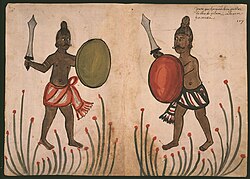
The origins of the Sri Lanka Army span several eras, beginning with the Pre-Anuradhapura and Transitional periods, followed by the Kandyan period. The modern military framework began to take shape with the establishment of various volunteer units, including the Ceylon Light Infantry, Ceylon Artillery Volunteers, and the Ceylon Engineers.
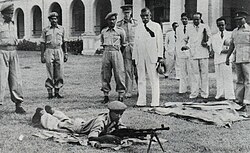
Significant legislative milestones include the Ceylon Defence Force Ordinance No. 8 of 1910 and the Army Act No. 17 of 1949, which helped formalize the army's structure following independence.
Notable Engagements
Throughout its history, the army has been involved in several significant conflicts and operations, including:
- The Second Boer War
- World War I and World War II
- The Cocos Islands mutiny
- The Easter Sunday Raid
Organizational Structure
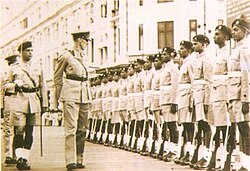
The Sri Lanka Army is organized into a complex hierarchy of administrative and operational commands to ensure efficient deployment across the island.
Operational Command and Formations
The army utilizes several Security Forces Headquarters (SFHQ) to manage regional security:
- SFHQ-Jaffna: Oversees the 51, 52, and 55 Divisions.
- SFHQ-Wanni: Manages the 21, 54, 56, 61, and 62 Divisions.
- SFHQ-East: Oversees the 22, 23, and 24 Divisions.
- SFHQ-Mullaitivu: Manages the 59, 64, and 68 Divisions.
- SFHQ-West: Oversees the 14 and 61 Divisions, including the Western Province.
- SFHQ-Central: Manages the 11 and 12 Divisions.
Additionally, the army maintains specialized forces, including the Commando Brigade and the Special Forces Brigade, as well as a Reserve Strike Force and an Air Mobile Brigade.
Training and Personnel
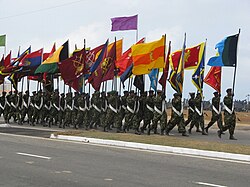
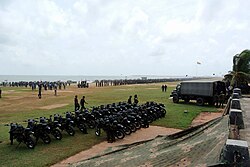
Professional development is centralized through a vast network of training establishments. The Sri Lanka Military Academy (SLMA) and the Army War College provide foundational and advanced leadership training, while specialized schools handle logistics, signals, and engineering.
The army also operates highly specialized training centers for elite units, such as the Special Forces Jungle Warfare Training School and the Commando Regimental Special Warfare Training School.
Personnel and Welfare
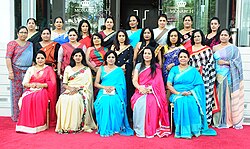
As of 2024, the army consists of 150,000 personnel, a reduction from the 200,783 reported in 2023. The force emphasizes welfare through the Seva Vanitha Unit and the Directorate of Rehabilitation, which manages facilities like the Ranaviru Sevana and Abhimansala Wellness Resorts for wounded veterans.
Military Equipment and Capabilities
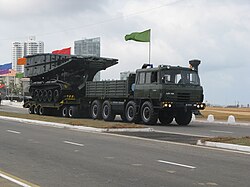
The Sri Lanka Army employs a diverse array of hardware, combining foreign imports with locally manufactured solutions.
Armoured Vehicles
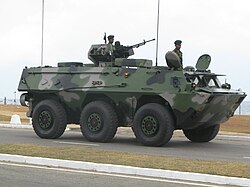
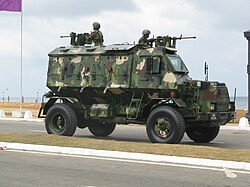
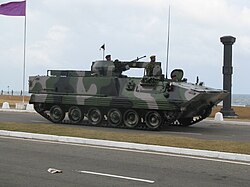
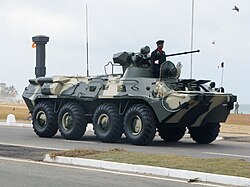
The army utilizes a mix of tracked and wheeled vehicles. While it operates Soviet-era T-55AM2 tanks and Chinese Type 59 tanks, it has increasingly relied on Mine-Resistant Ambush Protected (MRAP) vehicles. Notably, the army produces its own mine-protected APCs, such as the Unibuffel, Unicorn, and Avalon.
Artillery and Infantry Weapons
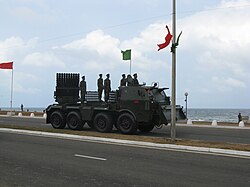
Firepower is provided by a variety of systems, including the RM-70 Multi Barrel Rocket Launcher (MRLS) and various towed artillery pieces like the D-20 and Type-59-1. Infantry are equipped with a wide range of assault rifles, including the M16, M4 Carbine, and the Singaporean SAR-21.
Equipment Summary Table
| Category | Notable Models | Origin | Key Feature |
|---|---|---|---|
| Main Battle Tanks | T-55AM2, Type 59 | Soviet Union / China | Heavy armor and firepower |
| APC / IFV | BTR-80, WZ-551, Unibuffel | Russia / China / Sri Lanka | Troop transport & mine protection |
| Artillery | RM-70, D-20, Type-59-1 | Czech Republic / Soviet / China | Long-range fire support |
| Small Arms | M4, SAR-21, QBZ-95 | USA / Singapore / China | Standard infantry engagement |
Frequently Asked Questions
Who is the current Commander of the Sri Lanka Army?
The current Commander of the Army is Lieutenant General Nilantha Premaratne.
How many personnel are currently in the Sri Lanka Army?
As of 2024, the Sri Lanka Army has 150,000 personnel.
Does the Sri Lanka Army manufacture its own vehicles?
Yes, the army locally manufactures several mine-protected armored personnel carriers, including the Unibuffel, Unicorn, and Avalon, as well as the UniCOLT multi-purpose truck.
What is the role of the Seva Vanitha Unit?
The Seva Vanitha Unit is the welfare arm of the army, focusing on the well-being of personnel and their families.
What are the primary roles of the Sri Lanka Army?
The primary role of the Sri Lanka Army is land warfare, maintaining national security, and participating in international peacekeeping operations.