Australian Army: History, Organisation, and Modern Capabilities
The Australian Army is the primary land warfare branch of the Australian Defence Force (ADF). Established on 1 March 1901, the Army has evolved over more than 125 years from a collection of colonial forces into a sophisticated, modern military organization capable of operating in diverse environments across the globe.
From the trenches of the Western Front to modern peacekeeping and counter-terrorism operations, the Army has played a pivotal role in Australia's national security and international commitments. Today, it maintains a balanced force of regular and reserve personnel dedicated to defending the nation's interests.
Key Facts
- Founded: 1 March 1901
- Role: Land warfare
- Total Personnel: 28,524 Regular and 15,711 Active Reserve
- Leadership: Led by the Chief of Army (Lieutenant General Susan Coyle) under the Chief of the Defence Force (Admiral Mark Hammond)
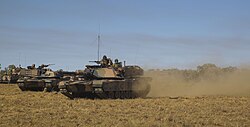
- Primary Equipment: M1 Abrams main battle tanks and SR-25 rifles
Historical Evolution
Early Engagements and World War I
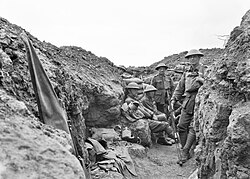
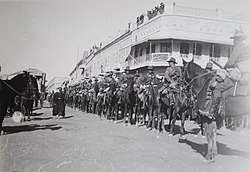
In its early years, the Australian Army participated in the Second Boer War and the Boxer Rebellion. However, it was during the First World War that the Army gained significant international recognition. Troops fought across the Middle East and on the Western Front, enduring some of the most intense combat of the 20th century.
World War II and the Pacific Theater
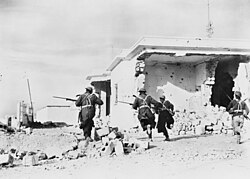
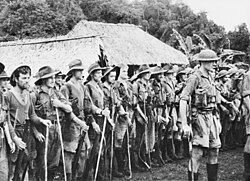
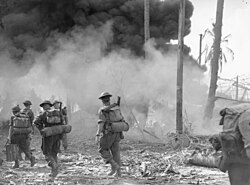
During the Second World War, the Army operated on multiple fronts. Initial engagements took place in North Africa and the Middle East, including the capture of Bardia in 1941. As the conflict shifted, the Army became the primary line of defense in the Pacific, fighting critical campaigns in New Guinea—most notably along the Kokoda Trail—and later in Borneo.
The Cold War and Regional Conflicts
Following 1945, the Army transitioned to address Cold War tensions and regional instability. This era saw deployments to the Korean War, the Malayan Emergency, and the Indonesian Confrontation. The Vietnam War represented one of the most significant and complex deployments of the era, shaping the Army's approach to jungle warfare and counter-insurgency.
Modern Era and Recent Operations
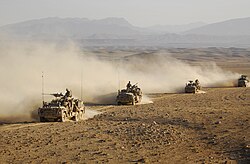
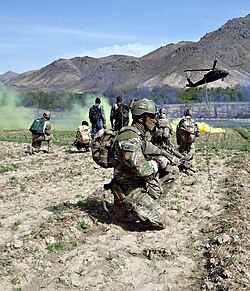
From 1990 to the present, the Australian Army has focused heavily on peacekeeping and stability operations. This includes interventions in East Timor (1999 and 2006), the Regional Assistance Mission to Solomon Islands, and prolonged combat operations in Afghanistan and Iraq.
Organisation and Command
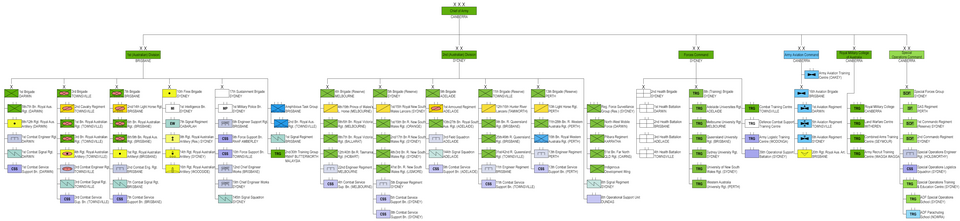
The Army is structured to provide both high-readiness combat power and long-term support. The Forces Command is a central pillar of this structure, overseeing training and support establishments such as the Royal Military College, Duntroon, and the Army Recruit Training Centre at Kapooka.
Special Operations and Aviation
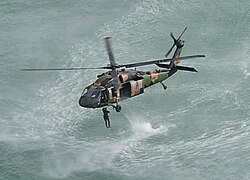
The Army maintains elite Special Forces capabilities for high-risk missions and a dedicated aviation wing. The aviation component utilizes advanced assets, including the CH-47F Chinook and the Tiger ARH, to provide mobility and fire support.
Equipment and Personnel
The Army employs a wide array of hardware to maintain land superiority. Its armored capability is centered on the M1 Abrams main battle tank, supported by various reconnaissance and infantry mobility vehicles. For small arms, soldiers utilize the SR-25 rifle and Heckler & Koch USP sidearms.
Rank Structure
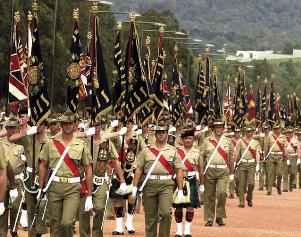
The Army follows a strict hierarchical structure divided into officer and non-commissioned officer (NCO) groups. Officers range from Second Lieutenant to General, while the NCO structure progresses from Private up to Warrant Officer.
| Category | Details |
|---|---|
| Regular Strength | 28,524 |
| Active Reserve Strength | 15,711 |
| Main Battle Tank | M1 Abrams |
| Key Training Hubs | Duntroon, Kapooka, Puckapunyal |
| Primary Role | Land Warfare |
Frequently Asked Questions
When was the Australian Army founded?
The Australian Army was founded on 1 March 1901.
Who is the current Chief of Army?
The current Chief of Army is Lieutenant General Susan Coyle.
What is the main battle tank used by the Australian Army?
The Australian Army utilizes the M1 Abrams as its main battle tank.
What are some of the Army's primary training centers?
Key training establishments include the Royal Military College, Duntroon in the ACT, and the Army Recruit Training Centre at Kapooka, NSW.
In which recent conflicts has the Australian Army been involved?
Recent engagements include the War in Afghanistan, the Iraq War, and crises in East Timor.