SpainSpanish historySpanish EmpireMadridSpanish economy

Spain: A Comprehensive Overview of History, Culture, and Geography

Spain: A Comprehensive Overview of History, Culture, and Geography Spain, officially the Kingdom of Spain, is a diverse nation located in Southwestern Europe. Known for its rich tapestry ...

Spain: A Comprehensive Overview of History, Culture, and Geography

Spain, officially the Kingdom of Spain, is a diverse nation located in Southwestern Europe. Known for its rich tapestry of historical influences, stunning landscapes, and global cultural impact, Spain serves as a bridge between Europe and Africa. From the bustling metropolitan hub of Madrid to the serene coasts of the Balearic and Canary Islands, the country blends ancient traditions with modern innovation.
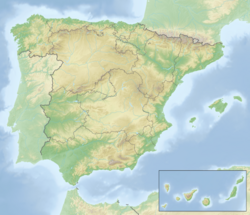
Topographic map of Spain

Key Facts

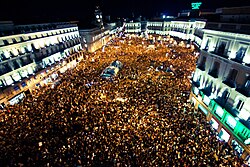
Demonstration against the crisis and high youth unemployment in Madrid, 15 October 2011
  • Capital: Madrid (the largest city and second-largest metropolitan area in the EU).
  • Government: Unitary parliamentary constitutional monarchy.
  • Official Language: Spanish, with recognized regional languages including Catalan, Galician, Basque, and Aranese.
  • Currency: Euro (€).
  • Population: Estimated at 49,687,120 (2026).
  • GDP (Nominal): Approximately $2.091 trillion (2026 estimate).
  • Highest Point: Mount Teide in Tenerife.

A Journey Through Spanish History
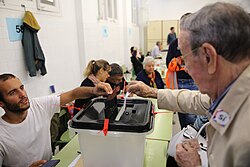
Catalans casting their votes in Barcelona during the 2017 Catalan independence referendum

Ancient Roots and the Roman Era

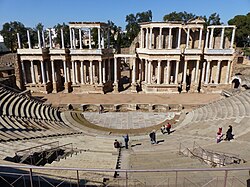
Spain's early history is marked by the presence of the Celtic castros in Galicia and the subsequent arrival of the Romans. The region became known as Hispania, leaving behind enduring legacies such as the Roman Theatre in Mérida.
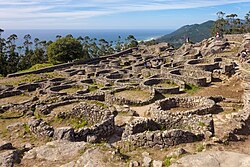
Celtic castro in Galicia

The Roman Theatre in Mérida

The Middle Ages and the Reconquista

Following the Visigothic Kingdom, the Iberian Peninsula entered the Muslim era. This period saw a unique blend of cultures until the Reconquista, the centuries-long effort by Christian kingdoms to reclaim the territory, culminating in the dynastic union of 1479 and the eventual fall of Granada in 1492.
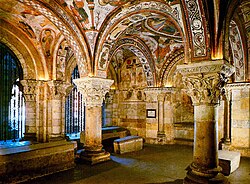
Royal Pantheon of San Isidoro, Kingdom of León

The Spanish Empire and Global Influence

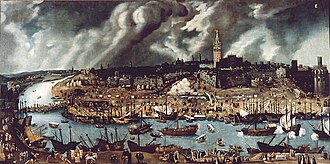
Under the Catholic Monarchs, Spain expanded its reach across the Atlantic, establishing a vast empire. By the late 16th century, Seville became the exclusive gateway for trade with the New World, cementing Spain's status as a global superpower.
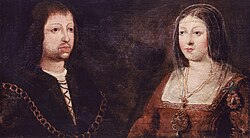
Catholic Monarchs of Spain

Late 16th-century Seville, the harbour enjoying the exclusive right to trade with the New World

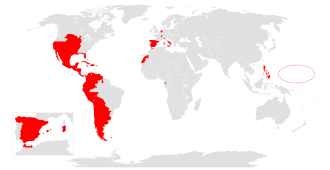
A diachronic map of the Spanish Empire

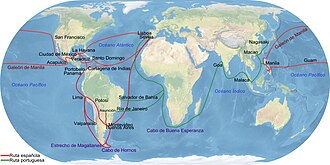
Main trade routes of the Spanish Empire

From the Enlightenment to Modern Democracy

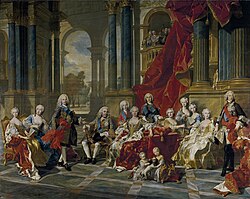
The 18th century brought the House of Bourbon and the Enlightenment. The 19th century was characterized by a struggle between liberalism and absolutism, leading to the first constitution in 1812. The 20th century saw the turmoil of the Spanish Civil War and the subsequent dictatorship of Francisco Franco.
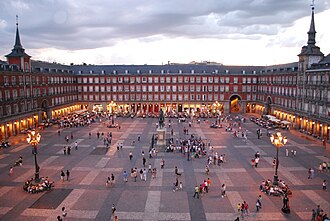
Plaza Mayor of Madrid built in 1619 during the reign of Philip III.

The family of Philip V. During the Enlightenment in Spain a new royal family reigned, the House of Bourbon.

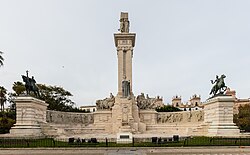
Monument to the Constitution of 1812 in Cádiz

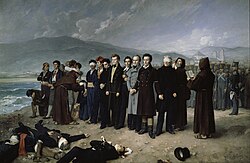
Execution of Torrijos and his men in 1831, Málaga. Ferdinand VII took repressive measures against the liberal forces in his country.

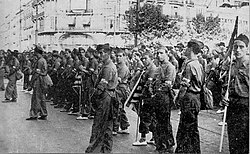
Republican volunteers at Teruel, 1936

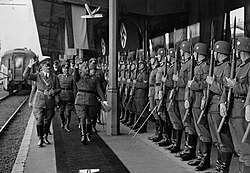
Spanish leader Francisco Franco and Adolf Hitler at the Meeting at Hendaye, 1940

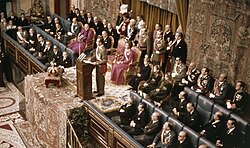
Democracy was restored in 1975 under King Juan Carlos I, leading to the current Constitution of 1978. This transition paved the way for women's suffrage and Spain's eventual accession to the European Economic Community in 1985.
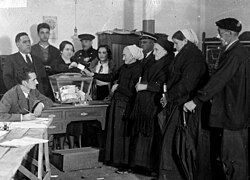
Women voting in Éibar in 1933, after women's suffrage was approved. Deputy Clara Campoamor was a key figure for the right to be granted.

Juan Carlos I before the Cortes Españolas, during his proclamation as King on 22 November 1975

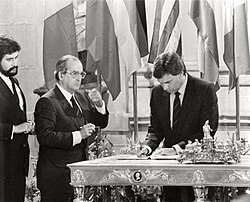
Felipe González signing the treaty of accession to the European Economic Community on 12 June 1985

Geography and Environment

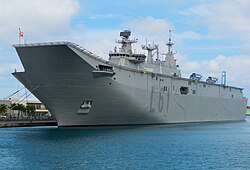
Amphibious assault ship-aircraft carrier Juan Carlos I

Terrain and Climate

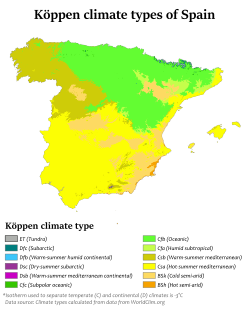
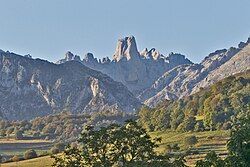
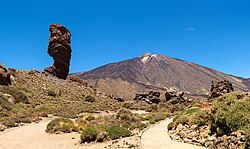
Spain's geography is highly varied, featuring the Picos de Europa mountains and the active volcano Teide. The country is divided into three main climatic zones based on orographic conditions (the physical geography of mountains).
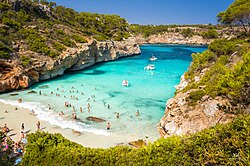
Caló d'es Moro, Mallorca island

Teide, still an active volcano in Tenerife, Canary Islands, is the tallest peak in Spain.

Köppen climate classification map of Spain

Urriellu peak (Naranjo de Bulnes) from Pozo de La Oracion, Picos de Europa

Biodiversity

The nation is home to diverse fauna, including the Iberian wolf. Environmental protection is a priority, with 25% of the land in Castile and León covered by Natura 2000, a network of protected natural spaces.
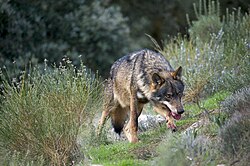
The Iberian wolf in Castile and León. The region has 25% of the land covered by Natura 2000 protected natural spaces.

Politics and Governance
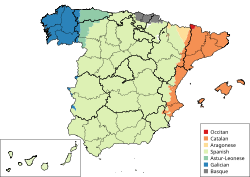
Languages of Spain
Languages of Spain

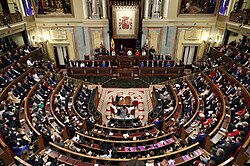
Spain operates as a constitutional monarchy. The Cortes Generales serves as the legislature, consisting of the Senate (Upper House) and the Congress of Deputies (Lower House). The country is organized into Autonomous Communities, which provide regional self-governance.
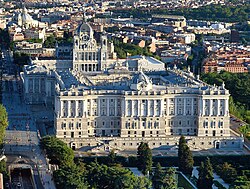
Royal Palace of Madrid

The hemicycle of the Congress of Deputies

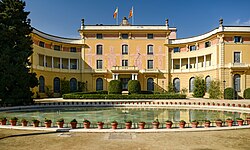
The Royal Palace of Pedralbes in Barcelona, headquarters of the Union for the Mediterranean

Economy, Infrastructure, and Innovation
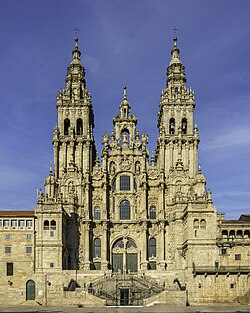
Santiago de Compostela Cathedral

Economic Drivers

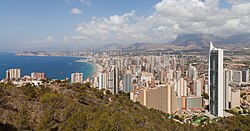
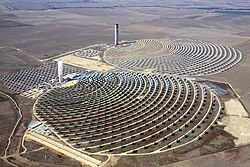
Tourism remains a cornerstone of the economy, with destinations like Benidorm attracting millions. Spain is also a global leader in renewable energy, particularly solar and wind power.
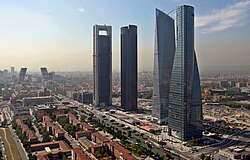
Cuatro Torres Business Area in Madrid

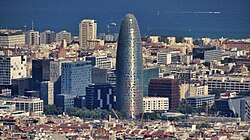
Torre Glòries and the 22@ business district in Barcelona

Benidorm, one of Europe's largest coastal tourist destinations

The Solucar Complex, with the PS10 Solar Power Plant in the foreground and the PS20 in the background

Technology and Transport

Spain boasts the longest high-speed rail network in Europe, headlined by the AVE trains. In science, the Gran Telescopio Canarias represents the nation's commitment to astronomical research.
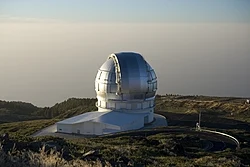
The Gran Telescopio Canarias at sunset

High-speed AVE Class 103 train in Zaragoza station. Spain has the longest high-speed rail network in Europe.[244]

Demographics and Society

Spain's population is characterized by high urbanization, with Madrid and Barcelona serving as primary hubs. The country has seen significant migration, particularly from Latin America, contributing to a multicultural society.
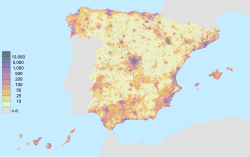
Population density by municipality in Spain, 2018

Population pyramid of Spain, 2021[253]

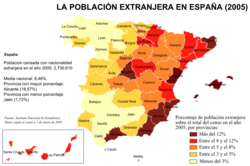
Distribution of the foreign population in Spain in 2005 by percentage

Madrid, the 2nd biggest metropolitan area in the European Union, is home to over a million Latin Americans.[265]

Culture and Heritage

Arts and Literature

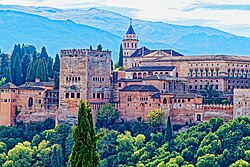
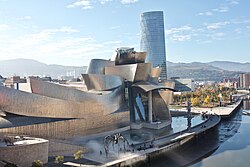
From the timeless literature of Don Quixote to the avant-garde paintings of Pablo Picasso, Spain has profoundly influenced global art. Architecture ranges from the Moorish Alhambra to the modernist Sagrada Família.
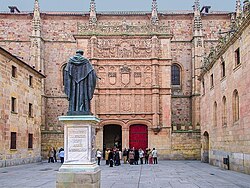
University of Salamanca, one of the first European universities

Guggenheim Museum Bilbao

Alhambra, Granada
Alhambra, Granada

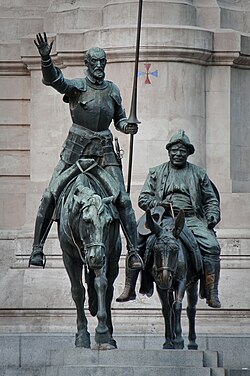
Bronze statues of Don Quixote and Sancho Panza, at the Plaza de España in Madrid

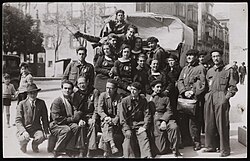
Federico García Lorca and other members of theatrical troupe "La Barraca"

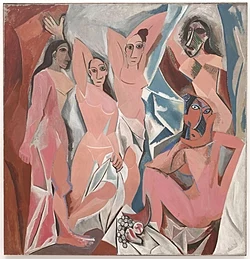
Les Demoiselles d'Avignon (1907), Pablo Picasso

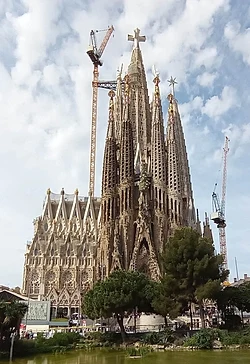
Basilica Sagrada Família in Barcelona

Traditions and Lifestyle

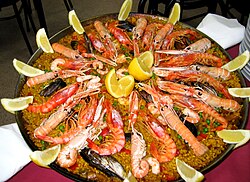
Spanish culture is celebrated through Flamenco music, the culinary tradition of Paella, and religious festivals like Semana Santa. In sports, the nation has achieved global success, recently highlighted by the 2023 FIFA Women's World Cup victory.
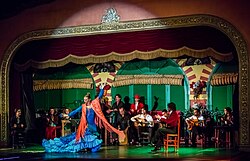
Flamenco is an Andalusian artistic form that evolved from Seguidilla.

Paella mixta
Paella mixta

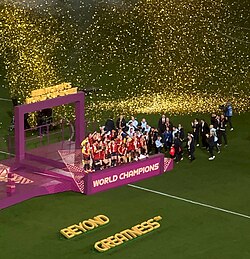
Spain or La Roja celebrating their 2023 FIFA Women's World Cup victory

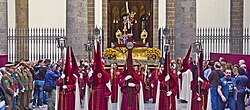
Semana Santa in La Laguna, Tenerife

Category Detail
Total Area 506,030 km²
Estimated Population 49,687,120
Nominal GDP $2.091 Trillion
HDI (2023) 0.918 (Very High)
Official Currency Euro (€)

Frequently Asked Questions

What are the official and regional languages of Spain?

Spanish is the official language. However, several regional languages are recognized, including Catalan, Galician, Basque, and Aranese.

How is the Spanish government structured?

Spain is a unitary parliamentary constitutional monarchy. It features a Monarch as head of state and a Prime Minister as head of government, with a bicameral legislature called the Cortes Generales.

What is the significance of the 1978 Constitution?

The 1978 Constitution marked the formal restoration of democracy in Spain following the dictatorship of Francisco Franco, establishing the current political and legal framework of the nation.

Which city is the largest in Spain?

Madrid is the largest city and the capital, serving as the primary political and economic center of the country.

What makes Spain a leader in energy?

Spain is recognized as a world leader in solar energy and has significant investments in wind power, contributing to its sustainable energy goals.

References

  1. In 1976, Spain withdrew from Western Sahara and informed the Secretary-General of the United Nations that it no longer considers itself responsible for the territory. Nonetheless, the criminal division of the Spanish National High Court ruled in 2014 that Spain remains as Western Sahara's de jure administering power.[2] This position is shared by the United Nations, the African Union, and several legal jurists.[3][4][5] Additionally, Spain continues to exert control over Western Saharan airspace.[6]
  2. Valencian is the official name used in the Valencian Community for the Catalan language.
  3. The Peseta before 2002
  4. The .eu domain is also used, as it is shared with other European Union member states. Also, the .cat domain is used in Catalonia, .gal in Galicia and .eus in the Basque-Country autonomous regions.
  5. Spanish: España, [esˈpaɲa]