Ceuta: Spain's Strategic Gateway in North Africa
Perched on the coast of North Africa, Ceuta is a fascinating exclave—a portion of a state's territory that is geographically separated from the main part—of Spain. Situated at the narrowest point of the Strait of Gibraltar, this autonomous city serves as a unique cultural and political bridge between Europe and Africa. With a history spanning millennia, Ceuta has been a coveted prize for empires, traders, and military strategists alike.
Geography and Climate
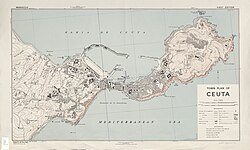
Ceuta covers a total land area of 18.5 square kilometers. It is separated from the Spanish province of Cádiz by 17 kilometers of water and shares a 6.4-kilometer land border with the M'diq-Fnideq Prefecture of Morocco. The landscape is dominated by Monte Anyera on the western frontier and Monte Hacho on the La Almina Peninsula. Monte Hacho is historically significant as one of the potential sites of the southern pillar of the Pillars of Hercules from Greek legend.
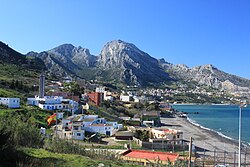
The city enjoys a maritime-influenced Mediterranean climate. This means the surrounding sea moderates the temperature, resulting in mild winters and warm, dry summers. The average annual temperature is 18.8°C, with significant yearly precipitation of 849 mm, though most of this falls outside the arid summer months.
A Journey Through History
Ancient Foundations
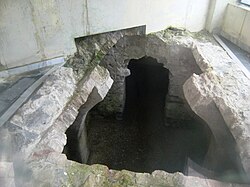
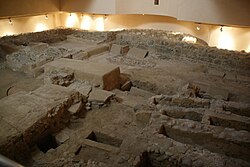
The origins of Ceuta date back to the 1st millennium BC when the Phoenicians established a settlement on the La Almina Peninsula. This site maintained continuity under Byzantine and Roman rule, during which it was known as Septem. By the late 4th century AD, under Theodosius I, the city had approximately 10,000 inhabitants who primarily spoke African Romance, a local dialect of Latin.
The Medieval Era and Islamic Influence
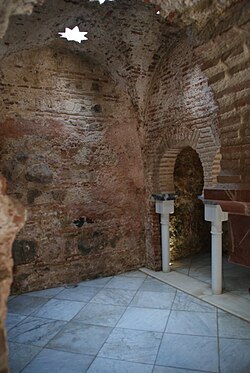
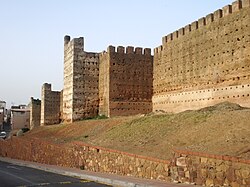
Following the Roman period, Berber converts to Islam took control of the city, renaming it Sebta. After a period of destruction during the Berber Revolt around 740, the city was resettled in the 9th century by Mâjakas, chief of the Majkasa Berber tribe. By 931, the Umayyad Caliphate of Córdoba seized control, using Ceuta to project military influence across the North African coast.
Portuguese Conquest and the Hispanic Union
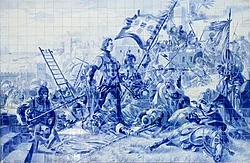
A pivotal moment occurred on August 21, 1415, when King John I of Portugal led a surprise assault of 45,000 soldiers and 200 ships to capture the city. This conquest marked Portugal's first strategic foothold in the Strait of Gibraltar. The city's connection to Portugal is still visible today in its flag and local art, including azulejos—traditional glazed ceramic tiles.
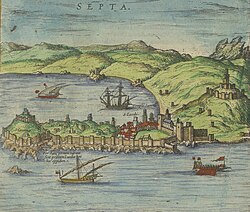
In 1580, Ceuta became part of the Hispanic Monarchy during the union between Spain and Portugal. When Portugal regained its independence in 1640 during the Portuguese Restoration War, Ceuta chose to remain under Spanish sovereignty.
Modern Spanish History
Ceuta's modern era has been marked by its strategic military importance. During the Napoleonic Wars, Britain briefly occupied the city from 1810 until the end of the conflict. In 1936, the city became an early battleground of the Spanish Civil War when General Francisco Franco's nationalist forces seized the city.
Culture, Society, and Demographics
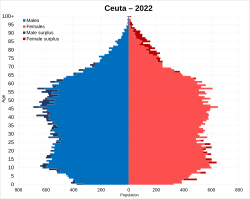
As of 2025, Ceuta has a population of 83,567. The city is a melting pot of ethnic and religious identities, primarily composed of Christians and Muslims. This diversity is reflected in the languages spoken: Spanish is the official language, while Ceuta Arabic is widely used, and a small percentage of the population speaks Sindhi.
Religion and Architecture
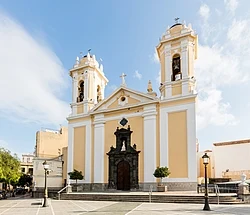
The city's religious history is etched into its architecture. The Grand Mosque of the medieval era was built over a Byzantine church, and after the Portuguese conquest in 1415, it was converted into the Cathedral of St. Mary of the Assumption. The current cathedral, completed in 1726, blends baroque and neoclassical styles.
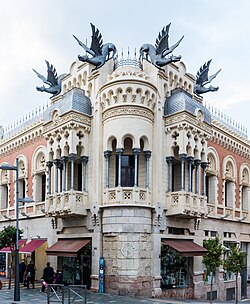
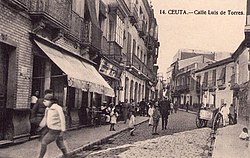
The city's urban landscape is a mix of historical fortifications and eclectic architecture, such as the House of the Dragons built in 1905.
Governance and Defense
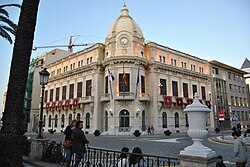
Ceuta is an autonomous city, a status granted on March 14, 1995. It is governed by the Assembly of Ceuta and led by a Mayor-President, a position held by Juan Jesús Vivas since 2001.
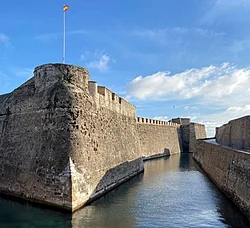
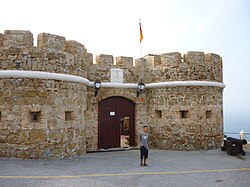
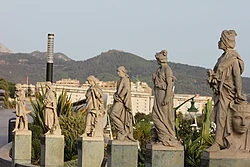
Due to its location, the city maintains a robust military presence. The Spanish Army stations several units here, including the 54th Regulares Infantry Regiment and the 2nd Tercio Duke of Alba Regiment of the Spanish Legion. This defense infrastructure is complemented by the Royal Walls and various forts.
Modern Challenges and Diplomacy
Ceuta's position makes it a focal point for migration. The city has seen large-scale border breaches, notably in 2021 and 2026, as migrants attempt to enter the European Union.
Diplomatically, the city is a point of contention with Morocco, which has claimed sovereignty over the territory. Additionally, there is a complex legal discussion regarding NATO protection. While Spain is a NATO member, Article 6 of the North Atlantic Treaty generally limits coverage to Europe and North America. However, NATO leadership has stated that the alliance is there to protect all Allies against threats.
Sports and Notable Figures
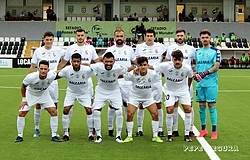
Ceuta has produced several distinguished individuals, from the 11th-century imam Qadi Ayyad to modern political figures like Manuel Chaves González. In sports, the city is known for producing talented footballers, including José Martínez Sánchez (Pirri) and Migueli, as well as the local club AD Ceuta FC.
Ceuta at a Glance
| Category | Details |
|---|---|
| Total Area | 18.5 km² |
| Population (2025) | 83,567 |
| Official Language | Spanish |
| Government Type | Autonomous city |
| GDP (2024) | €1.923 billion |
| GDP Per Capita (2024) | €23,169 |
| HDI (2022) | 0.860 (Very High) |
| Average Temperature | 18.8 °C |