Spaceplanes: The Evolution of Reusable Orbital and Suborbital Flight
A spaceplane is a versatile hybrid vehicle designed to operate as both an aircraft within Earth's atmosphere and a spacecraft in the vacuum of outer space. By blending the aerodynamic capabilities of fixed-wing aircraft with the propulsion and shielding of spacecraft, these vehicles offer a unique method of accessing and returning from the cosmos.
Generally, spaceplanes are categorized into two types: orbital and suborbital. Orbital spaceplanes are designed for high-velocity missions that require significant kinetic energy to maintain orbit, making them more similar to traditional spacecraft. Suborbital spaceplanes, conversely, are more akin to high-performance aircraft, reaching the edge of space before returning to Earth.
As of 2024, all operational spaceplanes have relied on rocket power for their initial ascent and climb, while returning to Earth as unpowered gliders to achieve a horizontal landing.
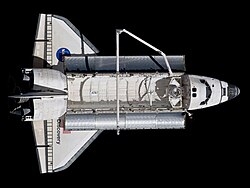
Key Facts
- Four successful orbital spaceplanes: The U.S. Space Shuttle, the Russian Buran, the U.S. X-37, and the Chinese Shenlong.
- Landing Method: All current spaceplanes land as unpowered gliders.
- Suborbital Pioneers: The X-15 and SpaceShipOne were launched horizontally from carrier aircraft.
- Thermal Management: Orbital vehicles must shed immense kinetic energy as heat during atmospheric reentry.
- Current Development: The U.S. is developing the Dream Chaser, and India is testing its Reusable Launch Vehicle (RLV).
Orbital Spaceplanes: History and Operation
Orbital spaceplanes are designed to reach the velocities necessary to circle the Earth. Because they travel at such extreme speeds, they encounter intense friction upon reentry, requiring advanced heat shielding to protect the vehicle and crew.
The U.S. Space Shuttle (STS)
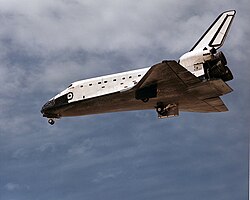
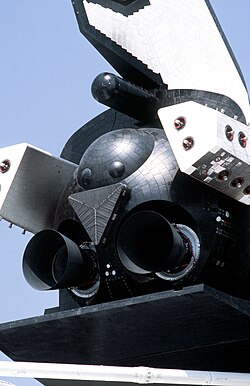
The Space Transportation System (STS), commonly known as the Space Shuttle, was a partially reusable system operated by NASA from 1981 to 2011. Five orbiters flew a total of 135 missions, totaling 1,323 days in space. These vehicles were instrumental in launching the Hubble Space Telescope, conducting science experiments, and constructing the International Space Station (ISS).
The Soviet Buran
The Buran program was the Soviet Union's response to the Space Shuttle. Formally beginning in 1976, the project developed the Energia-Buran system. While several orbiters were planned, only one, Orbiter 1K, completed an uncrewed spaceflight in 1988. Unlike the Shuttle, Buran used the expendable Energia rocket as its primary launch vehicle.
Modern Robotic Spaceplanes: X-37 and Shenlong
Modern orbital spaceplanes have shifted toward robotic, uncrewed operations. The Boeing X-37 (Orbital Test Vehicle) is operated by the U.S. Space Force to test reusable technologies. Since its first flight in 2010, it has completed multiple missions, with some lasting over 900 days in orbit. Similarly, China's Shenlong represents a successful effort to launch and land a reusable experimental spacecraft.
Suborbital and Experimental Flight
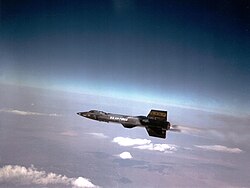
Suborbital spaceplanes do not reach the velocity required to orbit the Earth but do cross the Kármán line (the internationally recognized boundary of space). These vehicles often utilize a horizontal launch method, where they are carried to a high altitude by a mother ship before igniting their rockets.
Notable examples include the X-15, a hypersonic research aircraft, and SpaceShipOne. These vehicles provided critical data on how aircraft behave at the edge of the atmosphere.
Future Developments and Concepts
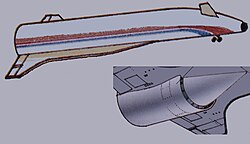
Global space agencies continue to pursue more efficient ways to reach orbit, including the development of air-breathing engines that can operate in both the atmosphere and space.
International Efforts
- India: The Indian Space Research Organisation (ISRO) is developing a Reusable Launch Vehicle (RLV). In April 2023, India successfully tested an autonomous landing of a scaled-down prototype dropped from a Chinook helicopter.
- United States: The Dream Chaser is currently under development to provide cargo and crew capabilities.
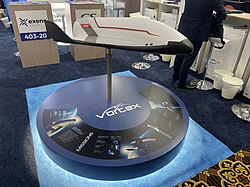
- Europe: Various concepts, such as the VORTEX and the ESA's Space Rider, have been explored to enhance European access to space.
Unflown Concepts
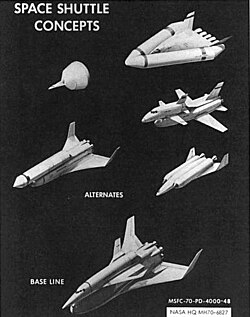
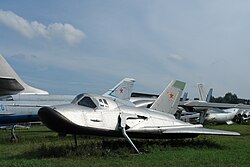
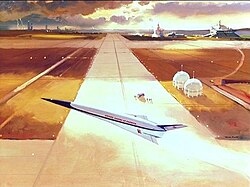
Many ambitious designs never left the drawing board. The Soviet Union's Spiral system and the MiG-105 test vehicle explored low-speed handling, while the U.S. proposed the National Aerospace Plane (NASP) for high-efficiency takeoff. In Europe, the British MUSTARD and German Sänger II projects aimed to reduce the cost of space access compared to expendable rockets.
Spaceplane Comparison Summary
| Vehicle | Country | Type | Status | Key Feature |
|---|---|---|---|---|
| Space Shuttle | USA | Orbital | Retired | Partially reusable, crewed |
| Buran | USSR/Russia | Orbital | Cancelled | Launched via Energia rocket |
| X-37 | USA | Orbital | Active | Robotic, long-duration missions |
| X-15 | USA | Suborbital | Retired | Air-launched hypersonic research |
| RLV | India | Orbital | Development | Autonomous landing prototypes |
Frequently Asked Questions
What is the difference between an orbital and a suborbital spaceplane?
An orbital spaceplane reaches the high velocities necessary to stay in orbit around the Earth, whereas a suborbital spaceplane only reaches the edge of space (the Kármán line) before falling back to Earth.
How do spaceplanes land?
All spaceplanes developed to date land as unpowered gliders, using their wings to steer and descend to a horizontal runway landing.
Why do spaceplanes need heat shielding?
When an orbital spaceplane re-enters the atmosphere, its immense kinetic energy is converted into heat due to friction with the air. Heat shielding prevents the vehicle from burning up.
Which spaceplanes are currently active?
The U.S. X-37 is currently active, and China's Shenlong has successfully demonstrated reusable orbital capabilities. Additionally, the Dream Chaser is under development.
How were the X-15 and SpaceShipOne launched?
Unlike orbital spaceplanes that launch vertically, these suborbital vehicles were launched horizontally from an airborne carrier aircraft.