South Korea Economy: Industrial Powerhouse and Global Trade Leader
The Republic of Korea, commonly known as South Korea, has transformed itself into one of the world's most influential developed economies. From its roots as an agrarian society, the nation has ascended to become a global leader in high-tech manufacturing, electronics, and shipbuilding. Today, it stands as a high-income economy characterized by a sophisticated blend of massive industrial conglomerates and a cutting-edge services sector.
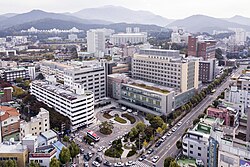
Central to this success is the country's strategic focus on export-led growth, leveraging a highly skilled workforce and significant investments in science and technology. With its financial heart beating in the Seocho District of Seoul, South Korea continues to navigate the complexities of global trade and domestic economic shifts.

Key Facts
- GDP (Nominal): $1.87 trillion (2025), ranking 14th globally.
- GDP per Capita (PPP): $67,550 (2026 forecast).
- Currency: South Korean won (KRW, ₩).
- Primary Export: Integrated circuits (15.35% of total exports).
- Major Trade Partners: China, United States, and Taiwan.
- Human Development Index: 0.937 (Very High).
- Employment Rate: 65.8% (2020).
Economic Overview and Structure
South Korea's economy is heavily weighted toward the services and industrial sectors. As of 2023 estimates, the services sector dominates at 58.4%, followed by industry at 31.6%, while agriculture accounts for a small fraction at 1.6%.
| Indicator | Value | Year/Note |
|---|---|---|
| Nominal GDP | $1.87 Trillion | 2025 |
| GDP Growth | 1.0% | 2025 |
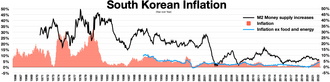
| Inflation (CPI) | 2.5% | 2024 |
| Unemployment Rate | 2.6% | Oct 2025 |
| Foreign Reserves | $458.7 Billion | July 2021 est. |
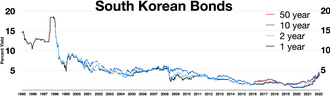
The nation's financial stability is reflected in its strong credit ratings, with Standard & Poor's, Moody's, and Fitch all maintaining stable outlooks and high-grade ratings (AA- to Aa2).
Industrial Sectors and Manufacturing

South Korea is renowned for its chaebol—large, family-owned business conglomerates that have historically driven the nation's industrialization. These entities have propelled the country to the forefront of several key industries.
Electronics and Semiconductors
The electronics sector is the crown jewel of the economy. South Korea is a global leader in the production of integrated circuits (semiconductors), which represent the largest share of its export value. Massive investments continue in chipmaking to maintain a competitive edge.
Automotive and Shipbuilding
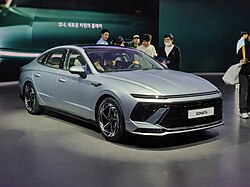
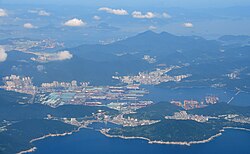
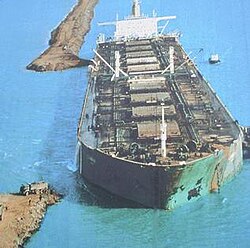
The automotive industry is a primary pillar of manufacturing, producing world-class vehicles and parts. Similarly, the shipbuilding industry remains a global powerhouse, with massive facilities like the Hanwha Ocean Okpo Shipyard producing advanced cargo and passenger ships.
Steel, Chemicals, and Defense
The country maintains a robust steel industry and a sophisticated chemical sector. In recent years, South Korea has also emerged as a defense powerhouse, utilizing its industrial base to produce advanced military equipment for domestic use and export.

Agriculture and Energy
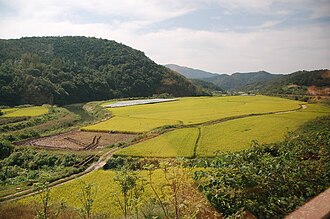
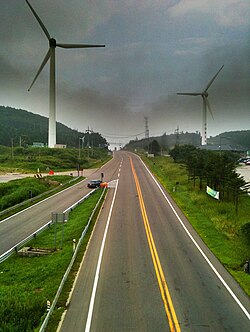
While agriculture is a small part of the GDP, it remains culturally significant, with intensive rice cultivation dominating the landscape. In energy, the country is diversifying its portfolio, incorporating renewable sources such as wind farms to supplement its industrial power needs.
Foreign Trade and Global Relations

South Korea operates as an open, trade-dependent economy. It is a member of major international organizations including the WTO, OECD, G20, APEC, and RCEP.
Export Profile
Exports are the engine of growth, totaling $709.4 billion in 2025. The primary goods exported include integrated circuits, machinery, and vehicles. China remains the largest export partner (23.4%), followed by the United States (17.3%).
Import Profile
To fuel its industrial machine, South Korea imports significant amounts of mineral fuels (25.01% of imports), machinery, and integrated circuits. Its primary import partners mirror its export partners, with China and the United States leading the list.
Labor Market and Social Indicators

The South Korean labor force is characterized by high productivity and a strong emphasis on education. However, the market faces specific challenges, including a youth unemployment rate (ages 15-24) of 6.4% as of 2024.
While the Human Development Index is very high (0.937), the country manages ongoing issues regarding economic inequality, as indicated by a Gini coefficient of 32.9 (medium) in 2021 and a poverty rate of 14.4% as of 2016.

Frequently Asked Questions
What are the main drivers of South Korea's economy?
The economy is primarily driven by high-tech manufacturing and exports, specifically in the electronics, semiconductor, automobile, and shipbuilding sectors, supported by large conglomerates known as chaebol.
Who are South Korea's largest trading partners?
China is the largest partner for both exports and imports, followed closely by the United States. Other significant partners include Taiwan, Japan, and Hong Kong.
What is the role of the South Korean won in the economy?
The South Korean won (KRW) is the official currency. The country's fiscal year follows the calendar year, and its monetary stability is monitored by global agencies like the IMF and World Bank.
How does South Korea's economy compare to its neighbors?
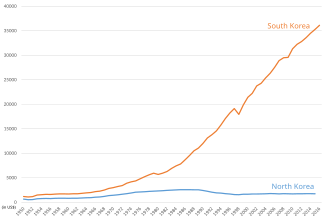
South Korea is classified as a developed, high-income economy. Historically, it diverged sharply from North Korea's economic trajectory after the latter's adoption of Juche in 1974, leading to a massive gap in GDP and living standards.
What are the current economic challenges facing South Korea?
Key challenges include managing inflation (which hit a significant peak in July 2022), addressing youth unemployment, and reducing economic inequality within the population.