South American Long Peace: The History of Interstate Stability
In the study of international relations, South America presents a fascinating anomaly. While other continents have been defined by recurring large-scale conflicts, this region has experienced what scholars call the South American long peace (or Latin American long peace). This term describes the relative absence of major interstate wars—conflicts between sovereign states—since the mid-20th century.
The concept is a regional parallel to the "Long Peace" described by John Lewis Gaddis regarding the stability between great powers during the Cold War. Experts like Nicolás Terradas and Arie Kacowicz suggest that South America has evolved into a "security community" or a "zone of peace," where the use of military force to resolve disputes has become an extreme rarity.
Key Facts
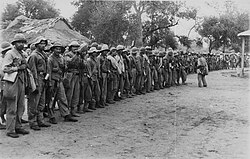
- Timeline: Generally dated from the end of the Chaco War in 1935 to the present, though some scholars trace its origins back to 1884.
- Defining Characteristic: A persistent lack of major conventional wars between sovereign South American states.
- The Paradox: Despite interstate peace, the region continues to face high levels of intrastate violence (violence within a single country).
- Exceptions: Low-intensity militarized crises, such as the 1981 Paquisha War and 1995 Cenepa War, occurred but did not destabilize the regional order.
- Exclusions: The 1982 Falklands War is typically excluded from this analysis as it involved the United Kingdom, a non-South American power.
The Road to Stability: Pre-1935
The Era of Balkanisation
Before the onset of the long peace, the 19th century was characterized by "balkanisation," a period where newly formed states frequently engaged in international wars. Many states were fragile; for instance, Argentina only emerged as a proper nation around 1860, while the weakness of Ecuador and Bolivia often invited foreign interference.
Border Disputes and Legal Frameworks
Much of the early conflict stemmed from vague borders inherited from Spanish and Portuguese colonial rule. Most states relied on uti possidetis iuris (the principle that new states should retain the borders they had as colonies), but poorly mapped regions like the Amazon, Patagonia, and the Atacama Desert led to friction. Brazil differed by often claiming territory based on de facto occupation.
The Shift Toward Arbitration
By the late 19th and early 20th centuries, the region began favoring arbitration over combat. The Pan-American Conference of 1889 highlighted arbitration as a preferred solution. Notable examples include Argentina and Chile inviting the United States (1899) and the British Crown (1902) to act as umpires in territorial disputes.
A milestone in this transition was the 1915 ABC Pact, signed by Argentina, Brazil, and Chile. This agreement established core principles of non-aggression, consultation, and arbitration to resolve disputes peacefully.
Conceptualizing the "Peace"
Scholars debate the nature of this stability using different frameworks:
- Negative Peace: Kalevi Holsti describes the region as a "non-war zone" where war is absent, but the underlying causes—such as ideological rivalries and border disputes—remain unresolved.
- Hybrid Peace: Jorge Battaglino suggests a "hybrid" state where arms races and militarized crises still occur, but robust diplomatic mechanisms (like UNASUR) prevent them from escalating into full-scale war.
- The Latin American Paradox: Sabine Kurtenbach highlights the contradiction where interstate peace coexists with extreme internal violence, including high homicide rates and systemic human rights abuses.
Proposed Causes of the Long Peace
Why has South America avoided major wars? Several theories exist:
- Geography and Culture: A combination of geographic isolation, a lack of "great power" ambitions, and a shared diplomatic culture that prioritizes sovereignty.
- Institutional Constraints: The rise of regional organizations has provided essential forums for mediation, reducing the risk of miscalculation.
- Internal Focus: Some argue that South American militaries have historically focused more on internal security and regime maintenance (fighting "internal enemies") than on external conquest.
- U.S. Hegemony: One thesis suggests the rise of the United States as the dominant power after 1945 suppressed interstate conflict. However, critics note that many states sought U.S. help as early as World War I, and conflicts did not clearly decrease only after 1945.
Summary of Last Major Interstate Conflicts
The following table lists the last war with at least 1,000 casualties fought by South American countries against another South American neighbor.
| Country | Conflict | End Date | Opponent | Result |
|---|---|---|---|---|
| Argentina | Paraguayan War | 1870 | Paraguay | Victory (Machaín-Irigoyen Treaty) |
| Bolivia | Chaco War | 1935 | Paraguay | Defeat (Bolivia–Paraguay Treaty 1938) |
| Brazil | Paraguayan War | 1870 | Paraguay | Victory (Loizaga–Cotegipe Treaty) |
| Chile | War of the Pacific | 1884 | Bolivia, Peru | Victory (Ancón & Valparaíso Treaties) |
| Colombia | Ecuadorian–Colombian War | 1863 | Ecuador | Victory (Pinsaqui Treaty) |
| Ecuador | Ecuadorian–Colombian War | 1863 | Colombia | Defeat (Pinsaqui Treaty) |
| Guyana | N/A | — | None | No interstate wars |
| Paraguay | Chaco War | 1935 | Bolivia | Victory (Bolivia–Paraguay Treaty 1938) |
| Peru | War of the Pacific | 1883 | Chile | Defeat (Treaty of Ancón) |
| Suriname | N/A | — | None | No interstate wars |
| Uruguay | Paraguayan War | 1870 | Paraguay | Victory (Decoud-Kubly Treaty) |
| Venezuela | N/A | — | None | No interstate wars |
Frequently Asked Questions
What exactly is the South American long peace?
It is a term used by historians and international relations scholars to describe the period since 1935 (and in some views, 1884) characterized by a lack of large-scale conventional wars between sovereign states in South America.
Does the "long peace" mean South America is entirely peaceful?
No. This is known as the "Latin American paradox." While states do not fight each other, the region still experiences high levels of internal violence, including organized crime, homicides, and systemic human rights abuses.
Why isn't the Falklands War included in this period?
According to scholars like Kalevi Holsti, the Falklands War of 1982 is excluded because it was a conflict between a South American state (Argentina) and a non-South American power (the United Kingdom), rather than an interstate war within the region.
What role did the United States play in this stability?
Some theorists argue that U.S. hegemony after 1945 acted as a deterrent to war. However, other evidence suggests that South American states were already using the U.S. as a mediator and hegemon after World War I, and that the decline in conflict does not align perfectly with the rise of U.S. dominance.
What is uti possidetis iuris?
It is a legal principle meaning "as you possess under law." In South America, it was used to establish that newly independent states should maintain the same borders they had as colonial administrative districts under Spain or Portugal.