Chaco War: The Bloody Struggle for the Gran Chaco
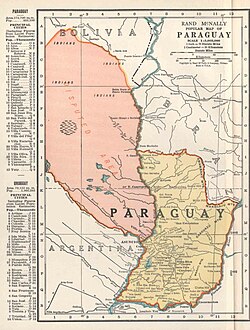
The Chaco War (Spanish: Guerra del Chaco) was a brutal conflict fought between 1932 and 1935 over the northern part of the Gran Chaco region, known as the Chaco Boreal. Driven by the belief that the territory was rich in petroleum, Bolivia and Paraguay engaged in the bloodiest South American war of the 20th century. Because the fighting took place in a semi-arid environment, it is often remembered as La Guerra de la Sed ("The War of Thirst").
This conflict marked a turning point in regional warfare, as it was the first in South America to employ modern weaponry, including airplanes, armored fighting vehicles, and machine guns. The human cost was staggering, claiming the lives of approximately 2% of the Bolivian population and 3% of the Paraguayan population.
![Paraguayan (1924, 1927 and 1932) and Bolivian (1928) stamps. The 1924 Paraguayan stamp shows no border with Bolivia. The 1927 stamp shows a border in the northern part of the Gran Chaco. By 1932, the border had moved even farther north and the disputed territory is called the Chaco Paraguayo; with a slogan saying "was, is and will be [ours]". The Bolivian stamp labels the region as the Chaco Boliviano.](/images/c8/23/c8231d9798485812028fbbc9f5c910bf03f5455217058559e2be5529bb0be3da.jpg)
Key Facts
- Duration: September 9, 1932 – June 12, 1935.
- Primary Cause: Territorial dispute over the Gran Chaco, believed to contain oil.
- Outcome: Paraguayan victory; most of the disputed area was awarded to Paraguay.
- Casualties: 35,000–50,000 Paraguayan deaths and 50,000–80,000 Bolivian deaths.
- Modern Warfare: First South American conflict to use tanks, aircraft, and machine guns.
Origins of the Conflict
The tension between Bolivia and Paraguay dates back to the late 19th century. In 1885, Bolivian President Gregorio Pacheco established Puerto Pacheco on the Upper Paraguay River to assert Bolivian sovereignty. However, Paraguay responded in 1888 by sending the gunboat Pirapó to forcibly evict the Bolivian settlers.
Despite several diplomatic agreements in 1894 and 1907, neither government fully approved the terms. Bolivia continued to establish outposts, such as Ballivián and Guachalla along the Pilcomayo River in 1905, ignoring official Paraguayan protests and further destabilizing the region.
Military Capabilities and Leadership
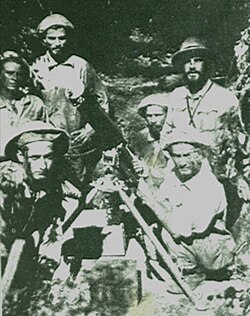
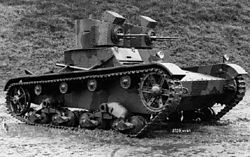
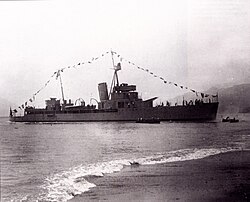
Both nations mobilized significant forces, with Bolivia deploying 210,000 troops and Paraguay fielding 150,000. The war saw the deployment of diverse military assets, from the Paraguayan Navy's gunboat Humaitá to the Bolivian army's Vickers 6-Ton light tanks.
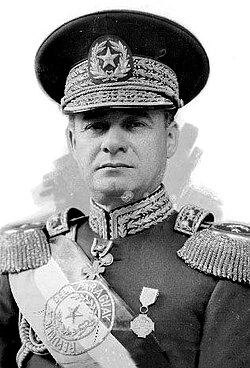
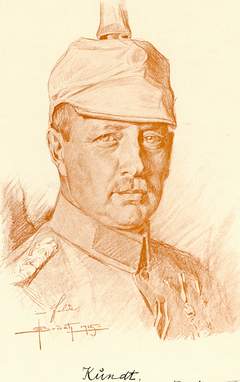
Leadership played a critical role in the campaign. Paraguay was led by commander-in-chief José Félix Estigarribia, while Bolivia's forces were commanded by Hans Kundt, who also served as the Minister of War.
The Course of the War
The Pitiantutá Lake Incident
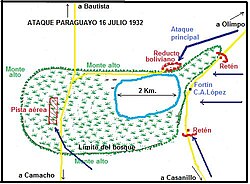
The spark that ignited the full-scale war occurred on June 15, 1932, when a Bolivian detachment captured and burned Fortín Carlos Antonio López at Pitiantutá Lake. This action defied the orders of Bolivian President Daniel Salamanca to avoid provocations. Paraguay retaliated on July 16, driving the Bolivian troops from the area.
Escalation and Offensives
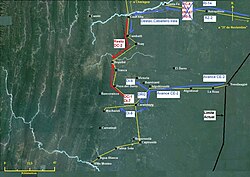
Following the lake incident, President Salamanca shifted his policy and ordered the capture of the outposts of Corrales, Toledo, and Fortín Boquerón. This led to a series of alternating offensives. While Bolivia initially held numerical superiority, Paraguayan forces utilized effective maneuvers to push westward.
A significant turning point occurred after the defeat at Campo de Vía, which forced Bolivian troops to withdraw from Fortín Nanawa. Although a 20-day ceasefire was established in December 1933, hostilities resumed in January 1934 with a reorganized Bolivian army.
Foreign Influence and the Role of Standard Oil
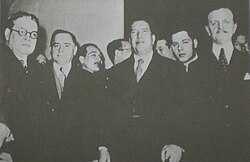
The conflict attracted international attention, particularly from US Senator Huey Long. A radical populist, Long accused the "forces of imperialistic finance" of fueling the war. He specifically targeted Standard Oil, claiming the company had "bought" the Bolivian government to secure oil concessions that Paraguay had refused to grant.
Long's vocal support made him a national hero in Paraguay, and a captured Bolivian fort was even renamed Fort Long in his honor.
Aftermath and Legacy
The war concluded with a peace treaty signed in Buenos Aires in 1938 by representatives from Paraguay, Bolivia, Argentina, and Uruguay.
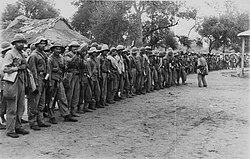
The cost of the victory was high. Paraguay lost roughly 3% of its population, while Bolivia lost 2%. Beyond the deaths, Bolivia suffered 21,000 prisoners of war and 10,000 deserters. Paraguay captured a massive amount of military hardware, including 42,000 rifles and 5,000 machine guns.
Ironically, the petroleum that sparked the war remained elusive for decades. No commercial amounts of oil were found in the awarded territory for 77 years. It was not until 2012 and 2014 that Paraguay announced the discovery of light oil in the Chaco Basin, specifically at the Lapacho X-1 well.
| Feature | Paraguay | Bolivia |
|---|---|---|
| Troop Strength | 150,000 | 210,000 |
| Estimated Deaths | 35,000–50,000 | 50,000–80,000 |
| Population Loss | ~3% | ~2% |
| Key Commander | José Félix Estigarribia | Hans Kundt |
| War Result | Victory | Defeat |
Frequently Asked Questions
Why was the Chaco War called "The War of Thirst"?
It earned the name La Guerra de la Sed because it was fought in the semi-arid Gran Chaco region, where water was scarce and dehydration was a constant threat to soldiers on both sides.
What was the primary cause of the conflict?
The primary cause was a territorial dispute over the Chaco Boreal, which both nations believed contained significant petroleum reserves.
Who won the Chaco War?
Paraguay was the victor, and as a result, the majority of the disputed territory in the Gran Chaco was awarded to them.
Was there actually oil in the disputed region?
For many years, no commercial oil was found. However, in 2012 and 2014, Paraguay announced the discovery of oil in the Chaco Basin, including light oil at the Lapacho X-1 well.
How did modern technology impact the war?
The Chaco War was the first in South America to integrate modern military technology, including the use of aircraft for reconnaissance and bombing, armored tanks, and machine guns, making it one of the deadliest conflicts in the continent's history.