Sonoma History: From Spanish Missions to the Bear Flag Revolt
The story of Sonoma is a tapestry of colonial ambition, military strategy, and revolutionary fervor. Long before it became a renowned destination, the region was the ancestral home of several Native American groups, including the Coast Miwok, Southern Pomo, Wappo, Suisun, and Patwin peoples. The transition from indigenous lands to a colonial outpost began in the early 19th century, setting the stage for a series of dramatic political shifts.
The Mission Era and Spanish Influence
The foundation of the town of Sonoma is inextricably linked to Mission San Francisco Solano. Established in 1823, this mission was unique because it was constructed by Mexican authorities rather than the Spanish. Governor Luis Antonio Argüello envisioned the mission as a strategic fortification to secure the Spanish presence north of the San Francisco Bay and deter the Russian Empire, which had established a presence in Russian America since the 1740s.
The planning of the mission involved Franciscan priest José Altimira and Governor Argüello, though the project faced opposition from José Francisco de Paula Señan, the President-General of the Spanish missions, who believed the secular government should not interfere in religious affairs.
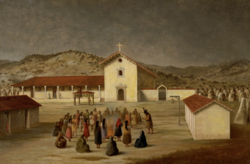
Secularization and the Shift to Civilian Rule
The landscape changed significantly with the Mexican secularization act of 1833. Passed by the Mexican Congress, this act ended the Roman Catholic Church's stewardship of vast land tracts to reduce the church's political and economic influence. Governor José Figueroa appointed Mariano Guadalupe Vallejo, the Commandant of the Presidio of San Francisco, as the comisionado (administrator) to oversee the closing of the mission and its transition into a civilian town.
The Era of General Vallejo
General Vallejo was tasked with protecting the northern frontier from foreign encroachment, specifically the Russian America Company operating out of Fort Ross and Bodega Bay. To achieve this, he moved army units and supplies from the Presidio of San Francisco to Sonoma, leading to the construction of the Sonoma Barracks.
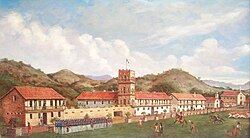
Vallejo's influence extended beyond military command. As the Director of Colonization, he managed land grants, including the 44,000-acre Rancho Petaluma. In 1835, with the help of William A. Richardson, Vallejo designed the Pueblo de Sonoma. The town was laid out according to the Spanish Laws of the Indies, featuring a grid of streets, a central plaza, and a broad main avenue.
While founded as a pueblo, Sonoma remained under military control until 1844, when a town council (ayuntamiento) was established, and Jacobo Leese was named the first alcalde (mayor).
The Bear Flag Revolt
Tensions peaked on June 14, 1846, when thirty-three American insurgents arrived in Sonoma. Many were associated with U.S. Army Brevet Captain John C. Frémont, who had entered California illegally. These settlers were frustrated by Mexican laws that barred them from renting or buying land and feared expulsion as the Mexican-American War loomed.
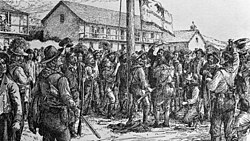
The rebels first captured 170 government horses before seizing the Sonoma Barracks. Despite attempts by General Vallejo to negotiate, the insurgents took him and three associates prisoner. Led by the rhetoric of William Ide, the group proclaimed the creation of the California Republic and raised the Bear Flag. The Californios mockingly called the rebels Los Osos (The Bears) due to their flag and unkempt appearance.
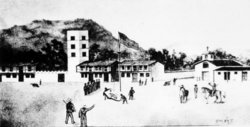
The short-lived republic ended on July 9, 1846, when Lieutenant Joseph Warren Revere of the U.S. Navy lowered the Bear Flag and raised the United States flag, signaling the end of the revolt.
Post-Conquest and the Gold Rush
The American conquest and the subsequent California Gold Rush brought a surge of prosperity to Sonoma as miners and soldiers passed through. However, this boom led to chaotic land speculation. Conflicting records from Vallejo's time as Director of Colonization and disputes between different alcaldes—such as the American-backed John H. Nash and the Californio-backed Lilburn Boggs—resulted in decades of lawsuits to establish clear land titles.
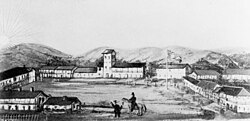
When California became the 31st state on September 9, 1850, Sonoma was initially named the first county seat of Sonoma County. However, as the gold rush faded and the U.S. Army departed, the town entered a recession. By 1854, the county seat and courthouse were moved to the faster-growing city of Santa Rosa.
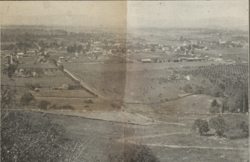
Contemporary Sonoma
In the 20th century, Sonoma evolved into the community known today. The Sonoma City Hall was dedicated in 1908, and the Mission Inn served as a U.S. Navy rest center through World War II. The town's historic charm has even attracted Hollywood, with portions of the 1996 film Scream being filmed at the Sonoma Community Center.
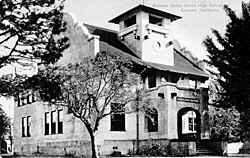
Today, the heart of the town remains the Plaza, which hosts a vibrant seasonal Farmers Market every Tuesday.
Key Facts
- Founded: Mission San Francisco Solano was established in 1823.
- The Bear Flag Revolt: Occurred on June 14, 1846, leading to the brief California Republic.
- Key Figure: General Mariano Guadalupe Vallejo served as Military Commander and Director of Colonization.
- Statehood: California joined the Union as the 31st state on September 9, 1850.
- County Seat: Sonoma was the first county seat before it moved to Santa Rosa in 1854.
| Era | Primary Authority | Key Event/Development |
|---|---|---|
| Mission Era | Mexican Authorities / Catholic Church | Founding of Mission San Francisco Solano (1823) |
| Vallejo Era | General Mariano G. Vallejo | Establishment of Pueblo de Sonoma (1835) |
| Revolt Era | American Insurgents / U.S. Navy | Bear Flag Revolt and California Republic (1846) |
| Post-Conquest | United States Government | Gold Rush boom and statehood (1850) |
Frequently Asked Questions
Why was Mission San Francisco Solano built?
It was built under Governor Luis Antonio Argüello to strengthen the Spanish/Mexican presence north of the San Francisco Bay and prevent the Russian Empire from expanding southward from Russian America.
What was the Bear Flag Revolt?
It was an uprising on June 14, 1846, by American settlers who seized the Sonoma Barracks and declared the independence of the California Republic from Mexico.
Who was General Mariano Guadalupe Vallejo?
Vallejo was the Military Commander of the Northern Frontier and Director of Colonization who oversaw the transition of the mission into the civilian town of Sonoma.
Why did Sonoma lose its status as the county seat?
Following an economic recession in 1851 and the rapid growth of neighboring towns, a special election in 1854 moved the county seat and courthouse to Santa Rosa.
What is the significance of the Laws of the Indies in Sonoma?
The Laws of the Indies were the Spanish colonial urban planning guidelines used by General Vallejo and William A. Richardson to design Sonoma's grid system and central plaza.