Sir Peter Scott: A Legacy of Conservation, Art, and Naval Service
Sir Peter Markham Scott was a true polymath of the 20th century. A distinguished ornithologist (a scientist who studies birds), conservationist, painter, and naval officer, Scott dedicated his life to the protection of the natural world. As the only child of the legendary Antarctic explorer Robert Falcon Scott, he inherited a spirit of adventure and a deep curiosity about the environment, which he channeled into groundbreaking work in wildlife preservation and the arts.
From winning an Olympic medal in sailing to designing the iconic logo of the World Wide Fund for Nature (WWF), Scott's influence spanned multiple disciplines. His ability to communicate the beauty of nature through both painting and broadcasting made him a household name in Britain and a global leader in the fight against species extinction.
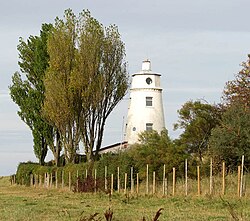
Key Facts
- Founder: Established the Wildfowl & Wetlands Trust (WWT) in 1946.
- WWF: Co-founded the World Wide Fund for Nature and designed its panda logo.
- Olympic Success: Won a bronze medal in sailing (monotype class) at the 1936 Berlin/Kiel Games.
- Naval Innovation: Designed the Western Approaches ship camouflage scheme during WWII.
- Conservation Win: Saved the nene (Hawaiian goose) from extinction through captive breeding.
- Broadcasting: Hosted the influential BBC natural history series Look (1955–1969).
Early Life and Artistic Pursuits
Born in London in 1909, Peter Scott's early years were marked by a fascination with wildfowl. He was educated at Oundle School and Trinity College, Cambridge, where he initially studied Natural Sciences before graduating in the History of Art in 1931. His artistic training continued at the State Academy in Munich and the Royal Academy Schools in London.
Scott became renowned as a wildlife painter, specializing in birds. His first London exhibition took place in 1933. Beyond the canvas, he was a versatile sportsman, excelling in gliding, ice skating, and sailing. In 1938, during the Prince of Wales Cup, he and his crew developed a modified wearable harness, now known as a trapeze, which helped them secure a victory.
![Three pieces of Midwinter Pottery 'Wild Geese' pattern tableware, with Scott's 1954 designs applied to "Stylecraft" shapes by Roy Midwinter, circa 1952, displayed in the Victoria and Albert Museum, London[22]](/images/de/69/de6919298f8f89368bc093773eabc96b246240826920d64c565b9fb9f2a0adbb.jpg)
Military Service and Naval Innovation
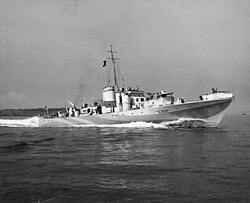
During the Second World War, Scott served in the Royal Navy Volunteer Reserve. He was recognized for his gallantry and skill, receiving the Distinguished Service Cross (DSC) and a Bar to the DSC for actions in the English Channel while commanding the First SGB Flotilla and the Steam Gunboat Grey Goose.
One of his most significant contributions to the war effort was the development of the Western Approaches ship camouflage scheme. By applying principles of countershading (painting shadowed areas white to flatten the appearance of an object), Scott created a scheme so effective that ships became nearly invisible under overcast skies. By May 1941, this scheme was mandated for all ships in the North Atlantic.
Conservation and the Wildfowl & Wetlands Trust
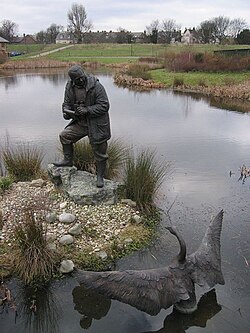
Following the war, Scott shifted his focus toward the preservation of nature. In 1946, he founded the Severn Wildfowl Trust, later renamed the Wildfowl and Wetlands Trust (WWT), headquartered at Slimbridge, Gloucestershire. This organization became a sanctuary for migratory birds and a center for scientific study.
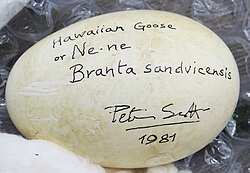
Scott's most notable conservation achievement was the rescue of the nene, the Hawaiian goose, from the brink of extinction during the 1950s through a dedicated captive breeding program. His passion for global conservation also led him to help found the World Wide Fund for Nature (WWF), for which he created the world-famous panda logo.
Public Life, Broadcasting, and Later Years
Scott became a pioneer of nature broadcasting. His BBC series Look ran for over a decade, and in 1968, he narrated The Private Life of the Kingfisher, the first BBC natural history film shown in color. He also authored numerous books, including his autobiography, The Eye of the Wind.
In his later years, Scott continued to pursue his diverse interests. He served as the Chancellor of the University of Birmingham from 1973 to 1983 and remained active in the sailing world, skippering the yacht Sovereign in the 1964 America's Cup challenge. He also had a curious interest in cryptozoology, co-founding the Loch Ness Phenomena Investigation Bureau in 1962.
Summary of Sir Peter Scott's Achievements
| Field | Key Contribution / Achievement |
|---|---|
| Conservation | Founded WWT; Co-founded WWF; Saved the nene goose. |
| Military | Developed Western Approaches camouflage; Awarded DSC and Bar. |
| Sports | 1936 Olympic Bronze (Sailing); 1963 British Gliding Champion. |
| Arts | Renowned wildlife painter; Designed WWF logo. |
| Media | Host of BBC's Look; Oscar-winning narrator for Wild Wings. |
Frequently Asked Questions
What was Sir Peter Scott's most significant contribution to conservation?
Sir Peter Scott is most famous for founding the Wildfowl & Wetlands Trust (WWT) and co-founding the World Wide Fund for Nature (WWF), including the design of its iconic panda logo. He also successfully saved the nene (Hawaiian goose) from extinction.
How did Sir Peter Scott contribute to the war effort in WWII?
Beyond his gallantry in the English Channel, Scott designed the Western Approaches ship camouflage scheme. This system used countershading to make British ships nearly invisible to the enemy under cloudy skies in the North Atlantic.
Did Sir Peter Scott have any Olympic achievements?
Yes, he represented Great Britain and Northern Ireland at the 1936 Summer Olympics in Berlin/Kiel, where he won a bronze medal in the monotype sailing class.
What was the 'Nessiteras rhombopteryx' incident?
In 1975, Scott proposed this scientific name for the Loch Ness Monster to try and get it registered as an endangered species. It was later revealed that the name was an anagram for "Monster hoax by Sir Peter S."
What was Sir Peter Scott's relationship with the BBC?
He was a popular television personality who hosted the natural history series Look from 1955 to 1969 and narrated several documentaries, including the Oscar-winning short Wild Wings.