Ernst Mayr: The Architect of the Modern Evolutionary Synthesis
Ernst Mayr was a towering figure in 20th-century science, a polymath whose influence spanned evolutionary biology, ornithology (the study of birds), and the philosophy of biology. As a German-American scientist, his work provided the conceptual framework necessary to unite different branches of biological thought, leading to what is now known as the modern evolutionary synthesis. This synthesis bridged the gap between Mendelian genetics and Darwinian natural selection, fundamentally changing how we understand the diversity of life.
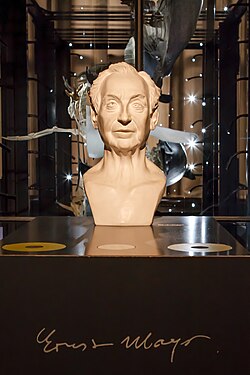
Key Facts
- Full Name: Ernst Walter Mayr
- Lifespan: 5 July 1904 – 3 February 2005 (aged 100)
- Major Contribution: Development of the biological species concept and the modern evolutionary synthesis.
- Fields of Expertise: Systematics, evolutionary biology, ornithology, and the history of science.
- Notable Affiliation: Faculty member at Harvard University and Director of the Museum of Comparative Zoology.
- Major Honors: Recipient of the National Medal of Science and the Crafoord Prize.
Early Life and Field Expeditions
Born in Kempten, Bavaria, Mayr pursued his higher education at the University of Greifswald and Humboldt University of Berlin. His career as a field researcher took a decisive turn in 1927 at the International Zoological Congress in Budapest. There, he was introduced to the naturalist Walter Rothschild, who commissioned him to lead an expedition to New Guinea on behalf of Rothschild and the American Museum of Natural History (AMNH).
During his time in New Guinea, Mayr proved to be an exceptional collector and observer. He identified 38 new bird species and 38 new orchid species during his lifetime. His expeditions also included the Whitney South Sea Expedition to the Solomon Islands. Beyond mere collection, Mayr demonstrated a keen investigative mind; while in the Finschhafen district, he identified significant discrepancies in Hermann Detzner's popular accounts of New Guinea, noting that Detzner's claims of exploring the interior did not align with the reality of his proximity to Australian patrols.
Scientific Contributions and the Modern Synthesis
Mayr is perhaps most famous for his role in the modern evolutionary synthesis. Before this era, the mechanisms of heredity (genetics) and the mechanisms of evolution (natural selection) were often treated as separate disciplines. Mayr helped integrate these fields, creating a unified theory that explained how genetic changes within populations lead to the emergence of new species.
The Biological Species Concept
A cornerstone of Mayr's legacy is the development of the biological species concept. This concept defines a species based on reproductive isolation—the idea that members of a species can interbreed to produce fertile offspring, while being reproductively isolated from other groups. This shifted the focus of systematics (the classification of organisms) from purely morphological traits to biological processes.
Academic Leadership at Harvard
In 1953, Mayr joined the faculty of Harvard University. His leadership extended to the Museum of Comparative Zoology, where he served as director from 1961 to 1970. His academic presence helped solidify Harvard as a global center for evolutionary research. In recognition of his immense contributions, Harvard later renamed the library of the Museum of Comparative Zoology the Ernst Mayr Library.
Awards and Recognition
Mayr's career was marked by an extraordinary array of scientific honors. He was a recipient of the "Triple Crown in Biology," having won the Balzan Prize, the Crafoord Prize, and the International Prize for Biology. His accolades reflect his impact across multiple disciplines, from the history of science to pure biological research.
| Year | Award/Honor | Organization/Context |
|---|---|---|
| 1946 | Leidy Award | Academy of Natural Sciences of Philadelphia |
| 1958 | Darwin-Wallace Medal (Silver) | Linnean Society of London |
| 1967 | Daniel Giraud Elliot Medal | National Academy of Sciences |
| 1969 | National Medal of Science | United States Government |
| 1983 | Balzan Prize | International Scientific Committee |
| 1999 | Crafoord Prize | Royal Swedish Academy of Sciences |
| 1994 | International Prize for Biology | International Scientific Committee |
Legacy and Scientific Impact
Even after his death in 2005, Mayr's influence remains visible in the natural world. Several taxa (groups of organisms) have been named in his honor, including the pseudoscorpion genus Ernstmayria, a species of spider Cebrennus mayri, and a species of damselfly Palaiargia ernstmayri.
Mayr's work was not limited to biology; he was a profound thinker regarding the philosophy of biology, exploring the autonomy of the discipline and the nature of scientific method. He famously noted that while he never won a Nobel Prize, there is no Nobel Prize for evolutionary biology, and that even Darwin would not have received one.
Frequently Asked Questions
What was the modern evolutionary synthesis?
The modern evolutionary synthesis is the unification of Darwinian natural selection with Mendelian genetics. It explains how evolutionary change occurs through genetic variation and natural selection within populations.
What is the biological species concept?
Developed by Mayr, this concept defines a species as a group of actually or potentially interbreeding natural populations that are reproductively isolated from other such groups.
Why did Ernst Mayr receive the Crafoord Prize?
The Crafoord Prize is awarded to scientists performing basic research in fields that do not qualify for the Nobel Prize. Mayr received it in 1999 for his significant contributions to biology.
How many species did Ernst Mayr name?
During his career, Mayr named 38 new bird species and 38 new orchid species.
What was Mayr's role at Harvard University?
Mayr was a faculty member at Harvard and served as the director of the Museum of Comparative Zoology from 1961 to 1970.