Sir Henry Hodgson: Commander of the Australian Mounted Division
Major-General Sir Henry West Hodgson was a distinguished officer of the British Army whose leadership spanned over four decades of service. From his early days in the cavalry to commanding large-scale divisions during the First World War, Hodgson earned a reputation for coolness under pressure and tactical skill, particularly during the challenging campaigns in the Middle East.
Key Facts
- Full Name: Sir Henry West Hodgson, KCMG CB CVO.
- Service Period: 1886–1927.
- Highest Rank: Major-General.
- Notable Command: The Australian Mounted Division during the Sinai and Palestine Campaign.
- Key Conflicts: First World War, including the Gallipoli, Senussi, and Sinai and Palestine campaigns.
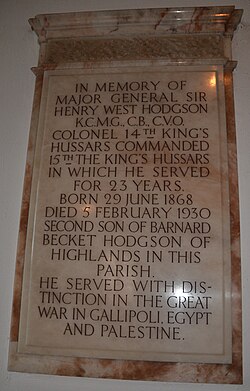
- Lifespan: 29 June 1868 – 5 February 1930.
Early Life and Rise Through the Ranks
Born on 29 June 1868 in Clapham, Henry West Hodgson was the second son of Barnard Beckett Hodgson. Military service ran in the family; his elder brother, Barnard Thornton Hodgson, served as a lieutenant-colonel in the 4th Battalion, Royal Sussex Regiment, while also working as a barrister and Justice of the Peace.
Hodgson began his military journey in 1889 by joining the 15th (The King's) Hussars, a cavalry regiment of the British Army. His ascent through the officer ranks was steady: he became a lieutenant in 1891, a captain in 1895, and served as the regimental adjutant starting in December 1893. By November 1899, he was promoted to major, and by October 1907, he succeeded Colonel William Peyton as the commanding officer of the 15th Hussars.
In November 1910, he was appointed to the Royal Victorian Order. After his tenure as commanding officer, he was placed on the half-pay list in October 1911 and promoted to colonel. By April 1912, he had transitioned to leading a mounted brigade of the Territorial Force, preparing him for the large-scale mobilizations of the coming war.
Leadership in the First World War
At the outbreak of the First World War in August 1914, Hodgson was appointed a temporary brigadier general and took command of the Eastern Mounted Brigade. He deployed with this force to the Gallipoli campaign. Following significant losses, his unit was amalgamated on 22 February 1916 with the remnants of the South Eastern Mounted Brigade to form the 3rd Dismounted Brigade, which Hodgson continued to command.
Following the Allied withdrawal from Gallipoli, Hodgson moved to Egypt to fight in the Senussi campaign as part of the Western Frontier Force. His success in these early theaters led to his first divisional command in February 1917: the Imperial Mounted Division, which was later renamed the Australian Mounted Division.
Hodgson's tenure with the Australian Mounted Division was marked by high praise from his superior, General Harry Chauvel. Chauvel specifically highlighted Hodgson's "masterpiece" during the second Trans-Jordan raid at Es Salt. Surrounded on three sides due to the defection of Arab allies and a fierce enemy counter-attack, Hodgson successfully withdrew his division and attached brigades through extremely difficult terrain, preventing severe losses for the Australian forces.
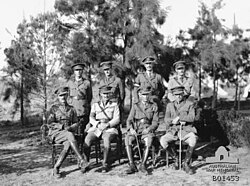
His leadership continued through the Sinai and Palestine Campaign, where he played a pivotal role in the Allied efforts to secure the region.
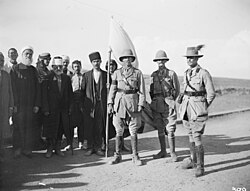
Post-War Career and Final Years
On 1 January 1919, Hodgson was promoted to substantive major-general. In recognition of his contributions in the Middle East, he was honored with the Order of the Nile (Second Class) by the Sultan of Egypt and the Military Order of Savoy by Italy.
In June 1920, he became the colonel of the 14th King's Hussars, where he oversaw the amalgamation of the 14th and 20th Hussars into the 14th/20th King's Hussars. His final military appointment came in June 1923 as the General Officer Commanding (GOC) of the 44th (Home Counties) Division, a Territorial Army formation. He officially retired from the army in 1927.
Sir Henry Hodgson passed away in London on 5 February 1930 at the age of 61. He was buried at St Mary Magdalene's Church in Bolney, West Sussex.
Summary of Service and Honors
| Category | Details |
|---|---|
| Primary Regiments | 15th (The King's) Hussars; 14th King's Hussars |
| Major Commands | Eastern Mounted Brigade, 3rd Dismounted Brigade, Australian Mounted Division, 44th (Home Counties) Division |
| Key Campaigns | Gallipoli, Senussi, Sinai and Palestine |
| Major Awards | KCMG, CB, CVO, Order of the Nile, Military Order of Savoy |
| Years of Service | 1886–1927 |
Frequently Asked Questions
What was Sir Henry Hodgson's most notable achievement?
He is most highly regarded for his skillful withdrawal of the Australian Mounted Division from Es Salt during the second Trans-Jordan raid, a maneuver that saved the division from being cut off and suffered minimal losses despite being surrounded on three sides.
Which divisions did Sir Henry Hodgson command?
He commanded the Eastern Mounted Brigade, the 3rd Dismounted Brigade, the Imperial Mounted Division (later the Australian Mounted Division), and the 44th (Home Counties) Division.
What honors was he awarded for his service in the Middle East?
For his service in the Middle East, he received the Order of the Nile (Second Class) from the Sultan of Egypt and the Military Order of Savoy from Italy.
When did Sir Henry Hodgson retire from the British Army?
Major-General Sir Henry Hodgson retired from the army in 1927, following his command of the 44th (Home Counties) Division.
Where is Sir Henry Hodgson buried?
He is buried at St Mary Magdalene's Church in Bolney, West Sussex, England.