Single-Board Computers: A History of Evolution and Innovation
The landscape of modern computing is defined by miniaturization and efficiency. At the heart of this evolution is the single-board computer (SBC)—a complete computer built on a single circuit board, containing a microprocessor and its necessary supporting components. From the early development boards of the 1970s to the ubiquitous smartphones of today, the SBC has transitioned from a niche tool for engineers to a cornerstone of global technology.
The Dawn of the Single-Board Computer
The emergence of SBCs followed closely on the heels of the first microprocessors. In 1971 and 1972, Intel introduced the SIM4-01 and SIM8-01 development boards. The SIM8-01, powered by the Intel 8008, was a foundational piece of hardware that integrated a CPU, RAM, ROM, and a TTY (teletypewriter) terminal interface.
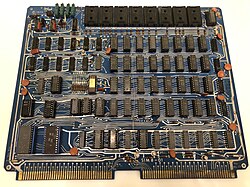
This TTY interface became a standard for several subsequent models, including the Intel 8080-based MYCRO-1 (released in December 1974), as well as the Intel SDK-80 and the Motorola MEK6800D1 in 1975. However, the market shifted toward accessibility in late 1975 with the announcement of the KIM-1. Based on the MOS 6502, the KIM-1 was more affordable and gained significant popularity upon its 1976 release.
The Era of Home Computing and Customization
During the early days of home computing, SBCs played a pivotal role. Systems such as the Acorn Electron, BBC Micro, Ferguson Big Board, Ampro Little Board, and the Nascom were all rooted in this architecture. Unlike modern consumer electronics, many early SBCs, including the KIM-1, were shipped without an enclosure, leaving the owner to provide their own housing.
Throughout the 1980s, the SBC design remained common in home computers. Some manufacturers even encouraged users to perform their own hardware upgrades by soldering components directly onto pre-marked points on the board, fostering a culture of DIY hardware modification.
The Shift to Modular Motherboards
The 1990s saw a decline in the prevalence of pure single-board designs for personal computers. This shift was driven by the standardization of the PCI (Peripheral Component Interconnect) bus and the adoption of IBM's peripheral standards. These advancements made motherboards and compatible components cheap and widely available.
Simultaneously, the rise of multimedia platforms—such as Sound Blaster cards and CD-ROM drives—evolved faster than the CPUs themselves. This created a demand for modularity. Instead of a single board, the industry moved toward motherboards that housed the CPU, while peripheral components like graphics processors, hard disk drive controllers, and RAM modules were placed on separate daughterboards.
The Return to Integration
By the 2000s, the trend reversed as technology allowed for greater integration. The introduction of USB (Universal Serial Bus) reduced the need for a wide variety of peripheral standards on the motherboard. Advances in integrated circuit manufacturing led to new chipsets that could handle I/O (Input/Output) functions previously reserved for daughterboards.
By the end of the decade, PC motherboards had integrated support for a vast array of components, including:
- Disk drive interfaces: IDE, SATA, NVMe, and RAID
- Integrated GPUs (Graphics Processing Units)
- Networking: Ethernet
- Traditional I/O: Serial, parallel, USB, and keyboard/mouse support
The Modern SoC Revolution
The 2010s marked a period of explosive growth for SBCs, driven by the development of the System on a Chip (SoC). An SoC allows almost all motherboard components to be placed on a single silicon die, drastically reducing size and power consumption.
A landmark example is the Raspberry Pi. Built around a custom Broadcom SoC with open-source drivers, it was originally intended for education. However, its Linux support and programmable GPIO (General Purpose Input/Output) pins made it a favorite for hobbyists working on home automation, streaming, and video game emulation.
In the industrial sector, the rise of smartphones and the Internet of Things (IoT) accelerated the adoption of SoCs. By the 2020s, the single-board architecture became the standard for tablets, laptops, and nearly all smart devices.
Summary of SBC Evolution
| Era | Primary Focus | Key Technology/Example | Characteristic |
|---|---|---|---|
| 1970s | Development & Early Hobbyists | Intel SIM8-01, KIM-1 | Basic CPU/RAM/ROM integration |
| 1980s | Home Computing | BBC Micro, Acorn Electron | User-solderable upgrades |
| 1990s | Standardization & Modularity | PCI Bus, IBM Standards | Shift to motherboards and daughterboards |
| 2000s | Re-integration | USB, Integrated Chipsets | On-board I/O and storage support |
| 2010s-Present | Miniaturization & Ubiquity | Raspberry Pi, SoCs | All-in-one silicon dies (SoC) |
Key Facts
- The Intel SIM8-01 (1972) was an early SBC based on the Intel 8008.
- The KIM-1 (1976) popularized SBCs by offering a more affordable price point.
- The 1990s saw a move away from SBCs toward modular motherboards due to the PCI bus and IBM standards.
- SoC (System on a Chip) technology allows most motherboard components to exist on a single die.
- The Raspberry Pi expanded SBC use into education and hobbyist projects via GPIO pins and Linux.
Frequently Asked Questions
What is a single-board computer?
A single-board computer is a complete computer built on a single circuit board, containing the microprocessor, memory, and input/output interfaces required for operation.
Why did the industry move away from SBCs in the 1990s?
The industry shifted toward modular motherboards and daughterboards to accommodate the rapid development of multimedia peripherals (like Sound Blaster cards) and to take advantage of the standardized PCI bus.
What is a System on a Chip (SoC)?
An SoC is an integrated circuit that integrates all or most components of a computer or other electronic system, including the CPU, memory, and I/O ports, onto a single semiconductor die.
What are GPIO pins on a Raspberry Pi used for?
General Purpose Input/Output (GPIO) pins allow users to connect the SBC to external electronic components, enabling projects like home automation and hardware control.
Which early SBC was known for being affordable?
The KIM-1, based on the MOS 6502 and released in 1976, was a cheaper and more popular alternative to earlier development boards.