Southern Baptist Convention
The Southern Baptist Convention (SBC), also known as the Great Commission Baptists (GCB), is one of the largest Protestant denominations in the United States. Operating under a congregational polity—meaning each local church is self-governing—the SBC functions as a voluntary cooperation of churches focused on evangelical Baptist theology and the spread of the Christian gospel.
With a membership of over 12 million people across more than 46,000 congregations as of 2025, the convention maintains a vast network of mission boards, seminaries, and aid organizations to support its global and domestic outreach.
Key Facts
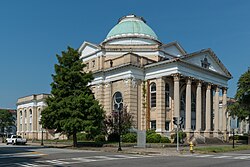
- Founded: 1845, after separating from the Triennial Convention.
- Theology: Evangelical Baptist, utilizing the Protestant Bible.
- Membership (2025): 12,331,954 members across 46,608 congregations.
- Core Practice: Full-immersion baptism.
- Current President: Willy Rice.
- Primary Mission Arms: International Mission Board and North American Mission Board.
Historical Evolution
Origins and the 19th Century
The SBC emerged from the complex religious and social landscape of the colonial era and the American Revolution. In 1845, the convention officially separated from the Triennial Convention due to deep divisions over the issue of slavery.
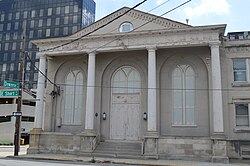
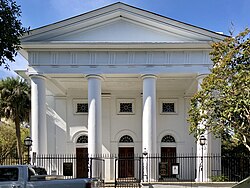
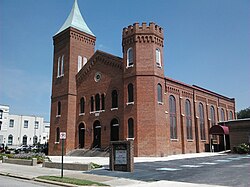
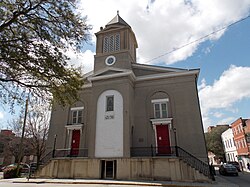
During this period, Black Baptist congregations also began to form and separate. Notable early examples include the First Baptist Church in Charleston, South Carolina, and the Gillfield Baptist Church, which was a prominent Black American congregation within the Portsmouth Association before the SBC's establishment.
Growth and Diversification
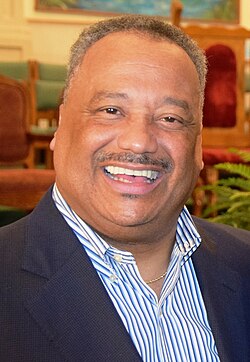
Following the American Civil War, the SBC experienced significant growth. By the mid-20th century, membership surged, peaking around the year 2000 with nearly 16 million members. Over time, the convention has seen increasing diversity, including the election of Fred Luter Jr. as the first African American president of the Southern Baptists.
Modern Challenges and Controversies
The convention has faced several internal and external conflicts, including the Landmark and Whitsitt controversies, and a long-standing tension between moderate and conservative factions. In recent years, the SBC has dealt with a significant sexual abuse scandal and federal investigations regarding the handling of abuse claims.
Additionally, the convention has seen departures from members and churches over policy changes, such as the status of women in ministry. Former U.S. President Jimmy Carter, for example, broke with the SBC in 2000 over its position on women.
![President Jimmy Carter addressing the SBC in Atlanta in 1978 (in 2000, Carter broke with the SBC over its position on the status of women)[193]](/images/ba/15/ba1530d615fdfbfed590e060855c2abc9e2cf43e0b18200a6f7f619320e89ef2.jpg)
Doctrine and Worship
Core Beliefs and Position Statements
The SBC adheres to Evangelical Baptist theology. Key position statements include a strong opposition to abortion, which was highlighted in a 1971 resolution urging a loosening of U.S. abortion laws. The convention also maintains specific views on gender-based roles and the sanctity of marriage.
Ordinances and Worship
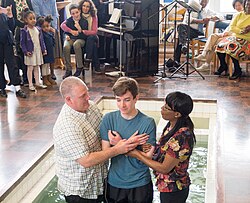
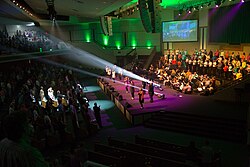
The primary ordinance of the SBC is full-immersion baptism, which is the accepted mode of initiating believers into the faith. Worship services vary by congregation but generally focus on biblical preaching and congregational singing.
Organizational Structure
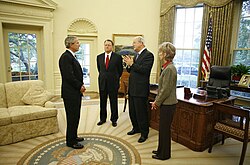
Governance and Leadership
The SBC is led by a President and governed through an annual meeting where messengers from local churches vote on resolutions and budgets. While the national convention provides coordination, the local pastor and deacons manage the day-to-day operations of individual churches.
The Cooperative Program and Missions
The Cooperative Program is the primary funding mechanism that allows churches to pool their resources to support missions and ministries. This funding fuels two major agencies:
- International Mission Board: Focuses on global evangelism.
- North American Mission Board: Focuses on church planting and outreach within the U.S. and Canada.
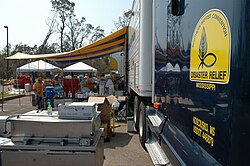
The convention also operates Send Relief, its primary aid organization, which provides disaster relief and humanitarian assistance.
Education and Seminaries
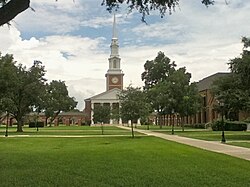
The SBC supports several theological seminaries to train its clergy, including:
- Southern Baptist Theological Seminary (Louisville, KY)
- New Orleans Baptist Theological Seminary (New Orleans, LA)
- Southeastern Baptist Theological Seminary (Wake Forest, NC)
- Midwestern Baptist Theological Seminary (Kansas City, MO)

Membership Trends
While the SBC grew rapidly throughout the 20th century, recent decades have shown a decline in total membership.
| Year | Approximate Membership |
|---|---|
| 1845 | 350,000 |
| 1905 | 1,900,000 |
| 1950 | 7,080,000 |
| 2000 | 15,900,000 |
| 2010 | 16,136,044 |
| 2020 | 14,089,947 |
| 2025 | 12,331,954 |
Frequently Asked Questions
What is the difference between the SBC and other Baptist groups?
The SBC is a specific convention of churches that cooperate for missions and education. It separated from the Triennial Convention in 1845 and is characterized by its evangelical theology and the Cooperative Program.
What is the Cooperative Program?
The Cooperative Program is a unified funding system where local Southern Baptist churches contribute money to a central fund, which is then distributed to support international and domestic missions, seminaries, and other convention entities.
Does the SBC allow women to be pastors?
The SBC generally opposes the ordination of women. The convention has disfellowshipped churches that have hired female pastors, citing a lack of "friendly cooperation" with its position on gender-based roles.
What is the meaning of "congregational polity"?
Congregational polity means that each local church is autonomous and self-governing. The national convention cannot dictate the internal affairs of a local church, though it can choose to disfellowship churches that do not align with its core tenets.
How does the SBC perform baptisms?
The Southern Baptist Convention practices full-immersion baptism, where the entire body of the person is submerged in water, symbolizing death to sin and rebirth in Christ.