Shubenacadie Mission: A History of Faith and Conflict
The history of the Shubenacadie region in Nova Scotia is a complex tapestry of spiritual convergence, military strategy, and indigenous resilience. At the center of this narrative is Mission Sainte-Anne, a site that served as both a religious sanctuary and a strategic outpost during the colonial struggles for North America.
The Foundations of Mission Sainte-Anne
The effort to centralize the Mi'kmaq people of the Nova Scotia peninsula began as early as 1699, led by Father Louis-Pierre Thury. However, it was not until Dummer's War that a permanent presence was established. Antoine Gaulin, a missionary born in Quebec, erected a permanent mission at Shubenacadie, located near Snides Lake and the site of a former Residential school. In addition to this central hub, Gaulin conducted seasonal visits to Mirlegueche, LaHave, and Cape Sable.
The dedication of the mission to Saint Anne reflects a unique cultural intersection. In Roman Catholicism, Anne is recognized as the mother of Mary and the grandmother of Jesus. This mirrored the high esteem held for grandmothers within Mi'kmaq society. This shared value created a point of agreement between the two worldviews, illustrating that the process of conversion was often a complex negotiation of cultural accommodation.
A Strategic Outpost in Times of War
By October 1738, Father Jean-Louis Le Loutre arrived at Mission Sainte-Anne. He had spent the preceding winter in Cape Breton studying the Mi'kmaq language under the guidance of Abbé Pierre Maillard. As regional tensions escalated during King George's War and Father Rale's War, the mission evolved into more than a place of worship; it became a functional military base.
The site's strategic importance is evidenced by the movements of colonial forces and indigenous warriors. In 1747, the troops of Coulon de Villiers passed through the area during a grueling mid-winter march toward the Battle of Grand Pré. Later, during Father Le Loutre's War, Mi'kmaq warriors utilized the mission as a staging point for raids against Dartmouth and Halifax.
On August 18, 1754, Captain Matthew Floyer visited the site and described the "Masshouse" as the neatest in the country, noting its fine lofty steeple and weather cock. While Floyer's written report mentioned the parsonage as the only habitation, his accompanying map suggested the existence of three separate structures.
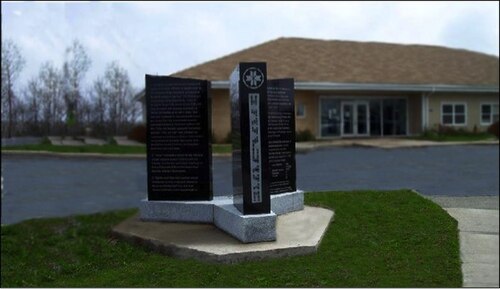
Destruction and Legacy
The decline of the mission coincided with the French and Indian War. By October 1755, as the Expulsion of the Acadians began, Mission Sainte-Anne was destroyed. According to oral tradition, the Mi'kmaq destroyed the mission themselves and dumped the remains into the adjacent Snides Lake to ensure the site did not fall into the hands of New Englanders.
The subsequent establishment of a reserve in 1779 by Governor Michael Francklin marked a new chapter for the community. Today, the legacy of the region continues through the people, including ongoing disputes regarding a self-regulated indigenous fishery.
Key Facts
- Established: Permanent mission founded by Antoine Gaulin during Dummer's War.
- Cultural Link: Dedicated to Saint Anne, bridging the gap between Catholic tradition and the Mi'kmaq respect for grandmothers.
- Military Use: Served as a staging point for attacks on Halifax and Dartmouth.
- Fate: Destroyed around October 1755; oral history states it was dumped into Snides Lake.
- Reserve: Formally established in 1779 by Governor Michael Francklin.
| Year/Period | Event | Key Figure(s) |
|---|---|---|
| 1699 | Initial attempt to gather Mi'kmaq at Shubenacadie | Father Louis-Pierre Thury |
| Dummer's War | Establishment of permanent mission | Antoine Gaulin |
| 1738 | Arrival of Father Jean-Louis Le Loutre | Jean-Louis Le Loutre |
| 1747 | Troops march toward Battle of Grand Pré | Coulon de Villiers |
| 1754 | Visit and documentation of the Masshouse | Captain Matthew Floyer |
| 1755 | Destruction of the mission | Mi'kmaq (Oral Tradition) |
| 1779 | Establishment of the reserve | Governor Michael Francklin |
Frequently Asked Questions
Why was the mission dedicated to Saint Anne?
The dedication to Saint Anne served as a bridge between Roman Catholicism and the Mi'kmaq worldview, as both cultures held grandmothers in high esteem.
What role did the mission play during colonial wars?
Beyond its religious purpose, the mission functioned as a military base and a staging point for Mi'kmaq warriors attacking Halifax and Dartmouth.
How was the mission destroyed?
While records indicate it was gone by October 1755, oral tradition maintains that the Mi'kmaq destroyed the buildings and dumped them into Snides Lake to prevent New Englanders from seizing them.
Who established the Shubenacadie reserve?
The reserve was established in 1779 by Governor Michael Francklin.
What current issues affect the Shubenacadie community?
Members of the community are currently involved in a dispute regarding a self-regulated indigenous fishery.