Halifax: The Vibrant Capital of Nova Scotia
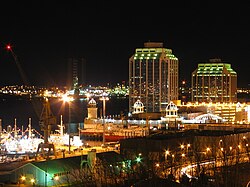
Perched on the rugged coast of Atlantic Canada, Halifax serves as the provincial capital of Nova Scotia and the heart of the Halifax Regional Municipality. Known for its deep-water harbor and rich maritime history, the city is a blend of colonial charm and modern urban development. From its role as a critical shipping gateway to its thriving academic and cultural scenes, Halifax is a dynamic hub for residents and visitors alike.
The city was established as a town in 1749 and later incorporated as a city in 1841, named after George Montagu-Dunk, the 2nd Earl of Halifax. Today, it is governed as a regional municipality, a structure adopted on April 1, 1996, led by Mayor Andy Fillmore and the Halifax Regional Council.
Key Facts
- Demonym: Residents are known as Haligonians.
- Economy: The Gross Metropolitan Product for the Halifax CMA was CA$ 24.4 billion in 2020.
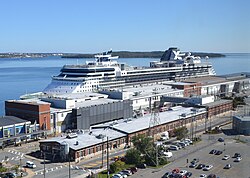
- Strategic Location: The Port of Halifax is North America's first inbound and last outbound shipping gateway to Europe.
- Population: The regional municipality had a population of 439,819 as of 2021.
- Motto: "E Mari Merces," which is Latin for "From the Sea, Wealth."
Geography and Climate
Halifax is characterized by its coastal landscape, with elevations ranging from sea level to a peak of 241.9 meters. The city experiences a maritime climate with significant precipitation throughout the year, totaling approximately 1,468.1 mm annually.
Winters are cold and snowy, with record lows reaching -29.4°C. Conversely, summers are mild to warm, with record highs hitting 37.2°C. The city's weather is heavily influenced by its proximity to the Atlantic Ocean, resulting in frequent rain and varying humidity levels.
Urban Landscape and Culture
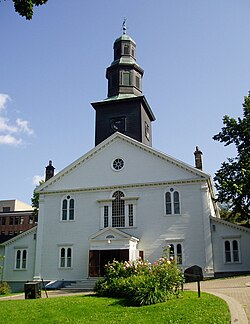
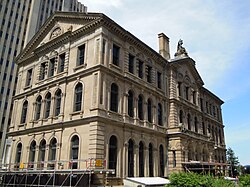
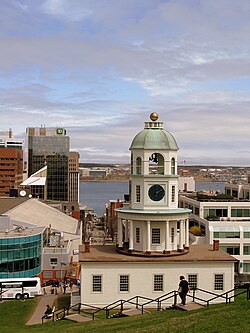
The municipal landscape of Halifax is a mix of historic landmarks and modern infrastructure. The city is home to the Art Gallery of Nova Scotia, the largest art gallery in Atlantic Canada, and the historic Halifax Town Clock, which overlooks the downtown core.
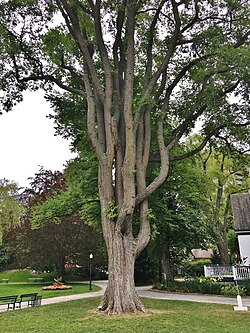
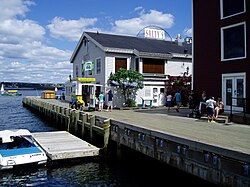
Public spaces are a cornerstone of the city's appeal. The Halifax Public Gardens, a Victorian-era site designated as a National Historic Site of Canada in 1984, offers a serene escape with its diverse flora, including ancient elm trees. Along the coast, the Halifax Boardwalk provides a scenic public footpath for pedestrians to enjoy the harbor views.

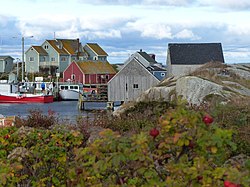
Beyond the city center, the community of Peggys Cove remains one of the region's most iconic tourist attractions, showcasing the raw beauty of the Nova Scotian coastline.
Education and Governance
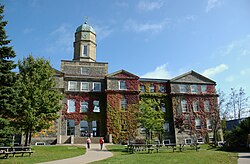
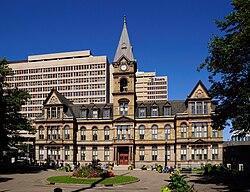
Halifax is a center for higher learning, most notably hosting Dalhousie University. Established in 1818, it is one of the oldest English-language post-secondary institutions in Canada. The city's administrative heart is Halifax City Hall, the seat of the municipal government.
Economy and Infrastructure
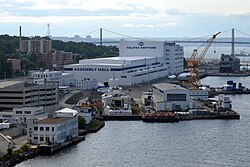
The economy of Halifax is bolstered by its strategic port and industrial sectors. The Halifax Shipyard, operated by Irving Shipbuilding, is a major employer in the region. The city also maintains a robust media presence, including the daily newspaper The Chronicle Herald.
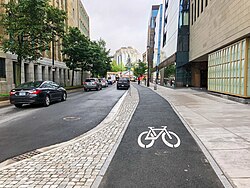
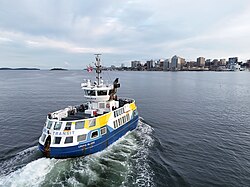
Transportation in the city is diverse, featuring a network of roads, dedicated bike lanes, and public transit. The Halifax Transit ferry system, including vessels like the Craig Blake, connects the peninsula to Dartmouth.
Sports and Recreation
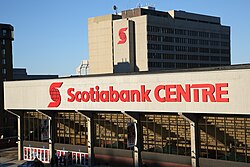
Halifax is a passionate sports town with several professional and semi-professional teams. The Scotiabank Centre, the largest multi-purpose sporting arena in Atlantic Canada, hosts the Halifax Mooseheads (Major Junior Hockey) and the Halifax Thunderbirds (Box Lacrosse).

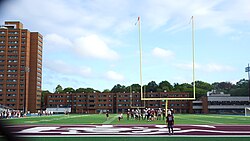
Other notable teams include HFX Wanderers FC and Halifax Tides FC, both playing at the Wanderers Grounds, and the Halifax Hoopers. The city also has a strong university sports culture, exemplified by facilities like Huskies Stadium.

Major Sporting Events
Over the decades, Halifax has proven its capability to host world-class events, including:
- World Junior Ice Hockey Championships (2003, 2023)
- IIHF World Championship (2008, co-hosted with Quebec City)
- ICF Canoe Sprint World Championships (1997, 2009, 2022)
- Canada Winter Games (2011)
- North American Indigenous Games (2023)
Demographics and Society
As of 2021, the population of the regional municipality grew to 439,819, reflecting a 9.1% increase from 2016. The city is ethnically diverse, with the largest group being of European descent (79.43%), followed by significant African (4.72%), South Asian (3.85%), and Indigenous (3.82%) populations.
English is the predominant mother tongue, spoken by 86.43% of the population, followed by French, Arabic, and Mandarin. Religiously, Christianity remains the largest group at 53.12%, while a significant portion of the population (39.74%) identifies as irreligious.
| Year | Population | Percentage Change |
|---|---|---|
| 1851 | 39,914 | — |
| 1901 | 74,662 | +4.6% |
| 1951 | 162,217 | +32.3% |
| 2001 | 359,183 | +4.7% |
| 2021 | 439,819 | +9.1% |
Frequently Asked Questions
What is the meaning of the Halifax motto "E Mari Merces"?
The Latin motto "E Mari Merces" translates to "From the Sea, Wealth," reflecting the city's historical and economic reliance on its maritime location.
Which is the largest art gallery in Atlantic Canada?
The Art Gallery of Nova Scotia, located in Halifax, is the largest art gallery in the Atlantic Canada region.
What is the significance of the Port of Halifax?
The Port of Halifax is strategically important as it serves as North America's first inbound and last outbound shipping gateway to Europe.
Which professional sports teams are based in Halifax?
Halifax hosts several teams, including the Halifax Mooseheads (hockey), Halifax Thunderbirds (lacrosse), HFX Wanderers FC (men's soccer), and the Halifax Hoopers (basketball).
How has the population of Halifax changed recently?
Between 2016 and 2021, the population of the Halifax Regional Municipality grew by 9.1%, reaching 439,819 residents.