Shipwrecks of the World: A Global Record of Lost Vessels
The ocean floor serves as a vast museum, preserving the remnants of maritime history. From the strategic losses of global conflicts to the tragic results of natural disasters and accidental collisions, shipwrecks provide a tangible link to the past. These vessels, ranging from massive cargo liners to small concrete tugboats, tell stories of commerce, war, and the relentless power of the sea.
Key Facts
- World War II Impact: A significant number of recorded losses occurred during WWII, primarily due to aerial bombing and submarine torpedoes.
- Diverse Vessel Types: Lost ships include lumber schooners, concrete-hulled merchant ships, motor torpedo boats, and specialized dredges.
- Global Distribution: Wrecks are scattered across the Pacific Ocean, East China Sea, Gulf of Mexico, and various European river systems.
- Varied Causes: Causes of loss range from military action and hurricanes to gradual decay and intentional scuttling for breakwaters.
War-Time Losses and Naval Combat
The Second World War left a permanent mark on the world's oceans. Many cargo vessels and military craft were lost to strategic strikes. For instance, the Cafernströn (Sweden) and the Enna (Italy) were both sunk by aircraft, though the Enna was later raised and scrapped in 1947. In Germany, the Gerhard, a 184.7-foot cargo vessel, was bombed and sunk in Hamburg, though it was eventually repaired and returned to service.
Submarine warfare played a critical role in the Pacific theater. The United States Navy's submarines were responsible for numerous sinkings, including the Kaifuku Maru and Wuhu Maru (both sunk by the USS Seawolf in the East China Sea), the Miyadonu Maru (USS Growler), the Taiau Maru (USS Gudgeon), the Tateyama Maru (USS Pickerel), and the Yamagibu Maru (USS Pargo).
Specialized Naval Craft
Beyond cargo ships, smaller tactical vessels were also lost. The Imperial Japanese Navy lost three TM 4/No. 102-class motor torpedo boats—Gyoraitei No. 109, 110, and 111—between 1943 and 1945. Additionally, the Cretestem, a 125-foot concrete tugboat from the United Kingdom, was destroyed by bombing in 1943.
Accidents, Natural Disasters, and Abandonment
Not all shipwrecks are the result of combat. Environmental factors and mechanical failures often lead to maritime losses. The Galveston, a US Army Corps of Engineers dredge, sank during a hurricane off the coast of Texas, resulting in the deaths of 12 crew members. Similarly, the Gelmer dredge sank in 88 feet of water in the Gulf of Mexico.
Some vessels were lost to the slow process of decay. The Alice L. Pendleton, a 228-foot four-masted lumber schooner, was abandoned in the 1940s at the Palmer Shipyard in Connecticut. Over time, it rotted and settled into the river bottom in 10 feet of water. Other losses include the D S S Co. No. 8 scow in Alaska and the Zibello barge in Italy's River Po.
Intentional Sinking and Target Practice
Certain ships were intentionally sunk for specific purposes. The Moliette, a concrete-hulled merchant ship, was used as a target for machine guns and rockets by the US Army Air Forces before sinking off West Mersea. In Australia, the Sidney (formerly the HMAS Protector) was scuttled to serve as a breakwater at Heron Island after a collision with a tug.
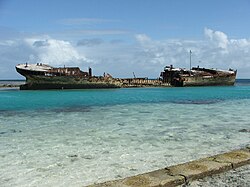
Summary of Notable Shipwrecks
| Ship Name | Nationality | Cause of Loss | Location/Notes |
|---|---|---|---|
| Alice L. Pendleton | United States | Abandonment/Decay | Mystic River, Connecticut |
| Kaifuku Maru | Japan | Torpedoed (USS Seawolf) | East China Sea |
| Galveston | USA (Army) | Hurricane | Off Galveston, Texas |
| Sidney (HMAS Protector) | Australia | Scuttled | Heron Island, Queensland |
| Moliette | United Kingdom | Target Practice | Off West Mersea |
| Thaddeus S. C. Lowe | United States | Heavy Seas Damage | Constructive Total Loss |
Frequently Asked Questions
What is a constructive total loss?
A constructive total loss occurs when a vessel is so severely damaged that the cost of repairing it would exceed its value, as seen in the case of the Liberty ship Thaddeus S. C. Lowe.
Which US Navy submarines were mentioned as sinking Japanese cargo ships?
The submarines mentioned include the USS Seawolf, USS Growler, USS Gudgeon, USS Pickerel, and USS Pargo.
Were any ships made of materials other than steel or wood?
Yes, the Cretestem tugboat and the Moliette merchant ship were both noted as having concrete hulls.
What happened to the Gerhard after it was sunk?
The Gerhard, a German cargo vessel bombed in Hamburg, was raised, repaired, and successfully returned to service.
How many crew members died on the Galveston dredge?
Twelve crew members were killed when the Galveston dredge sank during a hurricane.