Empire Ships: The Legacy of the 'L' Suffix Fleet
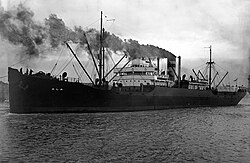
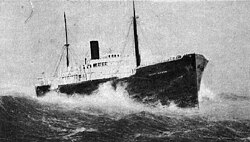
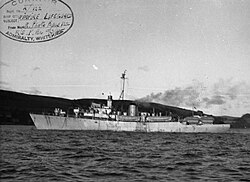
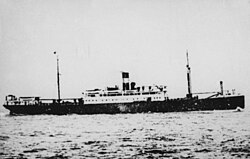
During the height of the Second World War, the Ministry of War Transport (MoWT) oversaw a massive shipbuilding effort to maintain vital supply lines. Among these were the "Empire" ships, a diverse fleet of cargo vessels, tankers, and tugs. The ships designated with the 'L' suffix represent a fascinating cross-section of wartime maritime logistics, ranging from prototype designs to captured enemy vessels and specialized colliers.
These vessels served in every theater of the war, from the treacherous Arctic convoys to the Mozambique Channel. While many were lost to U-boat torpedoes and aerial bombardment, others survived to serve in the post-war commercial era, often changing names and owners across the globe.
Key Facts
- Empire Liberty served as the prototype for the famous Liberty ship design.
- Many vessels, such as Empire Labrador and Empire Lancer, transitioned from wartime service to private commercial ownership.
- The fleet included specialized ships like colliers (coal carriers) and CAM ships (Catapult Aircraft Merchantmen).
- Significant losses occurred due to German U-boats, including the sinkings of Empire Lake, Empire Lakeland, and Empire Lytton.
- Some ships were seized from enemy territories, such as Empire Lea, which was captured in Copenhagen in 1945.
Cargo Ships and Specialized Transports
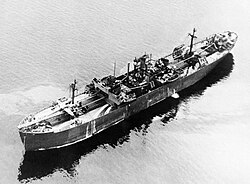
The bulk of the 'L' fleet consisted of cargo ships designed for versatility. The Empire Liberty (7,157 GRT) was particularly significant as the prototype for the Liberty ship, later serving the Greek government as the Kyklades. Other large cargo vessels included the Empire Life (9,879 GRT), which later became the Good Hope Castle.
Specialized roles were also critical. The Empire Lawrence was a 7,457 GRT CAM ship—a merchant vessel equipped with a catapult to launch aircraft for convoy protection—before it was sunk by German aircraft in 1942. Meanwhile, the Empire Lagos began its life as an aircraft engine repair ship (HMS Solway Firth) before being completed as a cargo ship.
The Role of Colliers
Colliers, ships specifically designed to carry coal, were essential for fueling the war effort. This group included the Empire Lagoon (2,013 GRT), Empire Laird (313 GRT), and Empire Lake (2,852 GRT). These ships often faced extreme danger; for instance, the Empire Lake was torpedoed by U-181 in July 1943.
Tankers and Support Vessels
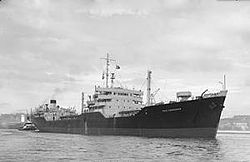
Fuel transport was managed by tankers like the Empire Law (8,127 GRT), which later served the Royal Fleet Auxiliary as RFA Wave Conqueror. Smaller coastal tankers, such as the Empire Lass, provided flexible fuel distribution and were often modified over time to increase capacity.
Tugs and Coastal Craft
The fleet also relied on smaller, agile vessels for harbor work and coastal transport. Tugs like the Empire Lawn, Empire Leonard, and Empire Lucy provided essential towing services. Coastal ships, such as the Empire Lundy and Empire Lewisham, handled shorter routes, often surviving the war to be sold to international operators in Greece and Norway.
Wartime Losses and Post-War Fate
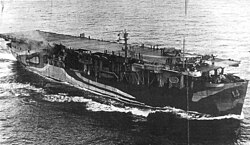
The cost of maintaining these lifelines was high. Many ships were lost to the "Grey Wolves" of the Kriegsmarine. The Empire Lancer and Empire Lugard were both victims of torpedoes, while the Empire Light (1940) was destroyed by shellfire from the German auxiliary cruiser Pinguin.
For those that survived, the post-war years brought a variety of fates. Many were sold to private firms, such as the Empire Labrador, which spent years in Asian waters and was even seized by a Chinese Nationalist warship in 1950 before being released with the help of HMS Mounts Bay.
Summary of Notable 'L' Suffix Empire Ships
| Ship Name | Type | GRT | Fate / Final Status |
|---|---|---|---|
| Empire Liberty | Cargo (Prototype) | 7,157 | Scrapped 1960 in Osaka |
| Empire Lawrence | CAM Ship | 7,457 | Sunk by aircraft 1942 |
| Empire Law | Tanker | 8,127 | Scrapped 1960 in Spezia |
| Empire Lake | Collier | 2,852 | Sunk by U-181 1943 |
| Empire Lytton | Tanker | 9,807 | Sunk by U-442 1943 |
| Empire Labrador | Cargo | 3,539 | Scrapped 1970 in Sakaide |
Frequently Asked Questions
What was a CAM ship?
A CAM ship, such as the Empire Lawrence, was a Catapult Aircraft Merchantman. These ships were equipped with a rocket-propelled catapult to launch a single fighter aircraft to defend a convoy against enemy bombers, as the aircraft had no way to land back on the ship and had to ditch in the sea or fly to land.
What does GRT stand for in shipping?
GRT stands for Gross Register Tonnage, which is a measure of the overall internal volume of a ship, rather than its actual weight.
Which 'L' ship was the most historically significant?
The Empire Liberty was the most significant, as it served as the prototype for the Liberty ships, the mass-produced cargo vessels that were crucial to the Allied victory in World War II.
How were these ships managed after the war?
Many were sold to private shipping companies (such as Clan Line or Royal Mail Lines) or allocated to allied governments, such as the Greek, Norwegian, and Belgian governments, to help rebuild their merchant fleets.
What happened to the ships that weren't sunk during the war?
Most surviving ships continued to operate under various names for several decades before eventually being sold for scrapping in ship-breaking yards in places like Japan, Italy, and India.