Shibuya Crossing: The Heartbeat of Tokyo's Urban Energy
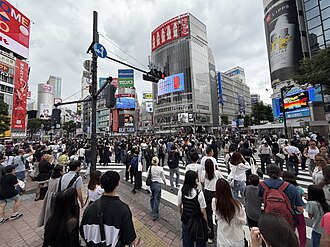
Located in the center of one of Tokyo's most vibrant commercial and entertainment districts, Shibuya Crossing is more than just a street intersection; it is a global symbol of Japanese urban life. Known as a scramble crossing—a type of pedestrian crossing where all vehicle traffic is stopped to allow people to cross in every direction simultaneously—it is widely regarded as the busiest pedestrian intersection in the world.
Since its inauguration in 1973, the crossing has become a magnet for tourists and a staple of international media, capturing the organized chaos that defines the modern Tokyo experience.
Key Facts
- Location: Shibuya, Tokyo, Japan, near Shibuya Station.
- Capacity: Up to 3,000 people can cross during a single green light cycle.
- Daily Traffic: Estimated between 260,000 (weekdays) and 390,000 (non-working days) pedestrians.
- Peak Volume: Some estimates suggest up to 500,000 people on the busiest days.
- Weekly Volume: Approximately 1.5 million pedestrians per week.
Pedestrian Flow and Usage
The sheer volume of foot traffic at Shibuya Crossing is staggering. According to 2016 data from Shibuya Center Street, the intersection handles as many as 3,000 people every two minutes. Despite this density, the crossing is noted for its efficiency; road traffic jams are rare, even during peak rush hours, and the flow of pedestrians remains constant from midnight through the early morning hours.
A 2014 survey by the Shibuya Redevelopment Association highlighted the difference between workdays and holidays, noting that non-working days see a significant spike in visitors, reaching nearly 400,000 people daily.
Evolution and Public Safety
While the crossing is a site of orderly movement for most of the year, it has recently faced challenges related to overtourism—the phenomenon where a destination receives too many visitors, leading to negative impacts on local residents and infrastructure.
Halloween and New Year's Regulations
Starting in the late 2010s, the area became a hub for young people and cosplayers during Halloween. However, the resulting chaotic crowds led Shibuya Ward to implement a public alcohol ban around the end of October in 2019. By 2023, officials strengthened these measures, requesting that tourists avoid gathering for parties and implementing stricter security to prevent litter, property damage, and altercations.
Similar safety concerns led to the suspension of official New Year's Eve celebrations starting in 2020–21. In 2023, alcohol restrictions were enforced from 6 p.m. on December 31 to 5 a.m. on January 1, and video billboards were turned off at 11 p.m. to discourage large gatherings.
Year-Round Ordinances
In response to ongoing issues, a new ordinance was passed in June 2024, extending the ban on public drinking year-round from 6 p.m. to 5 a.m. nightly.
Shibuya Crossing in Popular Culture
The crossing's visual impact has made it a favorite location for filmmakers and artists. It has appeared in major motion pictures such as The Fast and the Furious: Tokyo Drift, Resident Evil: Retribution, and Sonic The Hedgehog 3, as well as the series Alice in Borderland and Jujutsu Kaisen.
One of the most iconic images of the crossing is the large video screen on the QFRONT building. This screen was famously featured in the 2003 film Lost in Translation, showcasing a "walking dinosaur" advertisement.
![The walking dinosaur advertisement visible on the QFRONT (Tsutaya) building seen in the 2003 film Lost in Translation[17]](/images/82/88/82889d6f5e246e38a3cb30c50c5201e08d62f19441203b344d40dcf44978ab71.jpg)
Beyond film, the intersection is featured in video games like Persona 5, The World Ends with You, Chaos;Head, and Forza Horizon 6. It has also inspired music videos, such as the 1992 track "Motorcycle Emptiness" by the Manic Street Preachers, and fine art, including a large-scale work by British painter Carl Randall exhibited at London's National Portrait Gallery in 2013.
Summary of Pedestrian Statistics
| Metric | Estimated Volume | Source/Period |
|---|---|---|
| Per Green Light (2 min) | Up to 3,000 people | Shibuya Center Street (2016) |
| Average Weekday | 260,000 people | Shibuya Redevelopment Association (2014) |
| Average Non-Working Day | 390,000 people | Shibuya Redevelopment Association (2014) |
| Busiest Days | Up to 500,000 people | General Estimates |
| Weekly Total | 1.5 million people | SOTO Outdoor Media Survey (2012) |
Frequently Asked Questions
How many people cross Shibuya Crossing at once?
During a single green light cycle, which occurs every two minutes, as many as 3,000 pedestrians can cross the intersection simultaneously.
Is drinking alcohol allowed at Shibuya Crossing?
As of June 2024, a public drinking ban is in effect year-round from 6 p.m. to 5 a.m. nightly to maintain public order and safety.
Why are there restrictions during Halloween and New Year's?
Shibuya Ward implemented these measures to combat overtourism, prevent property damage, reduce litter, and ensure safety following incidents of unruly crowds and large-scale parties.
What is the QFRONT building?
The QFRONT building is a prominent structure at the crossing known for its massive video screens, which have appeared in numerous films and television shows.
Where is the Hachikō Statue located?
The Statue of Hachikō is located in Hachiko Square, which is immediately adjacent to Shibuya Crossing.