Shell USA: History, Operations, and Evolution of an Energy Giant
Shell USA, Inc., formerly known as the Shell Oil Company, is a powerhouse in the American energy landscape. As a wholly owned subsidiary of the British transnational corporation Shell plc, it stands as one of the largest producers of oil and natural gas, as well as a leading marketer of fuel and manufacturer of petrochemicals in the United States. Headquartered in Houston, Texas, the company employs over 12,100 people (as of 2021), though the broader Shell workforce in the U.S. reaches approximately 18,000.
Key Facts
- Headquarters: Houston, Texas.
- Market Presence: Approximately 14,000 branded fuel stations across nearly every U.S. state (except Montana).
- Parent Company: Shell plc.
- Major Products: Fuel, motor oil, and petrochemicals.
- Strategic Shifts: Transitioning toward sustainable aviation fuel (SAF) and renewable energy investments.
Historical Evolution
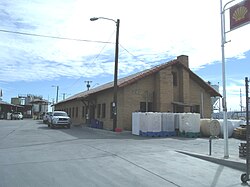
Royal Dutch-Shell established its American footprint in the 1910s, beginning with the 1913 acquisition of California Oilfields Limited. The modern entity emerged through the merger of two subsidiaries—Shell Oil Company of California and Oklahoma's Roxana Petroleum—with the Union Oil Company of Delaware. A milestone in its early growth occurred in 1921 with the drilling of the Alamitos oil well in Signal Hill, California.
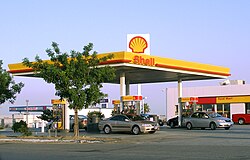
The company made headlines in 1979 by purchasing the Belridge Oil Company for $3.65 billion, a transaction described by government sources at the time as the largest cash takeover in American history. Throughout the late 20th century, Shell expanded its reach into the Gulf of Mexico and entered strategic joint ventures with Texaco, creating entities like Equilon and Motiva Enterprises. Following the merger of Texaco and Chevron in 2001, Shell acquired Texaco's shares, leading to a massive retail re-branding initiative completed by 2004.
Corporate Restructuring and Modernization
In recent years, Shell has streamlined its operations. The company separated its natural gas and power businesses into a distinct entity known as Shell Energy North America. This allowed Shell USA to focus primarily on midstream and downstream petroleum and chemical products.
Core Activities and Market Presence
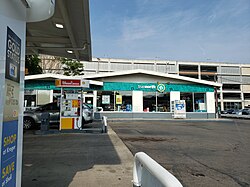
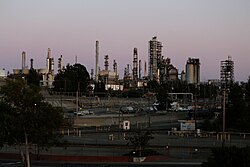
Shell maintains a dominant retail presence with roughly 14,000 fuel stations providing diesel, gasoline, and LPG (Liquefied Petroleum Gas). While it previously partnered with Saudi Aramco in Motiva Enterprises to operate Gulf Coast refineries, Shell has been in the process of divesting its interest in that venture.
The company's product evolution is evident in its fuel lines; the older RU2000 and SU2000 series have been replaced by the high-performance V-Power line. Beyond consumer retail, Shell is deeply involved in high-performance athletics, serving as the Official Fuel of the Indianapolis Motor Speedway and the NTT IndyCar Series, where it supplies 100% ethanol-sourced fuel.
The Shift Toward Sustainability
To accelerate decarbonization, Shell has integrated Sustainable Aviation Fuel (SAF)—fuel derived from renewable resources—into its distribution network through a multi-year agreement with Montana Renewables. Additionally, the company invested approximately $217 million in 2018 to acquire a 44% interest in Silicon Ranch, a solar energy company, as part of its global New Energies project.
Corporate Structure and Subsidiaries
For decades, Shell's U.S. operations functioned with significant independence from the parent office in The Hague. This independence was so pronounced that the U.S. division used a slightly different logo until June 1, 1998. This autonomy began to erode in 1984 when Royal Dutch Shell completed a $5.7 billion buyout of minority shares.
Shell USA manages a diverse portfolio of subsidiaries and brands, including:
- Pennzoil and Quaker State (Lubricants)
- Jiffy Lube (Automotive services)
- Greenlots (EV charging infrastructure)
- Specialty Oil Company (Walmart Super Tech Brand)
Notably, the company has recently scaled back some ventures, such as the 2022 sale of its interest in the Deer Park refinery to Pemex and the 2025 decision to cease operations of Volta Charging.
| Category | Details |
|---|---|
| Founded | 1912 |
| Headquarters | Houston, Texas |
| Revenue (2013/2016) | US$ 37.376 billion |
| Employee Count (2021) | 12,100+ |
| Key Brands | V-Power, Pennzoil, Jiffy Lube |
Legal and Environmental Challenges
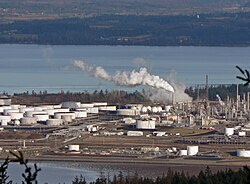
Shell's industrial scale has brought significant legal and environmental scrutiny. The Puget Sound Refinery in Washington was identified as a high-priority violator of the Clean Air Act between 2006 and 2010. Similarly, the Deer Park refinery faced lawsuits from the Sierra Club and Environment Texas over emissions exceeding EPA limits.
The company also faced a major class-action lawsuit starting in 1995 regarding polybutylene pipes produced between 1978 and 1995. These pipes were prone to corrosion when exposed to chlorine, leading to widespread household flooding. Shell settled the case by paying for the re-installation of piping in millions of homes.
Frequently Asked Questions
What is the difference between Shell USA and Shell plc?
Shell USA, Inc. is the United States-based wholly owned subsidiary, while Shell plc is the British transnational parent company that oversees global operations.
Does Shell operate in every U.S. state?
Shell has a presence in nearly all 50 states, with Montana being the only state where it lacks a presence.
What is Sustainable Aviation Fuel (SAF)?
SAF is a renewable alternative to traditional jet fuel designed to reduce the carbon footprint of aviation. Shell distributes this fuel through partnerships like the one with Montana Renewables.
What happened to the Shell Martinez Refinery?
The Martinez Refinery, the first Shell refinery in the U.S., was sold to PBF Energy in 2020.
Why did Shell settle the polybutylene lawsuit?
Shell settled because the polybutylene pipes it manufactured between 1978 and 1995 corroded when exposed to chlorine, causing significant flooding in homes across the U.S. and Canada.