Shamshi-Adad I and the Rise of the Kingdom of Upper Mesopotamia
In the turbulent landscape of the 18th century BC, one figure rose to dominate the Ancient Near East through a combination of military brilliance, strategic diplomacy, and rigid administration. Shamshi-Adad I, an Amorite ruler, transformed a series of fragmented city-states into the formidable Kingdom of Upper Mesopotamia, asserting himself as the "King of the Universe."
His journey from a political exile to the sovereign of a vast empire encompassing parts of modern-day Syria, Anatolia, and Iraq marks a pivotal era in Mesopotamian history, bridging the gap between early city-states and the great territorial empires of the Bronze Age.
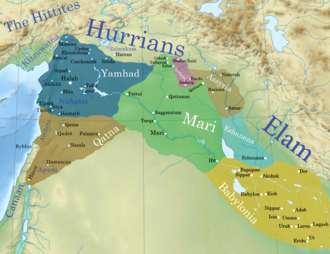
Key Facts
- Reign: Approximately 1809 BC to 1776 BC.
- Origin: Amorite, though he became the first Amorite king of Assyria.
- Capitals: Originally Ekallatum, later moved to Šubat-Enlil.
- Major Conquests: Assur, Mari, and various territories across Syria and Anatolia.
- Successors: His sons, Ishme-Dagan I and Yasmah-Adad.
Early Life and Rise to Power
Shamshi-Adad I was the son of Ila-kabkabu, an Amorite king. His path to power was not linear; early in his life, he was forced into exile in Babylon around 1823 BC following an attack on Ekallatum by Naram-Sin of Eshnunna. He remained in exile for over a decade, returning only after the death of Naram-Sin around 1809 BC.
Upon his return, Shamshi-Adad I retook Ekallatum and subsequently overthrew King Erishum II of Assyria. By conquering Assur, he established himself as the first Amorite ruler of the region. In Assur, he held the title of "Governor of Assur" and left a lasting architectural legacy, including the Temple of Assur, where inscriptions identify him as the "Unifier of the Land Between Tigris and Euphrates." These records also provide a glimpse into the ancient economy, noting that one shekel of silver was equivalent to two kor (a unit of volume) of barley, fifteen minas of wool, or two seahs of oil.
The Administration of an Empire
Shamshi-Adad I was a meticulous organizer who maintained strict control over every facet of his state. He utilized a sophisticated network of spies and propaganda to neutralize rivals and win over undecided cities. While he was a firm ruler, he was pragmatic, allowing conquered territories to retain some of their traditional practices to ensure stability.
To standardize his administration, he enforced the Eponym dating system—a method of recording years by the name of a high official—across his territories, including Mari, Tuttul, Terqa, and his capital.
Conquests and the Kingdom of Upper Mesopotamia
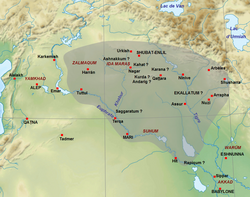
Around 1808 BC, Shamshi-Adad I established a new capital at the previously abandoned town of Shekhna, renaming it Šubat-Enlil ("the residence of the god Enlil"). From this base, he expanded his influence, competing against the powers of Eshnunna and Mari.
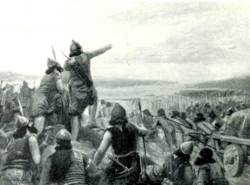
The city of Mari was a strategic prize due to its control over the vital caravan routes between Anatolia and Mesopotamia. Following the assassination of King Yahdun-Lim—an event possibly orchestrated by Shamshi-Adad I—the ruler seized Mari around 1796 BC. This victory allowed him to carve out the Kingdom of Upper Mesopotamia, a vast empire stretching across Syria and Anatolia.
Dynastic Management
To maintain control over his sprawling domains, Shamshi-Adad I installed his sons in key positions: Ishme-Dagan I was placed on the throne of Ekallatum, while Yasmah-Adad was appointed to rule Mari. However, the relationship between father and sons was strained. Correspondence reveals that Shamshi-Adad I viewed Yasmah-Adad as weak, once asking him, "Are you a child, not a man, have you no beard on your chin?"
Shamshi-Adad I also used marriage as a diplomatic tool, forcing Yasmah-Adad to grant a leading position of power to Beltum, the princess of Qatna, to solidify an alliance with her father, King Ishi-Addu.
Conflict with Eshnunna and Military Prowess
The relationship between Shamshi-Adad I and the Kingdom of Eshnunna was characterized by shifting alliances. Around 1781 BC, he allied with King Dadusha of Eshnunna to conquer the region between the two Zab Rivers. However, this alliance eventually collapsed, and Shamshi-Adad I turned his military might against Eshnunna, attacking cities such as Shaduppum, Nerebtum, and Andarig.
His military success was built on meticulous planning and the use of advanced siegecraft, including the deployment of battering rams and the construction of encircling ramparts. He even claimed to have erected triumphal stelae on the Mediterranean coast, though historians believe these were the result of short expeditions rather than permanent conquests.
The Fall of the Empire
Despite its size, the Kingdom of Upper Mesopotamia lacked internal cohesion and was geographically vulnerable. As Shamshi-Adad I aged, neighboring powers like Yamhad and Eshnunna began to exploit these weaknesses. The empire's stability relied heavily on the personal strength of its founder.
Shamshi-Adad I died around 1776 BC. His death triggered a rapid collapse of his achievements. Yasmah-Adad was quickly expelled from Mari by Zimri-Lim, and the remaining territories were gradually lost during the reign of Ishme-Dagan I to a coalition of Mari, Andarig, and Eshnunna, and eventually to Hammurabi of Babylon.
| Category | Details |
|---|---|
| Period | c. 1809 – 1776 BC |
| Ethnic Origin | Amorite |
| Primary Capitals | Ekallatum, Šubat-Enlil |
| Key Titles | King of the Universe, Unifier of the Land Between Tigris and Euphrates |
| Major Rivals | Naram-Sin of Eshnunna, Yahdun-Lim of Mari |
Frequently Asked Questions
Who was Shamshi-Adad I?
Shamshi-Adad I was an Amorite conqueror and ruler who established the Kingdom of Upper Mesopotamia around 1809 BC, ruling over vast territories in Syria, Anatolia, and Assyria.
What was the significance of Šubat-Enlil?
Šubat-Enlil was the capital city established by Shamshi-Adad I around 1808 BC. He converted the abandoned town of Shekhna into this administrative center, naming it "the residence of the god Enlil."
How did Shamshi-Adad I manage his sons?
He placed his sons, Ishme-Dagan I and Yasmah-Adad, as rulers in Ekallatum and Mari respectively. He maintained strict control over them through frequent letters and arranged political marriages to secure alliances.
Why did the Kingdom of Upper Mesopotamia collapse?
The kingdom lacked cohesion and was geographically vulnerable. Following the death of Shamshi-Adad I in 1776 BC, rival powers such as Eshnunna and the returning Zimri-Lim of Mari quickly dismantled his empire.
What military techniques did Shamshi-Adad I use?
He employed advanced siegecraft, including the use of battering rams and encircling ramparts, combined with meticulous planning and the use of spies and propaganda.