Selective Breeding: Shaping Animals and Plants Through Artificial Selection
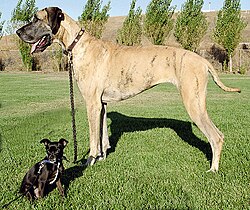
Selective breeding, also known as artificial selection, is the human-driven process of developing specific phenotypic traits—the observable physical characteristics of an organism—by choosing which males and females will reproduce. By controlling mating, humans can amplify desirable qualities over successive generations, fundamentally altering the biology of domesticated species.
In the animal kingdom, these domesticated groups are referred to as breeds and are typically managed by professional breeders. In the botanical world, they are known as varieties, cultigens, or cultivars. When two purebred animals of different breeds mate, they produce a crossbreed; similarly, crossbred plants are termed hybrids.
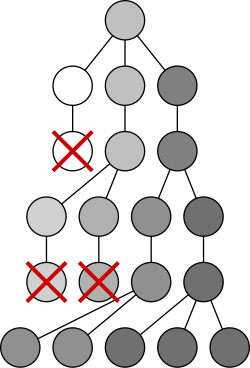
Key Facts
- Artificial Selection: A directed process where humans choose parents based on desired traits.
- Natural Selection: A non-directed process proposed by Charles Darwin as a contrast to artificial selection.
- Techniques: Often involves inbreeding, linebreeding, and outcrossing to stabilize or introduce traits.
- Applications: Widely used in agriculture, experimental biology, and aquaculture to improve growth and disease resistance.
The Science and History of Selection
The conceptual foundation of selective breeding was famously detailed by Charles Darwin in his 1859 work, On the Origin of Species. Darwin examined the domestication of pigeons, cats, cattle, and dogs to illustrate how traits change over time. He used artificial selection as an analogy to explain the theory of natural selection, though he emphasized that natural selection is a separate, non-directed process.
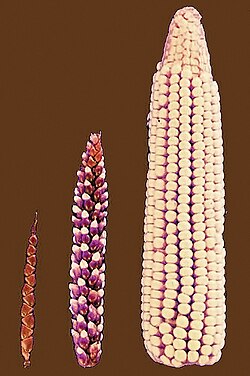
Modern selective breeding is a cornerstone of global food production. In plants, this process has transformed wild species into high-yield crops. For example, the wild grass teosinte was selectively bred into modern maize, shifting from a few fruitcases to rows of exposed kernels.
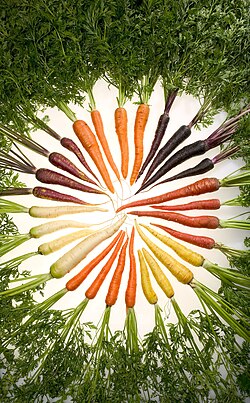
Agricultural professionals and amateurs alike use these methods to create variety. This is evident in the development of carrots, which have been bred into a wide array of colors for commercial and aesthetic purposes.
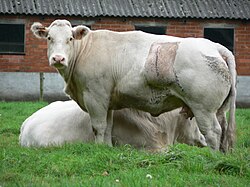
In livestock, specific genetic defects are sometimes maintained to achieve extreme physical results. The Belgian Blue cow is a prime example, where a defect in the myostatin gene is preserved through linebreeding to accelerate lean muscle growth.
Selective Breeding in Aquaculture
Aquaculture has seen significant success in applying artificial selection to improve the efficiency and health of aquatic species. These programs typically focus on growth rates, feed conversion, and disease resistance.
Finfish Response
Atlantic salmon (Salmo salar) have shown remarkable responses to selection. Research indicates that selecting for body weight can lead to a 30% increase per generation. Selected salmon exhibit twice the growth rate of wild fish, 40% higher feed intake, and a 20% improvement in Feed Conversion Efficiency (the efficiency with which an animal converts feed into body mass). Furthermore, selection for resistance to the Infectious Pancreatic Necrosis Virus (IPNV) reduced mortality from 66.6% in low-resistant species to 29.3% in high-resistant species.
Other finfish have shown similar gains:
- Rainbow Trout: Growth gains of 30% achieved over three generations.
- Coho Salmon: Weight increases of over 60% after four generations, with spawning dates occurring 13–15 days earlier.
- Common Carp: Bred for cold tolerance (Ropsha carp) and disease resistance, with some lines showing mortality as low as 11.5% compared to 57% in unselected lines.
Shellfish and Shrimps
Selection in shellfish focuses on live weight and parasite resistance. Pacific oysters have seen weight improvements up to 25.6%. In Europe, the flat oyster (Ostrea edulis) is being selectively bred to survive the Bonamia ostrea parasite, using survivors from infected areas as broodstock.
Penaeid shrimps have also benefited from these programs. The Pacific White Shrimp (Litopenaeus vannamei) showed a 21% increase in growth and an 18.4% increase in survival against the Taura Syndrome Virus (TSV) after one generation. Additionally, the "Super Shrimp" line of L. stylirostris was developed to be completely resistant to the Infectious hypodermal and haematopoietic necrosis virus (IHHNV).
Summary of Selective Breeding Outcomes
| Species | Target Trait | Observed Result |
|---|---|---|
| Atlantic Salmon | Growth/Weight | 30% increase per generation |
| Coho Salmon | Weight | >60% increase after 4 generations |
| Pacific White Shrimp | Growth/TSV Survival | 21% growth / 18.4% survival increase |
| Common Carp | Disease Resistance | Mortality reduced from 57% to 11.5% |
| Pacific Oysters | Live Weight | 0.4% to 25.6% improvement |
Frequently Asked Questions
What is the difference between selective breeding and natural selection?
Selective breeding is a directed process where humans choose which individuals reproduce based on desired traits. Natural selection is a non-directed process where environmental pressures determine which individuals are most likely to survive and reproduce.
What are the different terms used for domesticated plants?
Domesticated plants are referred to as varieties, cultigens, cultivars, or breeds, depending on the context and the professional standards used.
How does selective breeding improve aquaculture?
It improves aquaculture by increasing growth rates, enhancing feed conversion efficiency, and developing resistance to devastating viral and bacterial diseases, such as IPNV in salmon or IHHNV in shrimp.
What is a crossbreed versus a hybrid?
A crossbreed is the offspring of two purebred animals of different breeds. A hybrid is the term used for the offspring of crossbred plants.
Can selective breeding affect the timing of biological events?
Yes. For example, selective breeding in Coho salmon resulted in spawning dates that occurred 13–15 days earlier after four generations of selection.