Scottish Airways: The Lifeline of the Highlands and Islands
Founded on August 12, 1937, Scottish Airways served as a critical transport link for the remote Northern and Western Isles of Scotland. Born from the merger of Highland Airways and Northern & Scottish Airways (which became Northern Airways), the company was primarily controlled by the Whitehall Securities Corporation and the London, Midland and Scottish Railway (LMS). Based at Glasgow Renfrew Airport and Inverness Longman Airport, the airline specialized in connecting isolated communities with the mainland during a transformative era of British aviation.
Key Facts
- Operational Period: August 12, 1937, to January 31, 1947.
- Primary Hubs: Renfrew Airport (Headquarters) and Inverness Longman Airport.
- Key Figures: Clive Pearson, George Nicholson, and Ted Fresson.
- War Effort: Carried 64% of all domestic mail and freight in Britain between 1940 and 1945.
- Fate: Nationalized into British European Airways (BEA) in 1947.
Pre-War Growth and Regulation
In 1938, the British government established the Air Transport Licensing Authority (ATLA) to rationalize the aviation industry. The goal was to eliminate wasteful competition and improve infrastructure, including navigation, weather reporting, and pilot certification. While Scottish Airways provided essential services to the Highlands and Islands, the ATLA required them to cease competition on routes to Aberdeen in February 1939, leaving those services to Allied Airways.
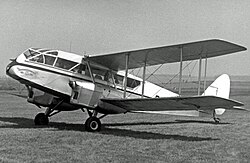
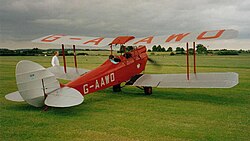
During this period, the airline operated a variety of aircraft to navigate the challenging Scottish terrain, including the De Havilland Dragon and the Spartan Cruiser.
Early Route Networks (1938–1939)
By May 1938, the airline maintained a robust schedule connecting Glasgow to Campbeltown, Islay, and Tiree. Their northern operations linked Inverness with Wick, Kirkwall, and Lerwick. By 1939, the network expanded further into the Orkneys, serving Sanday, Stronsay, Westray, Longhope, and North Ronaldsay.
Aviation During World War II
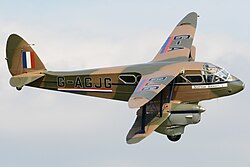
The outbreak of war in 1939 shifted the airline's focus toward national defense. The ATLA was replaced by the National Air Communications (NAC), which directed civil aircraft to assist the army with freight and blood supplies, particularly for missions to France. To maintain security, aircraft were painted in camouflage, passenger windows were blacked out with white paint, and military personnel were given priority on all flights.
Operations became increasingly difficult. In the Orkneys, Ted Fresson managed essential charter flights and eventually restarted the Inverness–Kirkwall–Sumburgh route. The airline faced significant challenges, including crashes at Wideford in 1940 and 1941, which eventually forced a move to RAF Grimsetter, the site of the current Kirkwall Airport.
One of the most enduring legacies of this era was the establishment of the Stornoway airfield. Ted Fresson tirelessly lobbied the local council to build an airfield at Melbost on the island of Lewis and Harris. Completed in August 1939, it became a vital link for the Hebrides route by May 1940, despite the treacherous winter gales and ice of the Highlands.
Post-War Expansion and Nationalization
Following the war, Scottish Airways continued to expand. In 1946, the airline began operating routes on behalf of British European Airways (BEA), including services to Belfast and various island hops. They also experimented with larger aircraft, such as the Douglas DC-3 Dakota, for routes between Prestwick and Northolt.
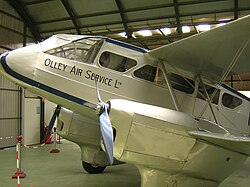
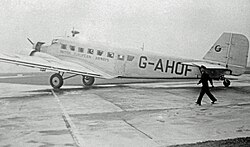
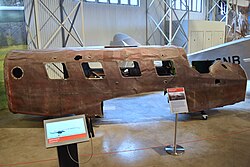
However, the era of independent operation ended on February 1, 1947, when Scottish Airways was nationalized and absorbed into BEA. This transition was fraught with tension; Ted Fresson advocated for a dedicated Scottish Division to handle the unique needs of the region. While a division was briefly created, Fresson criticized the imposition of Junkers Ju 52 aircraft, which he deemed unsuitable for the rugged Scottish environment compared to the nimble De Havilland Rapides.
Fleet and Equipment
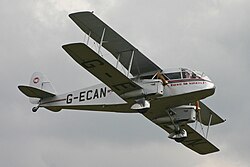
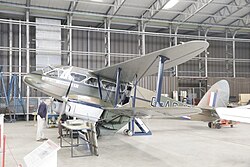
The airline's fleet was dominated by De Havilland designs, particularly the Dragon and the Dragon Rapide, known for their reliability in short-haul island hops. They also utilized the Spartan Cruiser and later the military-derived Dominie.
| Aircraft Type | Primary Role | Notable Characteristic |
|---|---|---|
| De Havilland DH.60G Gipsy Moth | Light Utility | Used for smaller transfers and light duties. |
| De Havilland DH.84 Dragon | Passenger Transport | Early workhorse for Northern and Southern divisions. |
| De Havilland DH.89 Rapide/Dominie | Regional Transport | The backbone of the fleet; Dominies were RAF versions. |
| Spartan Cruiser | Heavy Transport | Larger capacity aircraft used in early operations. |
| Junkers Ju 52/3m | Post-war Transport | Introduced by BEA; considered unsuitable for the region. |
Frequently Asked Questions
Who owned Scottish Airways?
The airline was primarily owned by the Whitehall Securities Corporation (55%) and the London, Midland and Scottish Railway (LMS) (45%).
What role did the airline play during World War II?
Under the direction of the National Air Communications (NAC), the airline maintained essential services and transported military freight, including blood supplies to France. Together with Allied Airways, they carried 64% of Britain's domestic mail and freight between 1940 and 1945.
Why was the Stornoway airfield significant?
Established through the persistence of Ted Fresson, the airfield at Melbost provided a critical link to the largest town in the Hebrides, though the route was often plagued by severe weather and ice.
What happened to Scottish Airways in 1947?
The company was nationalized on February 1, 1947, and became part of British European Airways (BEA).
Which aircraft were most common in their fleet?
The De Havilland DH.89 Dragon Rapide and its military variant, the Dominie, were the most prevalent aircraft used for the airline's island and highland routes.