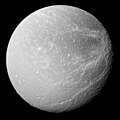
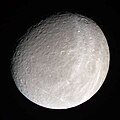
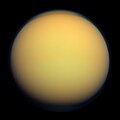
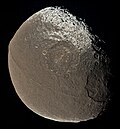
Saturn moonsTitanPhoebeirregular moonsSaturn ring system

Saturn's Moon System: From Massive Titans to Irregular Clusters

Saturn's Moon System: From Massive Titans to Irregular Clusters Saturn is far more than just a ringed giant; it is a complex gravitational playground hosting a vast and diverse collection...

Saturn's Moon System: From Massive Titans to Irregular Clusters

Saturn is far more than just a ringed giant; it is a complex gravitational playground hosting a vast and diverse collection of natural satellites. From the massive, atmosphere-shrouded world of Titan to the tiny, irregularly shaped fragments drifting in the far reaches of the system, Saturn's moons represent a wide spectrum of celestial evolution. These bodies are categorized into regular moons, which follow predictable paths, and irregular moons, which often arrive in large, clustered groups.
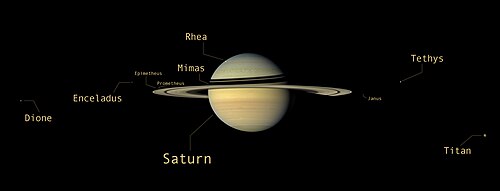
An annotated picture of Saturn's many moons captured by the Cassini spacecraft. Shown in the image are Dione, Enceladus, Epimetheus, Prometheus, Mimas, Rhea, Janus, Tethys and Titan.

Key Facts

ภาพประกอบบทความ
ภาพประกอบจากบทความต้นฉบับ
  • Saturn possesses a massive system including regular moons and over 250 known irregular moons.
  • Titan is the largest moon, significantly larger than any of Saturn's irregular satellites.
  • Irregular moons are often classified into groups such as the Inuit, Gallic, and Norse groups.
  • Many irregular moons orbit in a retrograde direction, meaning they move opposite to Saturn's rotation.
  • The Norse group is the largest collection of irregular moons, containing 210 members.

The Regular Moons: Giants of the System
ภาพประกอบบทความ
ภาพประกอบจากบทความต้นฉบับ

The regular moons of Saturn are the prominent, often spherical bodies that orbit relatively close to the planet. These moons are characterized by their significant mass and stable, predictable orbits. Titan, for instance, stands as a titan among satellites, possessing a scale that dwarfs the smaller irregular fragments.
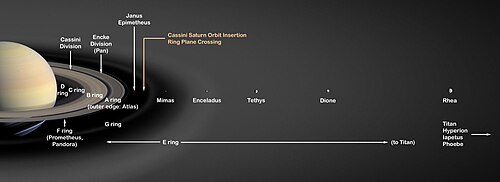
Artist conception of Saturn, its rings and major icy moons—from Mimas to Rhea

Beyond Titan, other major moons like Rhea, Dione, and Enceladus play critical roles in the system's dynamics. These bodies often exhibit smoother, more spherical shapes due to their gravitational influence and geological history.
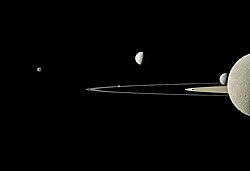
Five moons in a Cassini image: Rhea bisected in the far-right foreground, Mimas behind it, bright Enceladus above and beyond the rings, Pandora eclipsed by the F Ring, and Janus off to the left

Comparative Scale of Major Moons

To understand the sheer scale of Saturn's primary satellites, it is helpful to compare their physical dimensions and orbital characteristics.

Comparison of Selected Saturnian Moons
Moon Name Diameter (km) Mass (relative to Moon) Orbital Period (days)
Titan 5149 0.03 1527.6
Rhea 1527 0.002 451.7
Dione 1123 0.015 377.4
Enceladus 504 0.0005 396.4
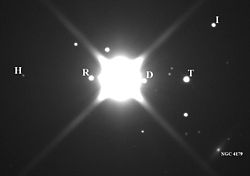
A large bright circle in the center is surrounded by small circles.
Saturn (overexposed) and the moons Iapetus, Titan, Dione, Hyperion, and Rhea viewed through a 12.5-inch telescope

The Irregular Moons: Clustered and Chaotic
ภาพประกอบบทความ
ภาพประกอบจากบทความต้นฉบับ

Farther from the planet, Saturn is surrounded by a swarm of irregular moons. Unlike the regular moons, these are typically much smaller, irregularly shaped, and follow highly inclined or retrograde orbits (orbits that move in the opposite direction of the planet's rotation). As of 2025, there are approximately 250 known irregular moons.
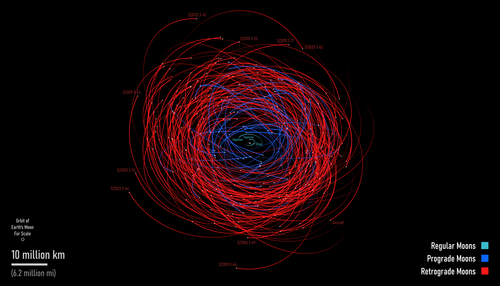
Diagram showing the highly clustered orbits of Saturn's 250 known outer irregular moons as of 2025. The majority of these irregular moons orbit retrograde, or opposite to the direction of Saturn's rotation. The orbits of retrograde moons are colored red while the orbits of prograde moons are colored blue.

These moons are not scattered randomly; instead, they appear in distinct families or groups, likely the remnants of larger bodies that were captured by Saturn's gravity. These groups are often named based on mythological themes.
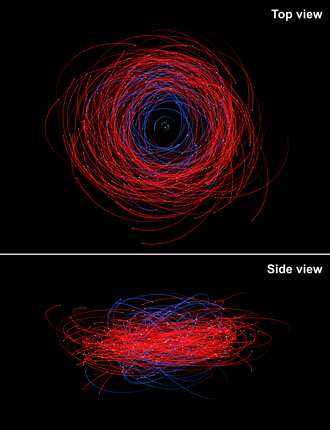
Orbits and positions of Saturn's 250 irregular moons as of March 2025. Prograde orbits are colored blue while retrograde orbits are colored red. Saturn's outermost regular moons, Titan, Hyperion, and Iapetus, are also shown with turquoise orbits.

Major Moon Groups

Astronomers categorize these irregular satellites into several primary groups:

  • Norse Group: The largest group, consisting of 210 moons. This group includes sub-groups like the Mundilfari, Phoebe, Kari, and low-inclination Norse moons.
  • Inuit Group (Kiviuq): A collection of 39 moons.
  • Gallic Group: A group containing 19 moons.
  • Round Moons: A smaller subset of 7 moons.
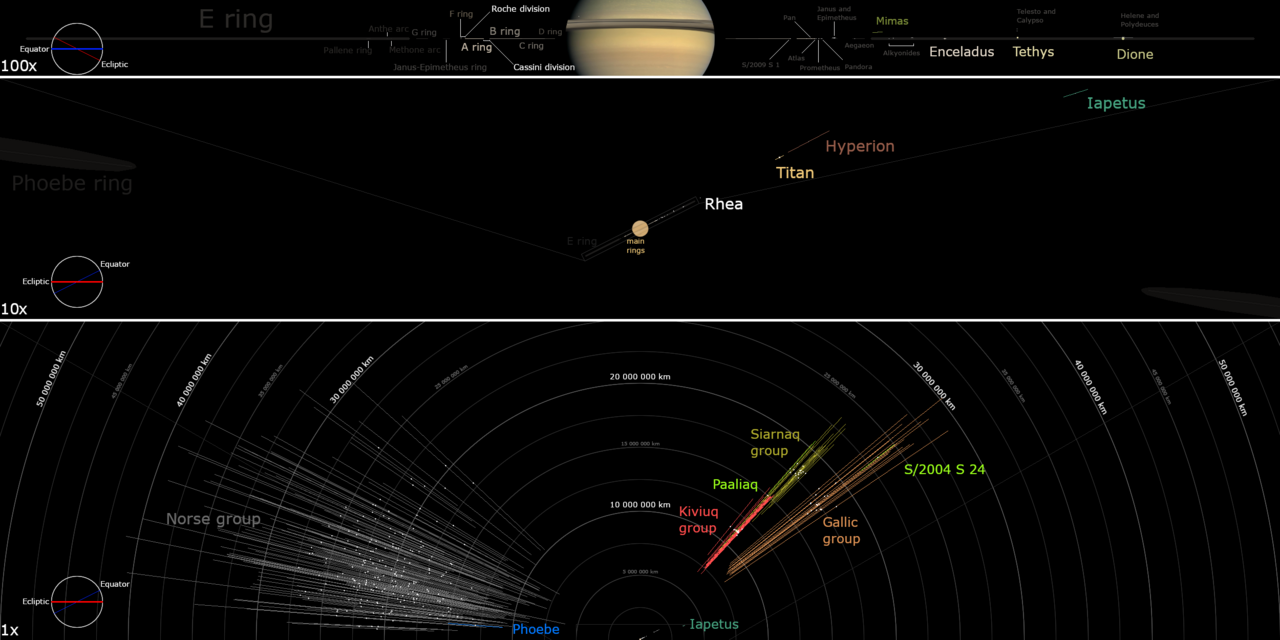
Orbital diagram of the orbital inclination and orbital distances for Saturn's rings and moon system at various scales. Notable moons, moon groups, and rings are individually labeled. Open the image for full resolution.

Phoebe: The Largest Irregular

Within the irregular population, Phoebe stands out as the largest. It is a significant body that belongs to the Norse group and orbits at a great distance from Saturn.
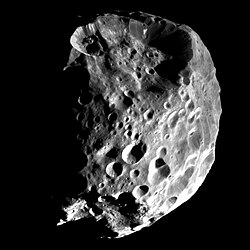
Phoebe, Saturn's largest irregular moon

Observing the Smallest Fragments

ภาพประกอบบทความ
ภาพประกอบจากบทความต้นฉบับ

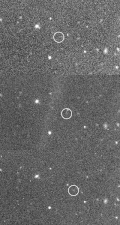
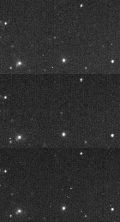
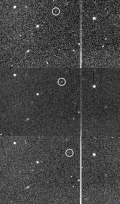
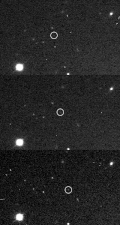
Detecting these tiny, distant objects requires advanced astronomical techniques. Because many of these moons are extremely faint, astronomers often use the shift-and-add technique. This involves taking multiple images and stacking them according to the moon's predicted motion to increase the signal-to-noise ratio, making a barely visible object appear clearly.
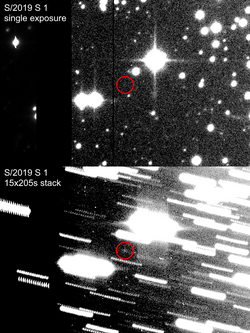
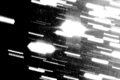
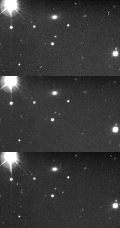
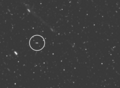
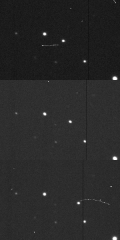
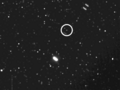
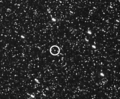
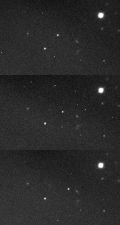
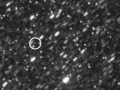
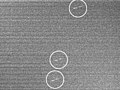
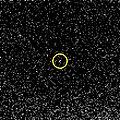
This image demonstrates the application of the shift-and-add technique to the detection of a faint moon of Saturn (S/2019 S 1; circled in red). While the moon is barely visible in an individual image (top panel), it can be seen better when many images of the moon are taken, stacked to the moon's motion and then added together (bottom panel)

The physical appearance of these moons varies wildly. While some are nearly spherical, many are elongated, cratered, or possess strange shapes like ridges or equatorial bulges.
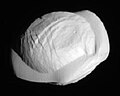
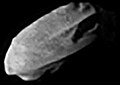
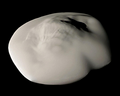
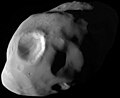
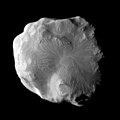
An irregularly shaped body with a prominent equatorial ridge. It is illuminated from the bottom right.
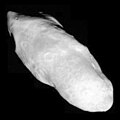
A small, irregularly shaped body elongated from the bottom left to top right. It is illuminated from the bottom left.
An irregularly shaped body is fully illuminated. The body, which looks like a cone viewed from the south pole, is elongated downward.
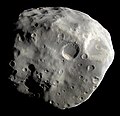
An irregularly shaped oblong body is fully illuminated. It is elongated in the direction from the top left to bottom left. Its surface is covered by craters.
An irregularly shaped body is half illuminated from the bottom. The terminator runs from the left to right. The surface is covered by numerous craters.
A partially-illuminated irregular body, which has a shape remotely resembling a cube. The body's surface consists of ridges and valleys and is covered by craters.
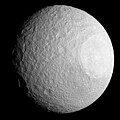
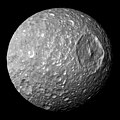
A spherical body is half illuminated from the left. The terminator runs from the top to bottom in the vicinity of the right limb. A large crater with a central peak sits on the terminator slightly to the right and above the center of the body. It makes the body look like the Death Star. There are numerous smaller craters.
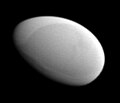
A smooth, featureless ellipsoidal object illuminated from the top right, distinctly looking like an egg.
A blurry ellipsoidal object in the center of the image
A small, half-illuminated ellipsoidal object in front of Saturn as a backdrop
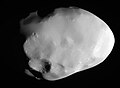
An oblong object with a few large craters and a smooth surface
An oblong body is seen in this low resolution image.
An irregularly shaped body illuminated from the left. Its surface is covered by numerous impact craters.
A small oblong body is barely resolved in this image.
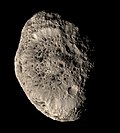
An irregularly shaped oblong body is illuminated from the left. The terminator is near the right limb. The body is elongated in the top-bottom direction. The surface is punctured by numerous impact craters, which make it look like a sponge or cheese.
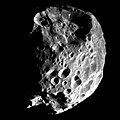
An approximately spherical heavily cratered body is illuminated from the bottom-right. The terminator runs near the left and top limbs. There is huge crater at the top, which affects the shape, and another slightly smaller at the bottom.

Some moons, such as Aegaeon, are even found embedded within the ring system itself, specifically within the bright arcs of the G Ring.
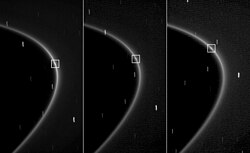
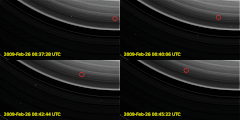
Sequence of Cassini images of Aegaeon embedded within the bright arc of Saturn's G Ring
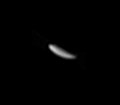
Image of Aegaeon by Cassini.

Frequently Asked Questions
ภาพประกอบบทความ
ภาพประกอบจากบทความต้นฉบับ
ภาพประกอบบทความ
ภาพประกอบจากบทความต้นฉบับ
ภาพประกอบบทความ
ภาพประกอบจากบทความต้นฉบับ
ภาพประกอบบทความ
ภาพประกอบจากบทความต้นฉบับ
ภาพประกอบบทความ
ภาพประกอบจากบทความต้นฉบับ
ภาพประกอบบทความ
ภาพประกอบจากบทความต้นฉบับ
ภาพประกอบบทความ
ภาพประกอบจากบทความต้นฉบับ
ภาพประกอบบทความ
ภาพประกอบจากบทความต้นฉบับ
ภาพประกอบบทความ
ภาพประกอบจากบทความต้นฉบับ
ภาพประกอบบทความ
ภาพประกอบจากบทความต้นฉบับ
ภาพประกอบบทความ
ภาพประกอบจากบทความต้นฉบับ
ภาพประกอบบทความ
ภาพประกอบจากบทความต้นฉบับ
ภาพประกอบบทความ
ภาพประกอบจากบทความต้นฉบับ
ภาพประกอบบทความ
ภาพประกอบจากบทความต้นฉบับ
ภาพประกอบบทความ
ภาพประกอบจากบทความต้นฉบับ
ภาพประกอบบทความ
ภาพประกอบจากบทความต้นฉบับ
ภาพประกอบบทความ
ภาพประกอบจากบทความต้นฉบับ
ภาพประกอบบทความ
ภาพประกอบจากบทความต้นฉบับ
ภาพประกอบบทความ
ภาพประกอบจากบทความต้นฉบับ
ภาพประกอบบทความ
ภาพประกอบจากบทความต้นฉบับ
ภาพประกอบบทความ
ภาพประกอบจากบทความต้นฉบับ
ภาพประกอบบทความ
ภาพประกอบจากบทความต้นฉบับ
ภาพประกอบบทความ
ภาพประกอบจากบทความต้นฉบับ
ภาพประกอบบทความ
ภาพประกอบจากบทความต้นฉบับ
ภาพประกอบบทความ
ภาพประกอบจากบทความต้นฉบับ
ภาพประกอบบทความ
ภาพประกอบจากบทความต้นฉบับ
ภาพประกอบบทความ
ภาพประกอบจากบทความต้นฉบับ
ภาพประกอบบทความ
ภาพประกอบจากบทความต้นฉบับ
ภาพประกอบบทความ
ภาพประกอบจากบทความต้นฉบับ
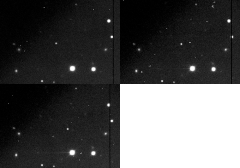
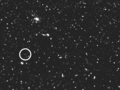
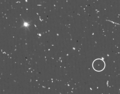
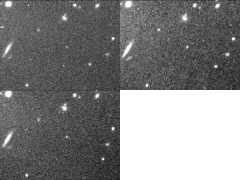
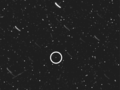
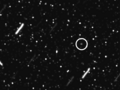
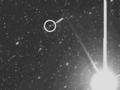
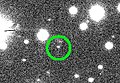
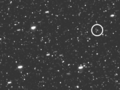
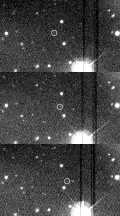
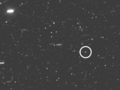
A noisy image showing a few bright dots marked by circles

What is the difference between regular and irregular moons?

Regular moons orbit close to the planet in nearly circular paths and are often large and spherical. Irregular moons orbit much further away, often in highly tilted or retrograde paths, and are typically smaller and irregularly shaped.

Why do many irregular moons orbit in a retrograde direction?

Retrograde orbits occur when a moon moves in the opposite direction of the planet's rotation. This is a common characteristic of moons that were captured by the planet's gravity from elsewhere in the solar system.

What are the Norse, Inuit, and Gallic groups?

These are classifications used by astronomers to group irregular moons that share similar orbital characteristics, suggesting they may have originated from the same parent bodies.

How do scientists find such small, faint moons?

Scientists use specialized imaging techniques like "shift-and-add," where multiple images are stacked to reveal objects that are too dim to be seen in a single exposure.

Is Titan a regular or irregular moon?

Titan is a regular moon. It is one of Saturn's largest and most significant satellites, orbiting in a stable, prograde path close to the planet compared to the irregular moons.

References

  1. If assuming an albedo of 0.04, HV = 16.5 corresponds to a diameter of 3.3 km. The formula for the calculation can be found in absolute magnitude#Small Solar System bodies (H).
  2. The mass of the rings is about 0.40 times the mass of Mimas, whereas the combined mass of Janus, Hyperion and Phoebe—the most massive of the remaining moons—is about one-third. The total mass of the rings and small moons is around 5.5×10¹⁹ kg.
  3. The photometric color may be used as a proxy for the chemical composition of satellites' surfaces.
  4. A confirmed moon is given a permanent designation by the IAU consisting of a name and a Roman numeral.[45] The eight moons that were known before 1850 are numbered in order of their distance from Saturn; the rest are numbered in the order by which they received their permanent designations. Many small moons have not yet received a permanent designation.
  5. Absolute magnitudes of regular satellites are calculated from their mean diameters and geometric albedos given in NASA's Saturnian Satellite Fact Sheet.[54] Absolute magnitude estimates for some small inner moons are not available as they do not have measured geometric albedos. Absolute magnitudes of irregular satellites were taken from the Minor Planet Center's Natural Satellites Ephemeris Service.[101]