San Justo: The History and Evolution of La Matanza's Capital
San Justo serves as the administrative heart of La Matanza, evolving from a strategic land grant in the mid-19th century into a bustling industrial and residential hub. Its journey from a colonial-style village to a modern city reflects the broader economic shifts of Argentina, moving from agricultural dominance to industrialization and subsequent urban revitalization.
The Foundation of the City
The origins of San Justo date back to 1852, when Magistrate Lino Lagos first applied for the land necessary to establish a capital city for La Matanza. While the process took several years, the land was officially granted in 1856. José Gorchs, acting on behalf of the heirs of Justo Villegas, proposed that the city be founded on their own lands, which they generously donated to the community.
On December 25, 1856, the city was formally founded. In honor of the prominent landowner whose land made the project possible, the city was named San Justo. The initial plan for the settlement was comprehensive, allocating specific lots for a municipality, a church, a school, security management, a market, a cemetery, and residential areas.
The physical layout of the village was demarcated by Melchor Romero and officially adopted by the Province's Survey Department on November 13, 1857. The city was limited to a square league and designed following the Spanish Colonial form, featuring a central park surrounded by the town hall, the church, the bank, and the police station.
Economic Evolution: From Livestock to Industry
In its early years, the economy of San Justo was rooted in agriculture and livestock. Grain production was the most predominant activity. However, a shift occurred after 1852, as traditional cattle breeding was gradually displaced by the production of wool-bearing livestock, which remained the primary focus until the late nineteenth century.
By the 1940s and 1950s, San Justo underwent a massive transformation, emerging as a significant industrial center. This era saw the rise of large-scale manufacturing that defined the city's economic identity for decades.
Industrial Decline and Revitalization
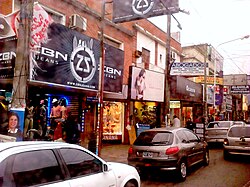
The industrial landscape shifted again after 1980, when the city lost a substantial portion of its industrial base. This decline led to the emergence of villas miserias (shantytowns) on abandoned lots, particularly in the western half of the city. In recent years, however, a process of revitalization has taken hold, supported by increased public housing efforts and the return of wholesale and industrial employers.
Today, the city maintains a strong industrial presence with several major employers, including:
- Acindar: A major steel mill.
- Eternit: A manufacturer of construction materials.
- Papelera Tucumán: A prominent paper mill.
- Pérez Companc Group: Owners of a former Siam di Tella machinery factory purchased in 1986.
Currently, San Justo is characterized by a predominantly middle-class population, with fewer than 20% of its 36,000 households living in substandard housing.
Key Facts
- Founded: December 25, 1856.
- Founder/Donor: Heirs of Justo Villegas.
- Urban Design: Spanish Colonial layout with a central park.
- Early Economy: Transitioned from cattle to wool-bearing livestock and grain.
- Industrial Peak: 1940s and 1950s.
- Current Demographics: Approximately 36,000 households, mostly middle-class.
| Period | Economic Focus | Key Development |
|---|---|---|
| 1850s | Agriculture & Livestock | City foundation and colonial demarcation |
| Late 19th Century | Wool Production | Shift from cattle breeding |
| 1940s - 1950s | Heavy Industry | Growth as a major industrial center |
| 1980s - Present | Mixed Industrial/Residential | Industrial loss followed by urban revitalization |
Frequently Asked Questions
Who donated the land for the foundation of San Justo?
The land was donated to the community by the heirs of Justo Villegas, represented by José Gorchs.
What architectural style was used for the city's civic center?
The civic center was built in the Spanish Colonial form, which centers the town hall, church, bank, and police station around a central park.
How did the livestock economy change in the 19th century?
After 1852, cattle breeding was largely replaced by wool-bearing livestock, which remained the dominant activity until the end of the century.
Which major companies operate in San Justo?
Key employers include the Acindar steel mill, Eternit (construction materials), Papelera Tucumán (paper), and the Pérez Companc Group.
What is the current housing situation in the city?
While some shantytowns (villas miserias) exist on abandoned lots, most of the city's 36,000 households are middle-class, with less than 20% living in substandard housing.