Argentine National Anthem
The Argentine National Anthem (Spanish: Himno Nacional Argentino) serves as a powerful symbol of national identity and sovereignty. Adopted on May 11, 1813, just three years after the May Revolution, the anthem has evolved from a long, ardently anti-Spanish war song into a dignified state symbol. Today, it is celebrated every May 11 as Argentine National Anthem Day (Día del Himno Nacional Argentino).
The anthem's journey reflects the political shifts of the nation, moving from the fiery rhetoric of the struggle for independence to a version that emphasizes peace and unity among the diverse populations of the Americas.

Key Facts
- Adopted: May 11, 1813.
- Lyrics: Written by politician Vicente López y Planes.
- Music: Composed by Spanish musician Blas Parera.
- Original Name: Marcha Patriótica (Patriotic March).
- Official Version: The current arrangement was finalized by Juan Pedro Esnaola and confirmed in 1944.
- Modern Format: Only the first and last verses and the chorus are sung in official settings.
Historical Evolution
The Early Anthems (1810–1812)
Before the current anthem was established, several versions existed. The first "Patriotic March" was published on November 15, 1810, featuring lyrics by Esteban de Luca and music by Blas Parera. Interestingly, this version did not mention "Argentina"—as the country was not formally named the República Argentina until 1826—and focused instead on the Peninsular War and the need for republican freedoms.
The 1813 Composition
In mid-1812, the ruling triumvirate commissioned a new anthem. While a text by Franciscan friar Cayetano Rodríguez was initially used, the Assembly of Year XIII found it ineffective. On March 6, 1813, poets were asked for new submissions, and the work of lawyer Vicente López y Planes was unanimously chosen. It was approved as the "sole national march" on May 11, 1813.
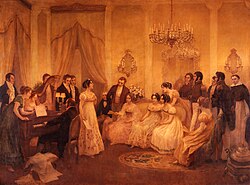
Blas Parera composed the music shortly thereafter. While oral tradition suggests the premiere took place on May 14, 1813, at the home of aristocrat Mariquita Sánchez de Thompson, the official theater premiere occurred on May 28.
Refining the Sound: The Esnaola Arrangement
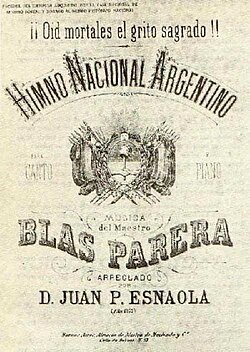
Throughout the 19th century, various versions of the song circulated, making unified singing difficult. In 1860, Juan Pedro Esnaola was commissioned to create an official version. He introduced a slower tempo, fuller texture, and enriched harmony. Despite a brief attempt in 1927 to return to a more "historicist" version, Esnaola's arrangement was reinstated and officially confirmed as the state anthem in 1944.
Lyrics and Controversies
From War Song to State Hymn
The original full-length anthem was a fierce pro-independence piece containing strong anti-Spanish sentiment, including descriptions of tearing apart the "arrogant Iberian lion." As tensions with Spain faded and Spanish immigration increased, President Julio Argentino Roca issued a decree on March 30, 1900. This decree limited official performances to the first and last verses and the chorus to maintain dignity and peace.
The "Opone" vs. "Pone" Debate
A notable linguistic controversy exists in the line "Buenos--Ayres se [o]pone á la frente De los pueblos de la ínclita union." Early manuscripts used opone (opposes), which some interpret as a reflection of centralist views in Buenos Aires. Later versions changed this to pone (positions itself), reversing the meaning to suggest leadership rather than opposition.

Modern Usage and Variations
Performance of the anthem is mandatory at official events, where attendees are expected to stand and sing. It is also traditionally played by radio and TV broadcasters at midnight.
Shortened Versions for Sports
Because the full version lasts three to four minutes, abridged instrumental versions are used at international sporting events like the Olympics or FIFA World Cup. These typically consist of the instrumental introduction or a combination of the pre-chorus and coda, though these shortened versions are not formally recognized by Argentine law.
Cultural Impact
The anthem has inspired various artistic interpretations. Rock musician Charly García caused controversy in 1990 with an idiosyncratic cover, and the song has appeared in award-winning films such as The Official Story (1985).
Summary of the Argentine National Anthem
| Feature | Details |
|---|---|
| Lyricist | Vicente López y Planes (1812) |
| Composer | Blas Parera (1813) |
| Official Arrangement | Juan Pedro Esnaola (1860/1944) |
| Key Date | May 11 (National Anthem Day) |
| Legal Basis | Decree 10302/1944 |
| Modern Structure | First verse, last verse, and chorus |
Frequently Asked Questions
Why is the full version of the anthem rarely sung today?
The original lyrics contained harsh anti-Spanish sentiments. To foster better relations with Spain and respect Spanish immigrants, a 1900 decree limited official performances to the non-offensive sections.
Who wrote the music for the Argentine National Anthem?
The music was composed by Blas Parera, a Spanish musician and theater director, around May 1813.
What is the significance of May 11 in Argentina?
May 11 is celebrated as the Argentine National Anthem Day, marking the date in 1813 when the song was approved as the sole national march.
How is the anthem used in international sports?
Due to its length, an abridged instrumental version (usually around one minute) is typically played during events like soccer matches or the Olympics.
What was the anthem originally called?
It was originally titled Marcha Patriótica (Patriotic March), and later Canción Patriótica Nacional before becoming known as the Himno Nacional Argentino around 1847.