Samantha Smith: The Youngest Ambassador of the Cold War
In the height of the Cold War, a ten-year-old girl from Maine managed to bridge the ideological divide between two superpowers. Samantha Smith became an unlikely symbol of peace and diplomacy when she reached out to the leader of the Soviet Union to express her fears of nuclear conflict, sparking a global conversation about humanity over politics.
Early Life and a Curious Spirit
Born on June 29, 1972, in Houlton, Maine, Samantha Smith grew up in a household that valued education and service. Her father was a literature and writing instructor, and her mother worked as a social worker. Even as a young child, Samantha showed a keen interest in the world; at age five, she wrote a letter of admiration to Queen Elizabeth II during the monarch's silver jubilee in 1977.
By 1980, the family had moved to Manchester, Maine, where Samantha attended Manchester Elementary School. It was here, amidst the geopolitical tensions of the early 1980s, that she decided to take a bold step toward understanding the conflict between the United States and the USSR.
The Letter That Changed Everything
In November 1982, Samantha wrote a heartfelt letter to Soviet leader Yuri Andropov. In her message, she asked why relations between the two nations were so tense and questioned whether Andropov intended to start a nuclear war. She appealed to a sense of shared humanity, stating that the world was meant to be shared and cared for, not fought over.
While the letter was published in the Soviet state newspaper Pravda, Andropov did not respond immediately. After Samantha followed up with a letter to Soviet Ambassador Anatoly Dobrynin, she finally received a formal response on April 26, 1983. Andropov praised her courage and honesty, comparing her to Becky from Mark Twain's Tom Sawyer. He assured her that the Soviet Union desired peace, cited the horrors of Nazi Germany's invasion during World War II, and proposed the abolition of all nuclear stockpiles.
A Journey to the Soviet Union
Andropov's response included an invitation for Samantha to visit the USSR. On July 7, 1983, Samantha and her parents flew to Moscow. Her visit became a global media sensation, featuring interviews with prominent figures like Ted Koppel and Johnny Carson.
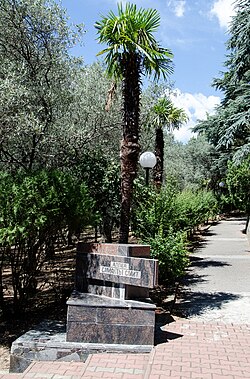
During her two-week trip, Samantha visited Moscow and Leningrad and spent significant time at Artek, a premier Soviet pioneer camp on the Crimean Peninsula. Rather than accepting luxury accommodations, Samantha chose to live in a dormitory with nine other girls, immersing herself in the daily lives of her Soviet peers.
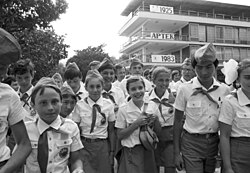
At a Moscow press conference, she famously declared that the Russians were "just like us." Although Andropov was too ill to meet her in person, they spoke via telephone. Samantha also met Valentina Tereshkova, the first woman in space, and participated in a documentary titled The Capital of Childhood, where she performed the song "May There Always Be Sunshine!"
Global Impact and Later Years
Upon her return to Maine on July 22, 1983, Samantha was greeted as a hero. While some critics viewed her trip as a Soviet propaganda tool, many saw her as a genuine bridge between cultures. Her influence extended beyond the USSR; in December 1983, she visited Japan, meeting Prime Minister Yasuhiro Nakasone. At a symposium in Kobe, she suggested that leaders exchange granddaughters for two weeks annually to discourage the use of nuclear weapons.
Samantha's journey inspired other goodwill exchanges, including a visit to the U.S. by Russian child Katya Lycheva. She later chronicled her experiences in her book, Journey to the Soviet Union.
In 1984, Samantha transitioned into media roles, hosting a Disney Channel special called Samantha Smith Goes To Washington... Campaign '84, where she interviewed Democratic presidential candidates such as Jesse Jackson and John Glenn. She also appeared in the series Charles in Charge and co-starred in the television show Lime Street in 1985.
Key Facts
- Birth: June 29, 1972, in Houlton, Maine.
- Key Correspondence: Wrote to Soviet leader Yuri Andropov in November 1982.
- Soviet Visit: Traveled to Moscow, Leningrad, and the Artek pioneer camp in July 1983.
- Diplomatic Reach: Visited Japan in December 1983 and met Prime Minister Yasuhiro Nakasone.
- Media Work: Hosted a 1984 Disney Channel political special and acted in Lime Street.
| Event/Location | Date | Key Outcome |
|---|---|---|
| Letter to Yuri Andropov | Nov 1982 | Initiated dialogue on nuclear war and peace. |
| Visit to USSR | July 1983 | Promoted the idea that Russians are "just like us." |
| Visit to Japan | Dec 1983 | Proposed granddaughter exchange to prevent war. |
| Disney Channel Special | 1984 | Interviewed U.S. presidential candidates. |
Frequently Asked Questions
Why did Samantha Smith write to Yuri Andropov?
Samantha wrote to the Soviet leader because she was worried about the possibility of a nuclear war between the United States and the Soviet Union and wanted to know if Andropov intended to prevent such a conflict.
What was the Artek pioneer camp?
Artek was the main Soviet international children's camp located in Gurzuf on the Crimean Peninsula, where Samantha stayed in a dormitory with other children to experience Soviet life firsthand.
How did the public react to her trip to the Soviet Union?
The reaction was mixed. While many in the U.S. and USSR viewed her as a symbol of peace and friendship, some critics suspected the trip was an "American-style public relations stunt" or a piece of Soviet propaganda.
Did Samantha Smith meet Yuri Andropov in person?
No, she did not meet him in person during her visit because he had become seriously ill and withdrawn from public view, although they did communicate via telephone.
What was Samantha's suggestion during her visit to Japan?
She suggested that the leaders of the Soviet Union and the United States exchange granddaughters for two weeks every year, reasoning that a president would be less likely to launch a bomb at a country where his granddaughter was visiting.