Saint-Valery-en-Caux: A Historic Coastal Gem of Normandy
Nestled along the stunning coastline of northern France, Saint-Valery-en-Caux is a picturesque commune in the Seine-Maritime department of Normandy. Known for its dramatic chalk cliffs and deep historical roots, this town blends the charm of a traditional fishing port with a poignant military history, making it a compelling destination for travelers and historians alike.
Located in the Pays de Caux region, the town sits approximately 37 miles (60 km) north of Rouen and 20 miles (32 km) west of Dieppe. It is defined by its striking geography, where massive white cliffs tower over a pebble beach that reveals sandy shores during low tide.
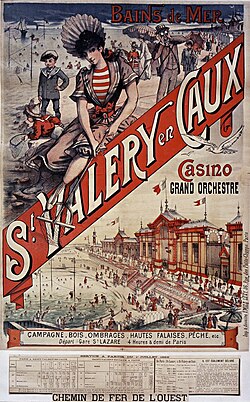
Key Facts
- Region: Normandy, France (Seine-Maritime department).
- Geography: Situated on the English Channel with an average elevation of 5 meters.
- Population: 3,851 residents (as of 2023).
- Economy: Primarily driven by tourism, featuring a casino and waterpark.
- Recognition: Awarded the highest rating of four flowers in the "France in Bloom" competition.
History and Heritage
The town's origins date back to the 7th century, when it was founded by Saint Valery. By 990 CE, a monastery known as Sanctum Walaricum existed on the site. Historical records show that Richard I, Duke of Normandy, granted the town to the abbey of Fécamp as part of his personal property. During the medieval period, the Honour of Saint Valery served as a significant cross-channel landholding.
From the 13th to the 17th century, Saint-Valery-en-Caux thrived as a busy fishing port. However, its maritime dominance eventually declined as the larger port of Fécamp grew in prominence to the west.
World War II and Liberation
The town is etched into military history due to the events of June 12, 1940, when the British 51st (Highland) Infantry Division, led by Major-General Victor Fortune, and accompanying French troops surrendered to Major-General Erwin Rommel. The fighting left the town partially destroyed.
Justice and liberation arrived on September 11, 1944, when a re-formed 51st Highland division liberated the town. Tragedy struck again shortly after on January 17, 1945, when a runaway train carrying American troops crashed into the railway station, resulting in 89 deaths and 152 injuries.
Local Culture and Landmarks
Today, the town is a hub of cultural interest, blending architectural beauty with memorials of the past. Visitors can explore the 15th-century church of St. Valery, the 16th-century "Henry IV" house, and a 17th-century cloister from a former convent.
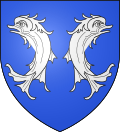
The town's heraldry reflects its maritime identity; the arms of Saint-Valery-en-Caux are blazoned as Azure, 2 dolphins addorsed argent (two silver dolphins back-to-back on a blue field).
Notable Sites of Interest
- The Harbour and Beach: Central to the town's identity and tourism.
- The Lighthouse: A guiding landmark for the English Channel.
- The 51st Highland Division Memorial: Located atop the cliffs to honor fallen soldiers.
- Commonwealth War Graves Commission Cemetery: A site of reflection and remembrance.
- Norman Architecture: Traditional half-timbered houses that preserve the region's aesthetic.
Famous Residents
The town has been home to several notable figures, including the French artist Adrien Victor Auger (1787–1854) and the Orientalist Charles Defrémery (1822–1883). In more recent times, professional footballer Demba Ba grew up in the commune.
Town Overview
| Category | Detail |
|---|---|
| Department | Seine-Maritime |
| Area | 10.47 km² (4.04 sq mi) |
| Population (2023) | 3,851 |
| Population Density | 367.8/km² |
| Elevation Range | 0–80 m |
| Postal Code | 76460 |
Frequently Asked Questions
Who founded Saint-Valery-en-Caux?
The town is said to have been founded by Saint Valery in the 7th century, with a monastery established on the site.
What is the significance of the 51st Highland Division in the town?
The 51st (Highland) Infantry Division surrendered to General Rommel in the town on June 12, 1940, and later returned to liberate the town on September 11, 1944.
How do visitors typically reach the town?
Since the SNCF railway station closed in the 1990s, public transport is limited to an infrequent bus service.
What are the main economic drivers of the town today?
Tourism is now a primary part of the economy, supported by attractions such as the local casino, waterpark, and the town's high "France in Bloom" rating.
What does the town's coat of arms depict?
The arms of the commune feature two silver dolphins positioned back-to-back (addorsed) on a blue (azure) background.