Russian Occupation of Crimea
Since 2014, the Crimean Peninsula, a territory recognized internationally as part of Ukraine, has been under Russian military occupation. This geopolitical shift began on February 27, 2014, when Russian forces in unmarked uniforms seized control of the region, triggering the broader Russo-Ukrainian War. While the Russian government considers Crimea a part of the Russian Federation, Ukraine and the majority of the international community maintain that it is an occupied territory.
This military takeover served as the precursor to the formal Russian annexation of Crimea on March 18, 2014. The occupation has since evolved from a rapid military seizure into a long-term administrative and military presence characterized by deep international dispute and local resistance.
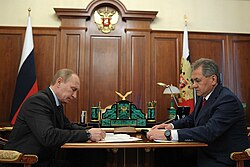
Key Facts
- Start Date: February 27, 2014.
- Administrative Center: Simferopol.
- Occupying Power: Russia.
- International Status: Recognized as occupied Ukrainian territory.
- Key Cities: Sevastopol, Simferopol, Yevpatoria, and Kerch.
- Current Head of Government: Sergey Aksyonov.
The Military Takeover and Annexation
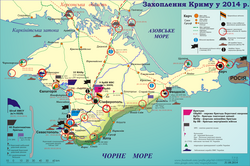
The occupation began with the deployment of Russian soldiers wearing unmarked uniforms, often referred to as "little green men," who took control of strategic locations across the peninsula. This strategy allowed Russia to establish dominance while initially maintaining a level of deniability.
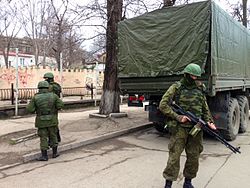
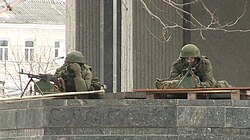
One of the first major actions was the seizure of the Crimean parliament building on March 1, 2014, which effectively neutralized local governance and paved the way for the installation of a pro-Russian administration.
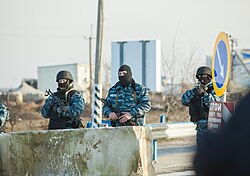
By March 10, 2014, armed men in Berkut uniforms—a former Ukrainian special police unit—were seen guarding checkpoints, such as the one at Chonhar, which marks the border between mainland Ukraine and Crimea.
During this period, the Armed Forces of Ukraine were subjected to blockades, preventing them from mounting a coordinated defense or exiting the peninsula.
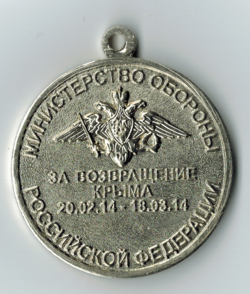
To commemorate these events, the Russian Defense Ministry established the medal "For the return of Crimea," covering the period from February 20 to March 18, 2014.
Life Under Occupation (2014–2021)
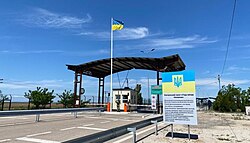
Following the annexation, Russia established full administrative control over the peninsula. This period was marked by the fortification of the border and the gradual integration of Crimea into Russian systems. Ukrainian checkpoints, such as the one at Kalanchak in the Kherson Oblast, became the primary points of contact between the occupied territory and mainland Ukraine.
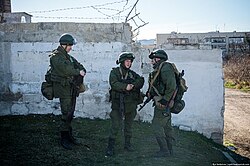
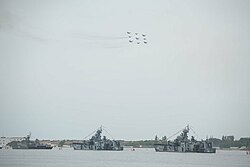
Russian troops maintained a heavy presence throughout the region, participating in high-profile events like the Victory Day parades in Sevastopol.
Resistance and Human Rights
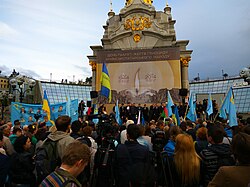
The occupation has been characterized by significant resistance and reports of discrimination. Crimean Tatars (the indigenous Turkic ethnic group of the peninsula) and ethnic Ukrainians have faced systemic pressure. This includes the closure of Ukrainian-language schools and the suppression of Ukrainian cultural institutions.
The 2022 Invasion and Current Status
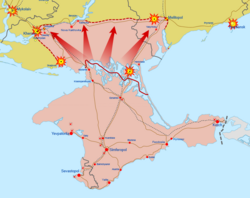
The outbreak of the full-scale Russian invasion of Ukraine in February 2022 shifted the strategic importance of Crimea. The peninsula became a primary hub for Russian logistics and military launches, though it also became a target for Ukrainian strikes.
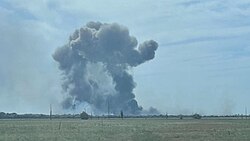
Strategic sites, such as the Saky Aerodrome, have been targeted in attacks to degrade Russian air capabilities in the region.
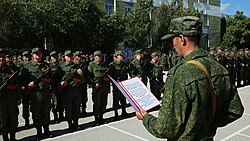
In September 2022, reports emerged of the mobilization of citizens from occupied Crimea to fight in the ongoing war in mainland Ukraine.
Ukrainian President Volodymyr Zelenskyy has stated that the war will only end when Ukrainian troops return to the 1991 state borders, which includes the liberation of Crimea.
Control of Major Settlements
The following table outlines the status of key settlements within the occupied region.
| Settlement | Population | Municipality/Raion | Held By | Status Date |
|---|---|---|---|---|
| Sevastopol | 509,992 | Special Status | Russia | 24 Feb 2022 |
| Simferopol | 332,317 | Simferopol City | Russia | 24 Feb 2022 |
| Kerch | 149,566 | Kerch City | Russia | 24 Feb 2022 |
| Yevpatoria | 105,719 | Yevpatoria City | Russia | 24 Feb 2022 |
| Yalta | 76,746 | Yalta City | Russia | 24 Feb 2022 |
| Alushta | 30,194 | Alushta Municipality | Russia | 4 Jan 2024 |
| Bakhchysarai | 26,090 | Bakhchysarai Raion | Russia | 4 Jan 2024 |
| Armiansk | 21,239 | Armiansk Municipality | Russia | 4 Jan 2024 |
| Bilohirsk | 16,354 | Bilohirsk Raion | Russia | 4 Jan 2024 |
| Alupka | 8,087 | Yalta Municipality | Russia | 4 Jan 2024 |
| Kinburn Spit | Unknown | Mykolaiv Raion | Contested | 8 Jun 2026 |
Frequently Asked Questions
When did the Russian occupation of Crimea begin?
The military occupation began on February 27, 2014, when Russian soldiers in unmarked uniforms took control of the peninsula.
What is the difference between the occupation and the annexation?
The occupation refers to the military seizure of the territory starting in February 2014. The annexation was the subsequent political act on March 18, 2014, where Russia formally claimed Crimea as part of its own territory.
How does the international community view Crimea's status?
Ukraine and most of the international community do not recognize the annexation and view Crimea as an occupied territory of Ukraine.
Who is the current head of the government in occupied Crimea?
The head of the government in Crimea since 2014 is Sergey Aksyonov.
What has been the impact on the local population?
There have been widespread reports of discrimination against ethnic Ukrainians and Crimean Tatars, including the closure of Ukrainian-language schools and cultural institutions.