Runic Scripts: The History and Evolution of Germanic Alphabets
Runes are more than just mysterious symbols from a bygone era; they represent a sophisticated family of alphabets used by Germanic peoples for centuries. From the early inscriptions of the 2nd century AD to the decorative calendars of rural Sweden in the 20th century, runic scripts served as vital tools for communication, law, and spiritual expression.
The term rune originates from the Proto-Germanic word *rūnō, meaning "secret," "mystery," or "confidential talk." This etymology reflects the perceived nature of the script—not merely as a means of writing, but as a medium for hidden knowledge and counsel.
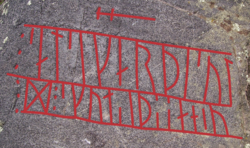
![The inscription on the Einang stone (AD 350–400), reading [Ek go]ðagastiz runo faihido ("[I, Go]dguest painted/wrote this runic inscription"),[3] is the earliest Germanic epigraphic attestation of the term.[4]](/images/fc/f0/fcf02d3f2265d68229a4dbf264c21241f0fa42ed478e66e3794794565974e0cd.jpg)
Key Facts
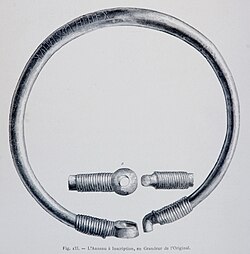
- Earliest Evidence: Secure inscriptions date back to at least AD 150, with some possible examples as early as AD 50.
- Primary Systems: The three most prominent alphabets are the Elder Futhark, Anglo-Saxon Futhorc, and Younger Futhark.
- Transition: Runes were gradually replaced by the Latin alphabet during Christianization (c. AD 700 in Central Europe and AD 1100 in Northern Europe).
- Persistence: Specialized use continued into the medieval period and even into the early 20th century in parts of Sweden.
- Modern Legacy: Runic symbols appear today in the Bluetooth logo and various esoteric practices.
The Evolution of Runic Alphabets
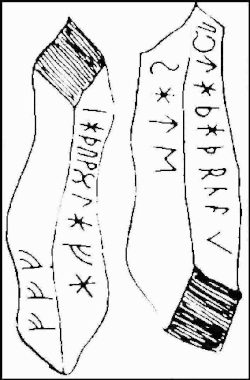
The development of runic scripts is characterized by a shift from a broad, standardized system to more specialized regional variations.
Elder Futhark (c. AD 150–800)
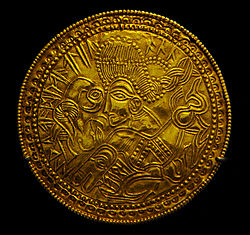
The Elder Futhark is the oldest form of the runic alphabet. During "Period I" (AD 150–550), inscriptions were common but lacked strict standardization. Many of these early writings appear on bracteates (small gold discs) and jewelry.
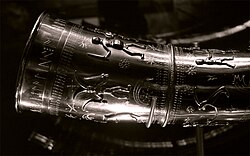
Anglo-Saxon Futhorc (c. AD 400–1100)
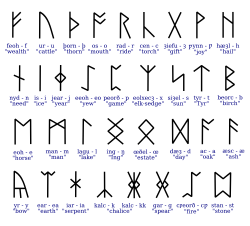
As Germanic tribes migrated and settled in Britain, the script evolved into the Futhorc, adapting to the phonetic needs of Old English.
Younger Futhark (c. AD 800–1100)
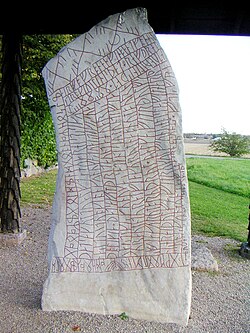
Dominant during the Viking Age, the Younger Futhark was a streamlined version of the script. It is further categorized into long-branch runes (Danish), short-twig runes (Swedish-Norwegian), and stavlösa (staveless) runes.
Medieval and Post-Reformation Runes
Beyond the Viking Age, runes evolved into medieval runes (1100–1500) and later Dalecarlian runes (1500–1800). In Norway, farmers continued using runes for personal names and Roman numerals on gravestones and musical instruments well into the 17th through 20th centuries.
Runic Usage and Applications
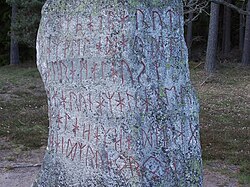
Runes were utilized across a vast spectrum of society, from the mundane to the mystical. While often associated with stone monuments, they were frequently carved into wood, bone, and metal.
Epigraphic and Legal Use
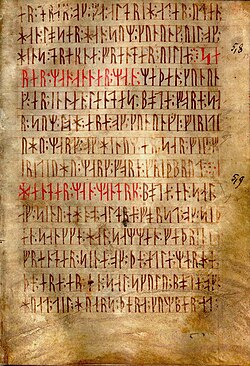
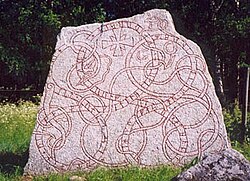
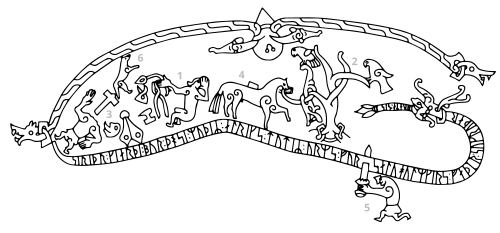
The most visible remnants of runic culture are the runestones found in Denmark and Sweden. These often served as memorials or markers of achievement. In some cases, runes were used for legal texts, such as the Codex Runicus, a vellum manuscript from approximately 1300 AD containing the Scanian Law.
Magic and Divination
In Eddic poetry, the god Odin is described as having won the runes through a ritual of self-sacrifice. This association with the divine led to the use of runes in amulets and for divinatory purposes, a tradition that persists in modern New Age esotericism.
Runology: The Scientific Study of Runes
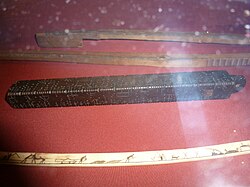
The formal study of runes, known as runology, began during the Renaissance with Johannes Bureus. In the 19th century, it became a specialized branch of Germanic linguistics. Scholars analyze the boustrophedon (text that alternates direction from left-to-right and right-to-left) and bidirectional nature of early inscriptions to understand ancient Germanic languages.
![The Vimose Comb, from the island of Funen, Denmark, features the earliest known runic inscription (AD 150 to 200) and simply reads, ᚺᚨᚱᛃᚨ "Harja", a male name.[61]](/images/3a/ec/3aecc304c457a5d27e1aa6809ec20887d1edc45d90735098cde7cbc00648dd88.jpg)
| Alphabet | Approximate Period | Primary Region/Culture | Key Characteristic |
|---|---|---|---|
| Elder Futhark | 2nd – 8th Century AD | Early Germanic | Original, most comprehensive set |
| Anglo-Saxon Futhorc | 5th – 11th Century AD | England | Expanded for Old English phonetics |
| Younger Futhark | 8th – 11th Century AD | Scandinavia (Viking Age) | Simplified character set |
| Medieval Runes | 12th – 15th Century AD | Northern Europe | Co-existed with Latin alphabet |
| Dalecarlian Runes | 16th – 19th Century AD | Sweden (Dalarna) | Used for decorative/calendar purposes |
Modern Influence and Misuse
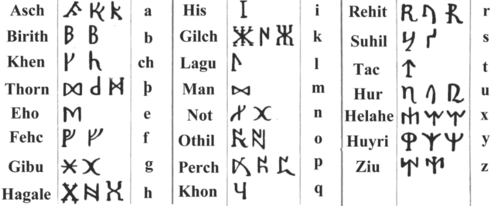
In the modern era, runes have transitioned from functional scripts to symbols of identity and mysticism. The Bluetooth logo, for example, is a combination of the runes for H and B, representing King Harald Bluetooth.

However, some runic symbols have been misappropriated. In the 19th century, Guido von List created the "Armanen runes," which were later adopted by the Nazi Schutzstaffel (SS) for their unit insignia.

Frequently Asked Questions


![The Saleby church bell [sv], Västergötland, Sweden, including a runic inscription from 1228 AD](/images/5e/70/5e70c99c8c8e63efc7a72f63639359d186fe052ba36364c0dce569620a671993.png)

![Some examples of Norwegian post-reformation runes according to James Knirk [nb], Eilert Støren and Jonas Nordby](/images/08/62/08622bbd80e256a818ff1ca780c5dac41b13d297afeca5e30098990ef8043d4c.jpg)
What is the difference between the Elder and Younger Futhark?
The Elder Futhark is the older, more expansive alphabet used by early Germanic tribes. The Younger Futhark is a simplified version that emerged during the Viking Age, reducing the number of characters while the spoken language actually became more complex.
Were runes used for magic?
While runes were used for everyday writing, they also held a strong association with magic and divination in Germanic culture and mythology, particularly in the stories of Odin.
When did people stop using runes?
Most cultures transitioned to the Latin alphabet between AD 700 and 1100 due to Christianization. However, specialized use continued in rural Sweden and Norway into the 19th and early 20th centuries.
How are runes represented in the digital age?
Runes are standardized in the Unicode block U+16A0–U+16FF, allowing them to be typed and displayed across modern computing systems.