Rudolf Rahn: The Diplomat and Plenipotentiary of Nazi Germany
Rudolf Rahn was a high-ranking German diplomat whose career spanned the Weimar Republic and the Third Reich. A man of academic depth and political ambition, Rahn operated at the highest levels of international diplomacy during the most turbulent years of the 20th century, eventually wielding significant power over the puppet regime in Italy during the final stages of World War II.
Early Life and Academic Foundation
Born on March 16, 1900, in Ulm, Württemberg, Rahn was the son of a notary. He received a classical education at the gymnasium in Esslingen before pursuing advanced studies in political science and sociology. His academic journey took him through the Universities of Tübingen, Berlin, and Heidelberg, culminating in a doctorate in 1923. Following his studies, Rahn spent several years traveling and studying abroad, broadening his perspective before entering the diplomatic service.
Diplomatic Ascent and Wartime Postings
Rahn joined the German Foreign Office as an attaché in 1928. His early career was marked by a series of strategic international postings. In 1931, he was assigned to the German Embassy in Ankara, Turkey, where he rose to the position of Secretary of the Legation by 1934. He later served in Lisbon in 1938 and Paris in August 1940.
As the war progressed, Rahn's role shifted toward political oversight in occupied or allied territories. In May 1941, he served as the political officer in Syria under the Italian Armistice Commission. By November 1941, he held a similar appointment in Tunisia, serving under the commanding officer of German forces until May 1943.
Power in Italy and the Social Republic
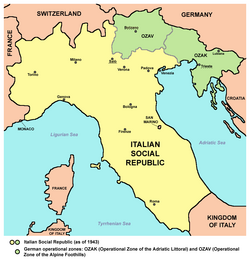
In August 1943, Rahn was appointed German Ambassador to Rome. His primary objective was to prevent King Victor Emmanuel III and the Grand Fascist Council from negotiating a separate peace with the Allied forces. Following the German installation of the Italian Social Republic—a puppet state led by Benito Mussolini in northern Italy—Rahn was appointed German Plenipotentiary in September 1943 by a direct order from Adolf Hitler.
In this capacity, Rahn wielded immense real-world power. Historical accounts suggest that Mussolini had little actual control over the Italian Social Republic, which functioned as a police state managed by Rahn and General Wolff alongside Italian collaborators.
Controversies and the Deportation of Roman Jews
Rahn's tenure in Rome is marked by the October 1943 deportation of 8,000 Jews. While records show that SS-Obersturmbannführer Herbert Kappler was ordered to arrest these individuals for liquidation, a directive from Hitler via Foreign Minister Ribbentrop specified they be sent to Mauthausen as hostages. Regardless of the specific terminology used in the directives, the 8,000 Jews were deported and killed by the SS.
Intervention in Hungary: Operation Panzerfaust
Rahn's influence extended beyond Italy. In October 1944, when Admiral Miklós Horthy, the Regent of Hungary, attempted to secure a separate peace with the Soviet Union, Rahn and Veesenmayer intervened. They pressured Horthy by revealing that his son, Miklós, had been kidnapped by German commandos led by Otto Skorzeny.
This pressure culminated in Operation Panzerfaust on October 15, 1944, which removed Horthy from power and led to the appointment of a pro-German government led by the fascist Arrow Cross Party.
Post-War Arrest and Denazification
At the end of the war, Rahn was arrested and held at Nuremberg as a potential war criminal. He spent four years in prison, during which time he wrote his memoirs and a study on the diplomat Talleyrand. Although initially listed for prosecution in the Wilhelmstrasse Trial, Rahn was interrogated eight times between 1947 and 1948.
On June 7, 1949, Rahn was classified as Class V (exonerated) during the denazification process. This decision was influenced by his claim that he had used diplomatic channels to save approximately 1,800 prisoners of the Gestapo in North Africa.
Later Years and the Papal Plot
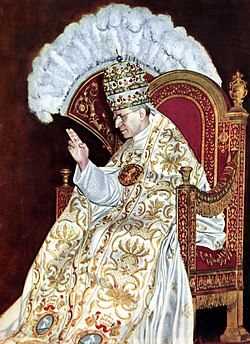
In his later life, Rahn remained connected to former military figures, attending the funeral of Generalfeldmarschall Albert Kesselring in 1960. In the early 1970s, Rahn revealed the existence of a failed German plot to kidnap Pope Pius XII, stating that he and others had blocked the plan due to the potentially catastrophic consequences.
Rahn died in Düsseldorf on January 7, 1975, at the age of 74.
Key Facts
- Role: German Plenipotentiary to the Italian Social Republic (1943–1945).
- Education: Doctorate in political science and sociology (1923).
- Key Operation: Involved in Operation Panzerfaust to install a pro-German government in Hungary.
- Legal Outcome: Exonerated (Class V) during denazification in 1949.
- Literary Work: Published a poet, political scientist, and author of memoirs.
| Period | Location/Role | Key Focus |
|---|---|---|
| 1931–1934 | Ankara, Turkey | Embassy Secretary |
| 1938–1940 | Lisbon, Portugal | Diplomatic Posting |
| 1940–1941 | Paris, France | Embassy Posting |
| 1941–1943 | Syria and Tunisia | Political Officer |
| 1943–1945 | Rome/Northern Italy | Ambassador and Plenipotentiary |
Frequently Asked Questions
What was Rudolf Rahn's role in the Italian Social Republic?
Rahn served as the German Plenipotentiary, a position appointed by Adolf Hitler. He wielded significant actual power over the puppet regime, effectively running the state alongside General Wolff while Benito Mussolini remained the nominal head.
Was Rudolf Rahn convicted of war crimes?
No. Although he was arrested and held at Nuremberg for four years, he was eventually classified as Class V (exonerated) in 1949, partly due to his efforts to save prisoners in North Africa.
How did Rahn influence the government of Hungary?
Rahn, along with Veesenmayer, helped orchestrate the removal of Regent Miklós Horthy through Operation Panzerfaust, using the kidnapping of Horthy's son as leverage to install the pro-German Arrow Cross Party.
What was the "Papal Plot" mentioned by Rahn?
In a letter written in the early 1970s, Rahn disclosed that there had been a German plan to kidnap Pope Pius XII, though he stated that he and others blocked the plan to avoid the severe consequences it would have caused.
What were Rahn's contributions outside of diplomacy?
Rahn was an academic and a writer. He published works on political science, wrote a portrait of the diplomat Talleyrand, and was a published poet.