A Guide to Rudbeckia: The Vibrant World of Coneflowers
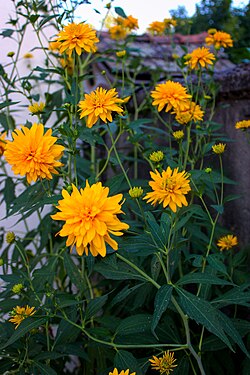
If you have ever wandered through a summer meadow or a well-tended garden, you have likely encountered the striking, sun-colored blooms of the Rudbeckia genus. Commonly known as coneflowers or black-eyed-susans, these plants are celebrated for their brilliant yellow or gold petals that frame a dark, prominent center. These flowers belong to the Asteraceae family, often referred to as the composite family, which is characterized by flower heads made up of many tiny individual florets.
Rudbeckia species are native to North America and are highly valued in both wild landscapes and cultivated gardens. They typically bloom from mid to late summer, providing a splash of color when many other plants are beginning to fade. Their unique appearance comes from their daisy-like inflorescences (clusters of flowers) where the outer ray florets tend to be decumbent, meaning they point outward and downward as the flower head opens, creating a distinct cone shape.
Botanical Characteristics and Growth
Most Rudbeckia are herbaceous plants, meaning they have non-woody stems, and are primarily perennial, which means they live for more than two years. Some species may be annuals (living for one season) or biennials (living for two seasons). These plants are quite hardy, typically growing to a height of between 0.5 and 3.0 meters with stems that can be simple or branched.
The foliage of the Rudbeckia is equally distinctive. The leaves are arranged spirally around the stem and can range from 5 to 25 cm in length. Depending on the specific species, these leaves may be entire (having smooth edges) or deeply lobed. Because of their sturdy nature, many species are used in prairie restoration projects to help rebuild native ecosystems, and they serve as excellent forage for livestock.
The Legacy of the Rudbeck Family
The naming of this genus is steeped in botanical history. The renowned scientist Carolus Linnaeus named Rudbeckia to honor his patron, Olof Rudbeck the Younger (1660–1740), a fellow botanist at Uppsala University. Linnaeus had served as a tutor in the younger Rudbeck's home and was later recommended by him for a prestigious position as a lecturer and botanical garden demonstrator at the university.

The name also pays tribute to the younger Rudbeck's father, Olof Rudbeck the Elder (1630–1702). The Elder Rudbeck was a distinguished naturalist, philologist, and doctor of medicine who is credited with discovering the lymphatic system. He was also the founder of Sweden's first botanic garden, which is known today as the Linnaean Garden at Uppsala University.

Ecological Importance and Garden Use
Beyond their beauty, Rudbeckia species play a vital role in the local environment. They are a food source for various insects, specifically the caterpillars of certain Lepidoptera (moths and butterflies), including cabbage moths and dot moths. Their presence in a rangeland is often an indicator of a healthy ecosystem.
For gardeners, Rudbeckia is a practical choice. Many species are known to be resistant to deer and rabbits, making them ideal for landscapes where wildlife might otherwise graze on ornamental plants. Popular species like Rudbeckia hirta are especially prized for their long flowering periods and various available cultivars.
Key Facts
- Common Names: Coneflowers and Black-eyed-susans.
- Native Region: North America.
- Flower Structure: Daisy-like inflorescences with a raised, dark central disc.
- Growth Habit: Mostly perennial herbaceous plants.
- Height Range: 0.5 to 3.0 meters.
- Ecological Role: Supports caterpillars (cabbage moths and dot moths) and provides forage for livestock.
- Garden Benefit: Highly resistant to deer and rabbits.
Summary of Rudbeckia Characteristics
| Feature | Details |
|---|---|
| Family | Asteraceae (Composite family) |
| Primary Colors | Yellow, gold, or orange petals with black, brown, or green centers |
| Typical Height | 0.5–3.0 m |
| Leaf Arrangement | Spiral, 5–25 cm long |
| Bloom Season | Mid to late summer |
Frequently Asked Questions
What makes Rudbeckia flowers look like they have a "cone"?
The "cone" appearance is created by the prominent, raised central disc. Additionally, the outer ray florets are often decumbent, meaning they point outward and downward, which emphasizes the central shape.
Are coneflowers easy to grow in a garden?
Yes, many species are popular garden plants because they are hardy, have long flowering times, and are resistant to common garden pests like deer and rabbits.
How are Rudbeckia used in environmental conservation?
Because they are native to North America, many species are used in prairie restoration projects to help stabilize and enrich natural habitats.
Which insects are attracted to Rudbeckia?
Rudbeckia provides food for various species, including honey bees and the caterpillars of cabbage moths and dot moths.
Is there a difference between Rudbeckia and Echinacea?
While both are commonly called coneflowers and belong to the Asteraceae family, they are different genera. Historically, some species were moved between these genera as botanical classifications evolved.