A Guide to Gaillardia: The Vibrant Blanket Flower
Known for its striking colors and resilient nature, Gaillardia is a genus of flowering plants that brings a burst of energy to any landscape. A member of the Asteraceae family (commonly known as the daisy family), these plants are celebrated both for their natural beauty and their ability to thrive in various environments. Whether you know them as "blanket flowers" or "firewheels," these blooms offer a fascinating look into the diversity of the plant kingdom.
The name Gaillardia honors Maître Gaillard de Charentonneau, an 18th-century French magistrate and dedicated botanist. The common name, "blanket flower," is thought to stem from two sources: the resemblance of the flower heads to the brightly patterned blankets crafted by Native Americans, or the way wild varieties can grow in dense colonies, effectively "blanketing" the ground.
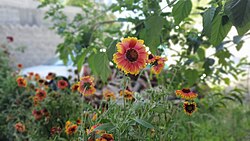
Physical Characteristics and Description
Gaillardia plants are versatile, appearing as either annuals (plants that complete their life cycle in one season) or perennials (plants that live for multiple years). They can grow as herbs or subshrubs, which are small, woody plants, and some species even possess rhizomes—underground stems that help the plant spread.
Typically, these plants feature branching, erect stems that can reach a maximum height of approximately 80 centimeters (31.5 inches). The leaves are arranged alternately along the stem, though some species may only produce leaves at the base of the plant. Most species feature glandular leaves, which contain small glands that may secrete substances.
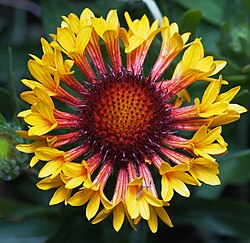
The most distinctive feature of the Gaillardia is its inflorescence—the arrangement of flowers on the plant. Each plant produces a solitary flower head. These heads often feature 15 or more ray florets (the petal-like structures around the edge), though some varieties lack them entirely. The colors are incredibly diverse, ranging from shades of yellow, orange, and red to purple, brown, white, or even bicolored patterns. At the center of the head lie numerous tubular disc florets, which are often tipped with tiny hairs. The fruit of the plant is characterized by a pappus, a structure of scales that aids in seed dispersal.
Ecology and Cultural Significance
Beyond their aesthetic appeal, Gaillardia species play a vital role in their local ecosystems. They serve as essential food plants for the caterpillars of various Lepidoptera (the order of insects that includes butterflies and moths). For instance, the species Schinia bina and Schinia volupia are known to feed on G. pulchella, while Schinia masoni feeds exclusively on G. aristata.
The plant also holds significant cultural and symbolic value. It is the official flower of Wallonia. Additionally, the school colors of Texas State University—maroon and old gold—were inspired by the striking colors found in the Gaillardia.
Notable Species and Hybrids
The genus contains a wide array of species distributed across North and South America. Some notable examples include the "firewheel" (G. pulchella), which is found across the central USA, Canada, and northern Mexico, and the "red dome blanketflower" (G. pinnatifida), native to the western USA and northern Mexico.
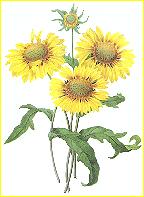
In addition to wild species, many cultivars (plants produced by selective breeding) have been developed for ornamental gardening. One well-known hybrid is Gaillardia × grandiflora, which is a cross between G. aristata and G. pulchella.
Key Facts
- Family: Asteraceae (the daisy family).
- Native Regions: North and South America.
- Growth Habit: Annual or perennial herbs and subshrubs.
- Max Height: Approximately 80 centimeters.
- Pollinator Support: Provides food for various Lepidoptera caterpillars.
- Symbolism: Official flower of Wallonia.
Species Summary
| Scientific Name | Common Name / Note | Primary Region |
|---|---|---|
| G. pulchella | Firewheel | USA, Canada, Mexico |
| G. aristata | Common Gaillardia | Canada, Northern/Western USA |
| G. pinnatifida | Red dome blanketflower | Northern Mexico, Western USA |
| G. aestivalis | Lanceleaf blanketflower | Southeastern USA |
| G. amblyodon | Maroon blanketflower | Texas |
| G. megapotamica | Boton de oro | Argentina |
Frequently Asked Questions
What does the name "blanket flower" refer to?
The name may refer to the colorful, patterned appearance of the flowers, which resembles Native American blankets, or to the plant's tendency to grow in dense colonies that cover the ground like a blanket.
How tall can Gaillardia plants grow?
Most Gaillardia species have erect stems that reach a maximum height of about 80 centimeters (31.5 inches).
Are Gaillardia plants useful for wildlife?
Yes, they are important food plants for the caterpillars of several Lepidoptera species, including certain types of moths.
Where are Gaillardia plants originally from?
The genus is native to the Americas, specifically found in North and South America.
What are the different colors of Gaillardia flowers?
They can appear in almost any shade, including yellow, orange, red, purple, brown, white, or combinations of these colors.